 Economy

.jpg)
SHB unveils sustainable finance framework to expand green and social lending
1.
.jpg)
|
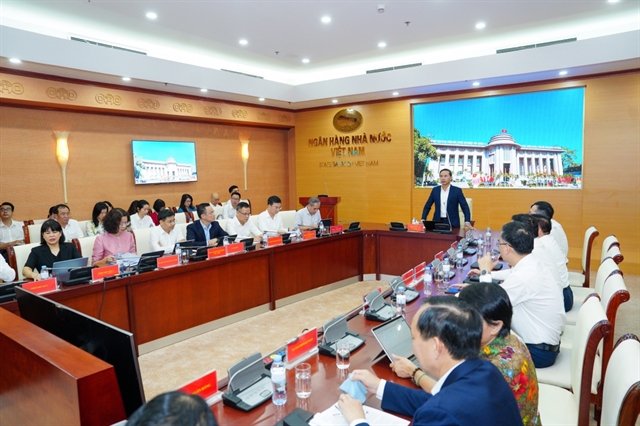
| SHB unveils its Sustainable Finance Framework. — Photos courtesy of SHB |
HÀ NỘI — Saigon-Hanoi Commercial Joint Stock Bank (SHB) has unveiled its Sustainable Finance Framework (SFF), establishing criteria for identifying, assessing and selecting eligible projects for sustainable financing.
In early October, S&P Global Ratings issued an independent Second-Party Opinion (SPO) on the framework. According to the assessment, eligible green and social projects could help address major challenges facing Việt Nam, including rising carbon emissions, water stress and marine plastic pollution. Improving access to education, healthcare, credit and housing could also enhance living conditions and opportunities for disadvantaged groups.
An SPO assesses a financial framework at a specific point in time and is not a credit rating of the bank. It provides investors and financial institutions with an additional reference for evaluating fund allocation criteria, project selection processes and reporting mechanisms.
SHB’s framework standardises the management of funds allocated to sustainable activities and covers bonds, corporate loans, trade finance, consumer lending, and green, social and sustainability deposits.
It encompasses three categories: green finance, blue finance and social finance, linking capital allocation to environmental protection, natural resource conservation and improved quality of life.
Eligible green projects include renewable energy, energy efficiency, green buildings, clean transportation, pollution control, the circular economy and natural resource management. Blue finance focuses on marine ecosystem protection, sustainable water management, wastewater treatment, sustainable fisheries and responsible ocean-related economic activities.
Social finance covers access to finance, job creation, healthcare, education, affordable housing and basic infrastructure, aligning funding with specific economic and community needs.
|
|
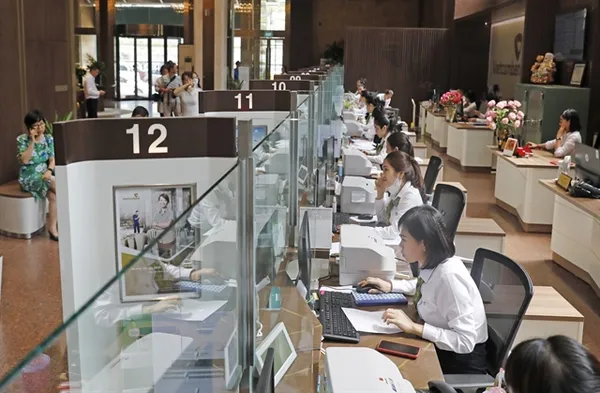
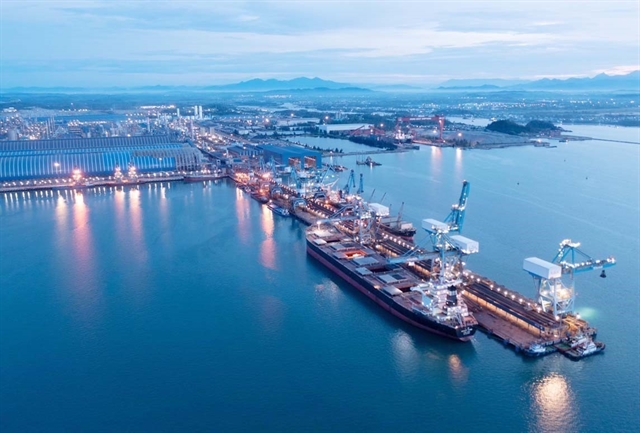
| SHB seeks to channel capital into green projects and sustainable development. |
The framework follows the International Capital Market Association’s Green Bond Principles, Social Bond Principles and Sustainability Bond Guidelines, alongside the Green Loan Principles and Social Loan Principles developed by the LMA, LSTA and APLMA. It also references the International Finance Corporation’s Guidelines for Blue Finance.
Under the framework, SHB has established procedures for project selection, appraisal and approval, applies an environmental and social management system to monitor risks, and specifies activities excluded from financing.
The bank has committed to publishing annual fund allocation and impact reports until all proceeds have been allocated. It will also engage an independent third party to review post-issuance allocation reports.
These measures aim to improve transparency and accountability, allowing stakeholders to track fund utilisation and assess results against published criteria. They also provide a basis for SHB to improve impact measurement, enhance environmental and social data quality, and develop products supporting customers’ investment, technological innovation and business transformation.
SHB recently announced a loan agreement coordinated by Sumitomo Mitsui Banking Corporation, with an initial facility of US$340 million that could be increased subject to the agreement’s terms.
The bank also successfully issued Singapore dollar-denominated bonds internationally for the first time. Listed on the Singapore Exchange, the bonds received a long-term “AA” issue credit rating from S&P Global Ratings before issuance. The rating applies to the bonds guaranteed by the Credit Guarantee and Investment Facility (CGIF), a trust fund of the Asian Development Bank, and reflects its unconditional, timely and irrevocable guarantee. It is not a credit rating of SHB itself.
The transaction helps diversify SHB’s medium- and long-term funding sources and expand relationships with international financial institutions and investors.
.jpg)
|
| SHB has received Global Finance’s “Best Sustainable Finance Bank in Việt Nam” title for several consecutive years. |
Green credit targets and sustainable development
SHB aims to increase green credit to at least 25 per cent of its total outstanding loans by 2028.
Its renewable energy portfolio includes the 155MW Chợ Long wind power project, the 72MW Hoa Đông 2 wind power project and the 240MW Thiên Tân solar power complex. The three projects have a combined investment value of approximately VNĐ14.601 trillion, with SHB providing around VNĐ11.265 trillion in financing.
The bank has also raised two US dollar-denominated syndicated loans linked to environmental, social and governance (ESG) criteria, worth nearly $600 million in total, with participation from 26 international financial institutions.
In social finance, SHB prioritises small- and medium-sized enterprises, including women-owned businesses and companies participating in supply chains. Cooperation with international institutions also helps mobilise funding and technical assistance to improve credit access for target customer groups.
The framework and S&P Global Ratings’ independent opinion mark a step towards standardising how SHB identifies, manages and reports sustainable finance activities. They support the bank’s efforts to align lending with environmental and social objectives, strengthen disclosure and access a broader range of domestic and international funding sources.
The approach is in line with the spirit of Politburo Resolution No 59-NQ/TW on international integration in the new situation, reflecting SHB’s efforts to adopt international practices, expand partnerships and mobilise capital to support economic development. — VNS
Economy
 Economy
 Economy
 Economy
 Economy
 Economy
 Economy
.jpg) Economy
 Economy
 Economy
 Economy
 Economy
 Economy
 Economy
 Economy