 Economy



Ambassador pledges every effort to promote Việt Nam–Sweden ties
1.
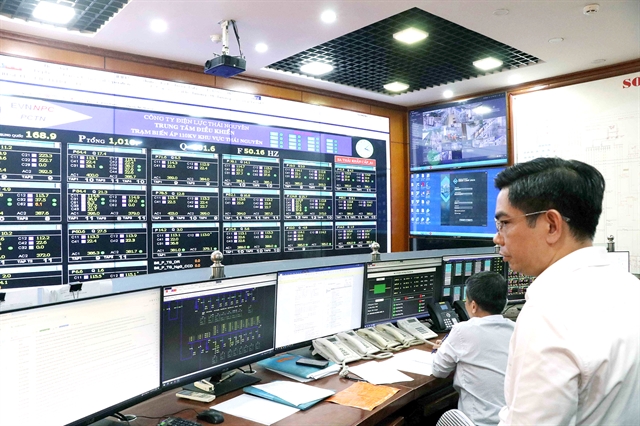 |
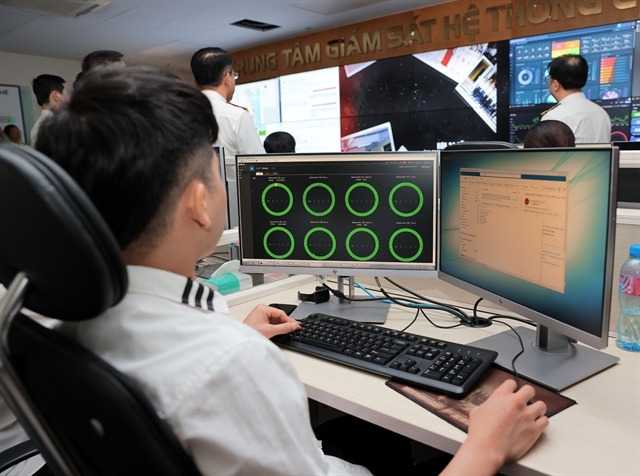
| The 110kV substation control centre in Thái Nguyên Province. Accelerating investment in generation and transmission, improving the policy framework and developing a more transparent power market will be crucial to preventing supply shortages. — VNA/VNS Photo Trần Trang |
HÀ NỘI — Bottlenecks in regulatory framework, power infrastructure and electricity market need to be removed to ensure reliable energy supplies and support its target of annual economic growth of at least 10 per cent in 2026-30, experts have told conference.
With electricity demand projected to rise by 10.5-12.9 per cent annually over the next four years, accelerating investment in generation and transmission, improving the policy framework and developing a more transparent power market will be crucial to preventing supply shortages, particularly in the northern region.
Under the adjusted eighth national power development plan (PDP8), Việt Nam will need to add nearly 90,000 megawatts (MW) of new power capacity by 2030 and mobilise around VNĐ830 trillion (US$31.5 billion) in investment.
The strain on the system was evident during the heatwave in late June, when peak national electricity demand reached a record 58,500MW. Peak demand in northern Việt Nam rose to 30,200MW, growing by more than 14.4 per cent.
The National Power System and Market Operation Company (NSMO) forecasts that nationwide peak demand could approach 100,000-110,000MW by 2030, almost double current levels.
Nguyễn Quốc Trung, deputy general director of NSMO, said northern Việt Nam faced the greatest pressure on electricity supplies due to slow development of local power sources while inter-regional 500kV transmission lines were nearing their operating limits.
Power demand in the region is also highly sensitive to temperatures, with consumption typically peaking between 9pm and 11pm, when solar power is no longer generating electricity, he said.
The rapid growth of renewable energy is also adding to the complexity of operating the grid which increases the need for better forecasting, dispatching and modern monitoring systems to maintain grid stability, he said.
To address these challenges, experts said it would require more coordinated action across planning, investment procedures, infrastructure development and electricity market reforms.
Bùi Quốc Hùng, deputy director of the Electricity Department under the Ministry of Industry and Trade, said the ministry is reviewing and updating the PDP8 with priority on projects with a higher likelihood of implementation and seeking to resolve procedural bottlenecks related to investment approvals and the selection of investors for transmission projects.
The ministry is also reviewing the regional structure of power generation, accelerating the issuance of a renewable energy generation price framework for 2026 and finalising the mechanism for direct power purchase agreements (DPPA).
The measures are expected to provide a clearer and more transparent legal framework and help mobilise more private investment in the power sector, he said.
Energy expert Hà Đăng Sơn said resolving institutional obstacles and ensuring more consistent implementation across localities were among the most urgent tasks. It is also necessary to promote energy saving and expand the application of energy storage technologies, Sơn said.
Encouraging self-consumed rooftop solar systems combined with storage, adjusting peak-hour electricity prices to better reflect actual system conditions and supporting businesses to upgrade technologies could help curb demand growth and strengthen energy security, he added.
According to Trịnh Quang Ninh, deputy head of Electricity of Vietnam's Planning Department, EVN has drawn up an investment plan worth around VNĐ830 trillion for 2026-30 with an aim to complete 15 key power projects with combined capacity of more than 6,000MW.
They include the Quảng Trạch 1 thermal power plant, Quảng Trạch 2 LNG power project, expansion projects at the Trị An, Tuyên Quang, Sê San 3 and Sê San 4 hydropower plants, and the Bắc Ái pumped-storage hydropower project.
EVN also plans to develop 2,000MW of battery energy storage systems and put nearly 300 transmission projects with voltages of between 220kV and 500kV into operation.
EVN also called for special mechanisms to shorten investment preparation times, including allowing land, planning and environmental procedures to be handled in parallel, together with faster land clearance to speed up investment. — VNS
Economy
 Economy
 Economy
 Economy
 Economy
 Economy
 Economy
 Economy
 Economy
 Economy
 Economy
 Economy
 Economy
 Economy
 Economy