 Economy



LANDMARK Launches ‘Destination CENTRAL’: A District-Wide Invitation to Explore the Dynamism, Luxury, and Soul of Central
1.
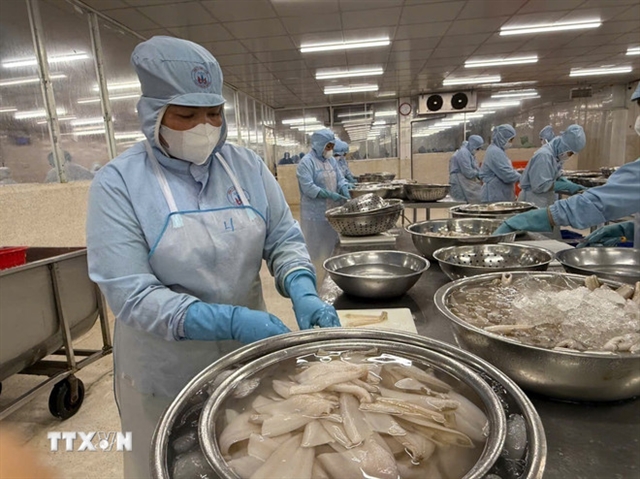 |
| A seafood processing plant in HCM City. Việt Nam’s seafood exports increased by nearly 8 per cent in the first quarter of 2026 to US$2.64 billion. — VNA/VNS Photo |
HCM CITY — Việt Nam’s seafood exports reached US$2.64 billion in the first quarter of 2026, a year-on-year increase of nearly 8 per cent, maintaining positive growth despite signs of slowing momentum in March, according to the Việt Nam Association of Seafood Producers and Exporters (VASEP).
The association said after a strong surge of roughly 20 per cent in the first two months of the year, export growth moderated in March, reflecting continued volatility in global demand.
China remained the largest market and the main growth driver, with exports to the country reaching $764 million in the first quarter, up nearly 45 per cent year-on-year. This played a decisive role in sustaining overall export growth as other markets weakened.
VASEP attributed the strong performance in China to three key factors.
Seasonal demand linked to the Lunar New Year in mid-February boosted imports, particularly of high-end products such as whole shrimp and live seafood.
Demand in the mid- and high-end segments also remained robust, with shrimp shipments rising by 18 per cent in the first two months. Tighter supply and higher tariffs on Canadian lobster imports created opportunities for alternative suppliers, including Việt Nam.
Geographical proximity and flexible supply chains further enabled Vietnamese exporters to respond quickly to short-term demand spikes.
But the strong first-quarter growth also reflects seasonal and stockpiling factors rather than a sustained long-term trend. This highlights the need to distinguish between short-term gains and underlying growth when assessing prospects for the coming quarters, Lê Hằng, VASEP’s deputy general secretary, said.
The dominance of the Chinese market has also reshaped the industry’s growth structure. In the shrimp segment, growth was largely driven by lobster, a high-value product heavily dependent on China, while white-leg shrimp, a key export to the US and EU, remained largely flat.
For pangasius, China remained the largest market, helping maintain steady growth. Other seafood products, including crab and molluscs, also benefited from demand across Asia.
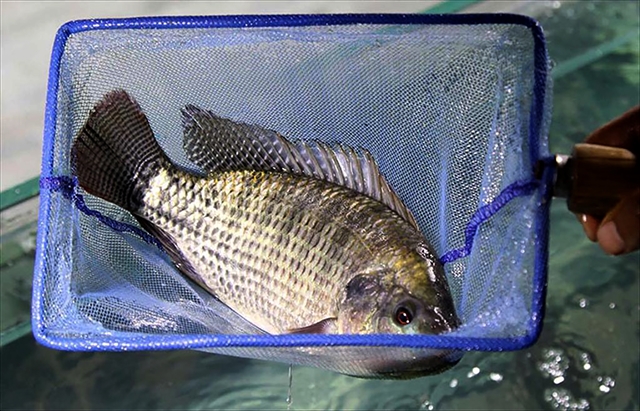 |
| Tilapia stands out as a fast-growing product in seafood exports. — Photo courtesy of VASEP |
Tilapia has emerged as a notable bright spot. After exports reached around $99 million in 2025, up 141 per cent, the momentum continued in the first quarter of 2026, with exports estimated at $35 million, an increase of 190 per cent year-on-year, the association said.
In contrast, other major markets have yet to show a clear recovery.
Exports to the US declined by more than 10 per cent due to low demand as well as technical and tariff barriers.
Shipments to Japan and South Korea also fell by around 10 per cent. Exports to the EU were largely flat, indicating stable but insufficient demand to drive growth, although opportunities remain in whitefish and sustainably certified products.
On a more positive note, markets such as ASEAN, Australia, Taiwan and several emerging destinations continued to expand, helping diversify export outlets.
Looking ahead to the second quarter of 2026, China is expected to remain the primary growth driver, though the pace may slow as seasonal factors fade.
The growth will depend more on actual consumption demand and the ability of Vietnamese exporters to maintain market share amid intensifying competition. Products offering affordability and convenience are expected to play a more important role than premium items.
Overall, seafood exports in the second quarter are projected to maintain positive growth but with clear divergence across markets. Shrimp and pangasius will remain key pillars, with China leading growth, while the US and other developed markets continue to pose constraints.
Markets with logistical advantages and preferential tariffs under free trade agreements are likely to be prioritised by exporters.
Shifting towards affordable segments
According to Lê Hằng, conflicts in the Middle East are affecting the global economy, but seafood remains an essential food category, so demand is unlikely to decline sharply. In times of uncertainty, consumers tend to stockpile food and shift towards more affordable options, she said.
Instead of premium products such as black tiger shrimp, consumers are increasingly opting for pangasius, whitefish, tilapia, canned seafood, and surimi, a trend businesses need to adapt to, she added.
Rising demand for affordable, nutritious protein sources is also driving the expansion of global surimi and tilapia markets.
According to global market research firm Persistence Market Research, the global surimi market is expected to be worth $4.4 billion in 2026 and reach $6.5 billion by 2033.
According to Future Market Insights, the global tilapia market is projected to grow from $15.1 billion in 2025 to $24.2 billion by 2035.
Experts say tilapia is gaining popularity due to its reasonable price, high nutritional value and versatility in cooking, making it an attractive option for health-conscious consumers seeking a nutritious, budget-friendly food. — VNS
Economy
 Economy
 Economy
 Economy
 Economy
 Economy
 Economy
 Economy
 Economy
 Economy
 Economy
 Economy
 Economy
 Economy
 Economy