 Economy


84 individuals investigated for transnational online frauds
1.
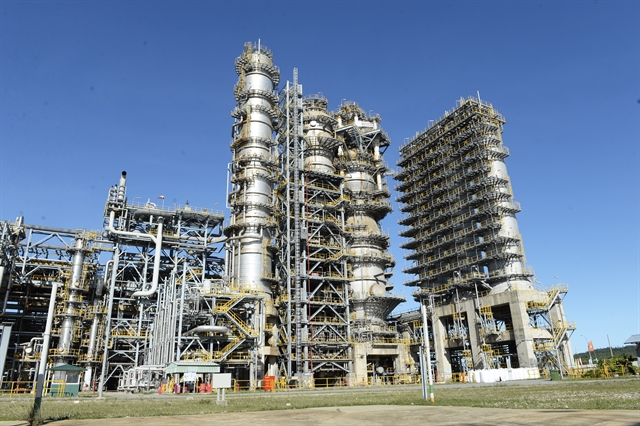 |
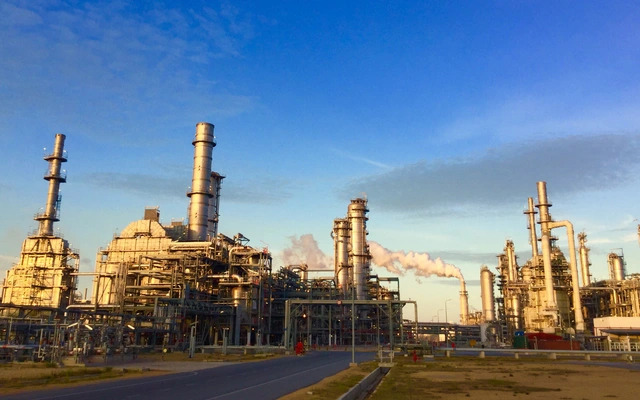
| The Dung Quat Refinery plant in Quảng Ngãi Province. — Photo bsr.com.vn |
HÀ NỘI — Binh Son Refining and Petrochemical JSC (BSR) is intensifying efforts to advance technological capabilities and engineering innovation as part of a broader strategy to modernise Việt Nam's refining and petrochemical sector.
At the core of this transformation is the Dung Quat Oil Refinery, where continuous upgrades, technical initiatives and operational improvements are being implemented to enhance efficiency, flexibility and environmental performance.
One of the most notable achievements is BSR's successful research and production of specialised fuels serving defence and security purposes.
According to industry experts, the project represents a high level of scientific and technological content with strategic significance for national energy and defence security.
Initially, the refinery's configuration was not designed to produce such fuels. This required BSR's engineering teams to simultaneously maintain stable commercial operations while conducting extensive research to adapt the refining process.
The development process involved analysing dozens of crude oil samples, running hundreds of simulations and reviewing extensive technical documentation. Engineers worked continuously to identify the differences between commercial fuels and specialised fuels, and to modify processing parameters accordingly.
As a result, BSR has been able to produce three key types of specialised fuels domestically: Jet A-1K aviation fuel, DO L-62 diesel and A80 (RON83) gasoline.
This transition has moved Việt Nam from full import dependence toward self-sufficiency in these critical fuel categories.
The production of specialised fuels requires strict adherence to technical specifications that differ significantly from conventional petroleum products. For example, Jet A-1K must ensure stable combustion at high speeds, maintain performance under varying temperature and pressure conditions, and prevent residue formation during operation.
Similarly, DO L-62 diesel must meet low-temperature requirements, including pour point and filtration limits below minus 10 degrees Celsius, ensuring reliable operation in demanding conditions.
According to Colonel Phạm Minh Nhật, deputy director of the Petroleum Department under the Ministry of National Defence, the fuels produced by BSR have earned high marks in practical use, particularly in terms of acceleration performance, operational stability and cleanliness, with almost no residue build-up.
The successful commercialisation of these fuels has enabled BSR to replace certain imported products, enhancing domestic supply capability and supporting defence logistics.
A key challenge in the development process was ensuring that technological modifications did not disrupt the refinery's primary role of supplying commercial fuels to the domestic market. Any adjustment in process configuration had to be carefully evaluated to avoid affecting output stability.
This required a high degree of coordination between research teams and operational units, allowing BSR to maintain continuous refinery operations while implementing technical innovations.
Associate Professor Dr Nguyễn Hồng Liên from the Hanoi University of Science and Technology said that the project demonstrated creativity, adaptability and a high level of technological mastery by BSR's engineering team, particularly given that the refinery was not originally designed for such production.
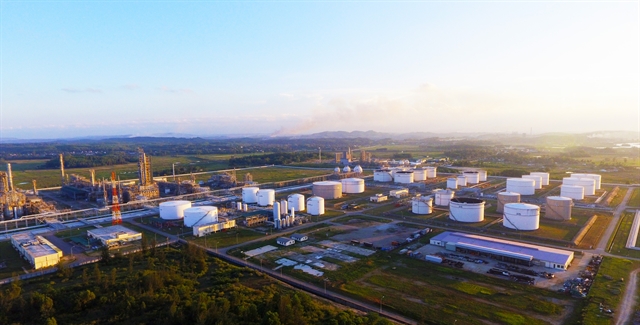 |
| A view of Dung Quat Refinery. — Photo bsr.com.vn |
Infrastructure upgrades
Alongside product innovation, BSR is also investing in technological upgrades to improve operational efficiency and expand processing capacity.
The Dung Quat Refinery Upgrade and Expansion project includes site preparation and infrastructure development to accommodate new processing units and enhance existing systems.
The refinery has also maintained high operational performance, with average throughput exceeding design capacity. According to company data, overall utilisation reached approximately 123.5 per cent of capacity, with key units such as the crude distillation unit operating at 118.4 per cent and the RFCC unit at 109 per cent.
These operational results reflect the impact of continuous technical optimisation, which includes process adjustments and improved equipment performance.
BSR has also applied modern blending technologies to diversify its product portfolio. The refinery currently produces E5 RON92 biofuel by blending gasoline with ethanol, supported by an integrated infrastructure system that allows flexible adjustment of blending capacity to meet market demand.
This capability positions BSR to respond to Việt Nam's roadmap for expanding the use of E10 gasoline starting this year, requiring higher blending capacity and tighter quality control.
In addition to biofuels, the company has developed sustainable aviation fuel (SAF), marking a further step in applying new technologies to create more environmentally oriented products. The first commercial batch of SAF was produced through a technical blending process combining imported feedstock with domestically produced Jet A-1 fuel.
The combination of research-driven product development, process optimisation and infrastructure investment highlights BSR's broader approach to technological advancement. — BIZHUB/VNS
Economy
 Economy
 Economy
 Economy
 Economy
 Economy
 Economy
 Economy
 Economy
 Economy
 Economy
 Economy
 Economy
 Economy
 Economy