 Economy

NA President sets June 2027 deadline for APEC projects, rules out delays, quality cuts and violations
1.
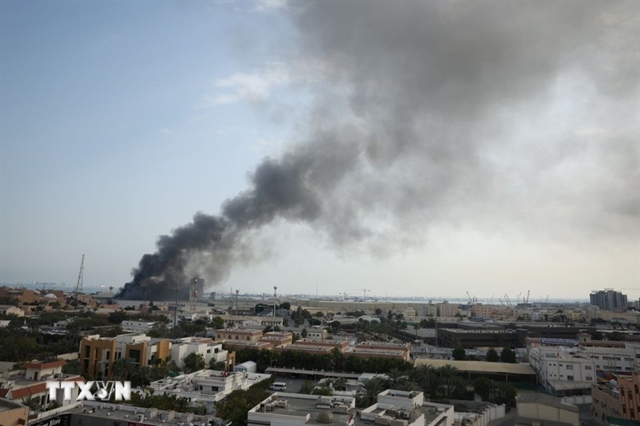 |
Rising geopolitical tensions in the Middle East on Việt Nam’s economy under the baseline scenario is expected to remain limited. — VNA/VNS Photo |
HCM CITY—The war in Iran continues to escalate, but experts say it is unlikely to have a major impact on Việt Nam, partly because exports to the Middle East account for less than 3 per cent of the country’s total exports.
In addition, the likelihood of protracted, large-scale ground operations in Iran is considered relatively low. Instead, the current conflict could resemble a more intense version of last year’s “12-day war”, lasting slightly longer but ultimately proving to be a sharp yet temporary shock for global markets.
This assessment was highlighted in a recent report by Michael Kokalari, chief economist, and Thái Thị Việt Trinh, senior economist, at VinaCapital.
Their view is based on several factors. First, reports citing officials at the Pentagon indicate concerns about the sustainability of prolonged high-intensity operations. This suggests the current campaign is more likely to involve several days of intense bombardment followed by weeks of lower-intensity conflict, rather than a prolonged war.
Second, China remains a major buyer of Iranian crude oil and therefore has strong incentives to prevent extreme oil price spikes or a prolonged disruption to the Strait of Hormuz. China also has geopolitical leverage due to its dominance in the global rare earth supply chain.
Meanwhile, the likelihood of regime change in Iran is viewed as low. The country’s political system is deeply institutionalised through the Islamic Revolutionary Guard Corps and the clerical leadership, making a rapid internal collapse unlikely without large-scale ground intervention. Such an intervention appears improbable given the strong domestic opposition to the war in the US, including among supporters of President Donald Trump.
According to VinaCapital, the most visible impact on Việt Nam’s economy would come through oil price fluctuations. Global oil prices have already risen by around 30 per cent since the beginning of the year, which could push Việt Nam’s consumer price index (CPI) inflation from about 2.5 per cent year-on-year to around 4 per cent in the coming months.
Even so, the impact is expected to remain manageable. Petrol accounts for roughly 4 per cent of Việt Nam’s CPI basket, while food accounts for around 36 per cent. Because most food consumed in the country is produced domestically, policymakers have some flexibility to limit the impact of temporary inflation spikes.
Kokalari said higher oil prices could also weigh on economic growth because Việt Nam remains a net importer of energy equivalent to slightly more than 1 per cent of GDP, despite producing crude oil and gas.
However, the Government could offset much of this impact through stimulus measures if necessary.
Oil price pressures may also ease somewhat as the Organization of the Petroleum Exporting Countries is expected to increase production from April, while oil inventories in several countries, particularly China, remain relatively high, according to the expert.
At the same time, the value of the US dollar and the price of gold have risen due to safe-haven investment flows following the outbreak of the conflict. This could place some depreciation pressure on the Vietnamese đồng.
Combined with higher inflation, this reinforces expectations that 12-month bank deposit rates in Việt Nam may increase by 50–100 basis points this year to around 7 per cent by year-end.
Risks under a prolonged conflict scenario
Several global financial institutions, including Standard Chartered and Goldman Sachs, estimate a 10–20 per cent probability of a prolonged conflict that would include a “hard closure” of the Strait of Hormuz, one of the world’s most critical oil transport routes.
Such a protracted "hard closure", which has never happened before, could push oil prices above US$100 per barrel.
In that scenario, Việt Nam could face three major challenges. Inflation could rise above 5 per cent, pushing one-year deposit interest rates beyond the 7–8 per cent range. The domestic economy could suffer a roughly one percentage-point hit to growth due to persistently high energy prices. At the same time, exports would likely weaken as global demand slows, potentially reducing GDP growth by another percentage point.
Together, these factors could lower Việt Nam’s GDP growth by about two percentage points. However, analysts stress that this remains an extreme and relatively low-probability scenario.
Geopolitical tensions could also create divergence across sectors of the economy and the stock market.
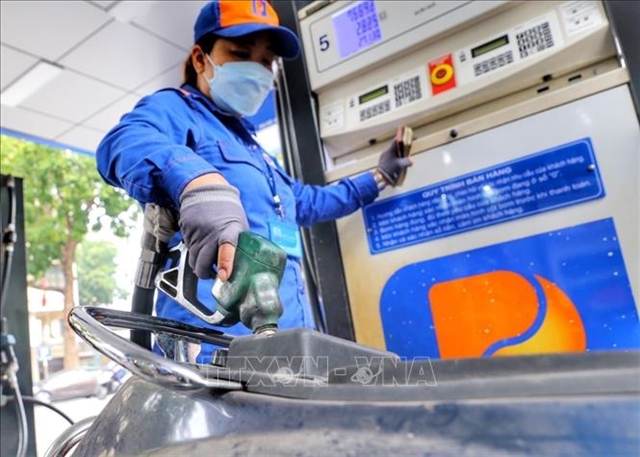
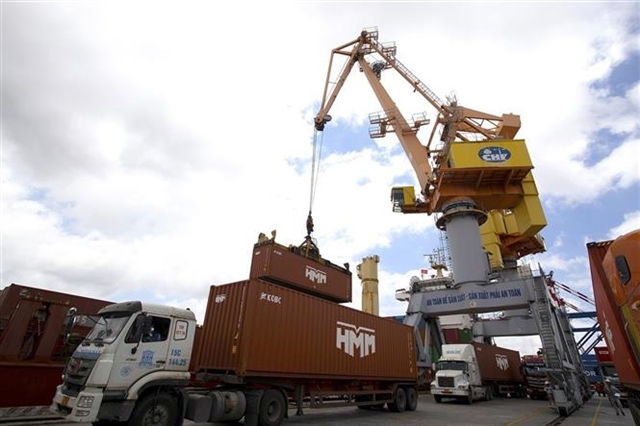
Companies that may benefit include petrol retailers, oil refiners and oilfield service providers due to higher oil prices. Shipping companies and port operators could also gain from rising freight rates and higher logistics costs.
Fertiliser producers, particularly urea manufacturers, may also benefit, as Iran accounts for roughly 10 per cent of global urea exports. Jewellery companies could also see stronger performance thanks to higher gold prices and increased demand for safe-haven assets.
On the other hand, airlines, travel and tourism companies are likely to face headwinds due to higher fuel costs. Rising interest rates could also weigh on interest-sensitive sectors such as real estate.
Despite short-term volatility caused by geopolitical tensions, analysts remain optimistic about the longer-term outlook for emerging markets. The MSCI Emerging Markets Index has already outperformed the S&P 500 by about 9 per cent since the start of the year and nearly 30 per cent since early 2025.
Against this backdrop, VinaCapital expects continued outperformance in the months ahead and says any significant drop in the VN-Index could represent a buying opportunity for investors. — VNS
Economy
 Economy
 Economy
 Economy
 Economy
 Economy
 Economy
 Economy
 Economy
 Economy
 Economy
 Economy
 Economy
 Economy
 Economy