 Economy



Police rescue two foreign tourists lost in Đà Nẵng forest
1.

|
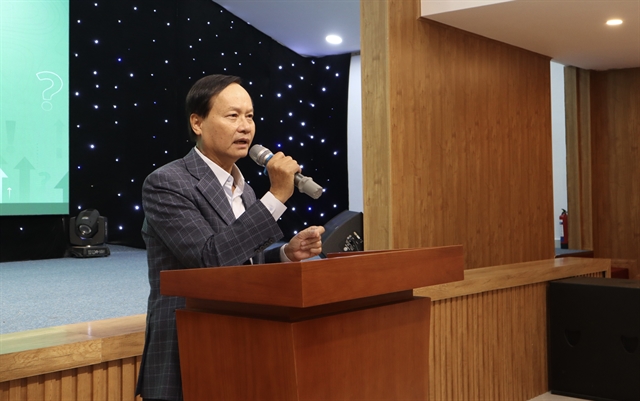
| Đinh Minh Tuấn, southern regional director of Batdongsan.com.vn, speaks at the Vietnam Real Estate Summit (VRES 2025) in HCM City on December 11. — Photo courtesy of the organiser |
HCM CITY — The property market is entering a recovery phase but remains uneven across geographies and segments, the Vietnam Real Estate Summit held in HCM City on December 11 heard.
Đinh Minh Tuấn, southern regional director of property technology platform Batdongsan.com.vn, the organiser, said interest in property has rebounded nationwide, with prices appreciating in areas supported by real housing demand or new infrastructure.
But a Batdongsan.com.vn survey of brokers in the fourth quarter shows a pronounced market divergence: 48 per cent reported fewer transactions, 14 per cent recorded an increase and 35 per cent said trading was stable.
Apartments continue to lead the market, with 37 per cent of brokers noting more transactions, reflecting persistent end-user demand.
Private houses also performed steadily, with 26 per cent reporting higher transaction volumes and over half assessing the market as stable.
In contrast, land plots and villas have cooled, with about 40 per cent seeing weaker activity.
Townhouse transactions have also slowed, with 29 per cent of brokers noting fewer deals and half describing the segment as flat.
Most respondents expect apartments and private houses to remain the two strongest segments over the next six months.
Tuấn highlighted different recovery drivers in the country’s two largest markets. In Hà Nội, the rebound is supported by strong end-user demand in the inner city and spill-over effects from new ring roads, boosting demand for apartments and private houses.
In HCM City, recovery is being driven by major inter-regional transport projects and the expansion of satellite cities, supporting a gradual shift of residents away from the urban core, he said.
“Infrastructure development remains the key driver of HCM City’s property market.”
He noted the rapid progress in metro line work, the Bến Lức–Long Thành expressway and new bridges connecting to Đồng Nai, saying these are stimulating demand in satellite hubs such as Thuận An, Dĩ An and Vũng Tàu and across eastern districts and the former Bình Dương border areas.
Apartments continue to dominate as supply expands.
Before 2015, apartment projects were largely concentrated within Ring Road 2. As Ring Road 3 and 4 take shape, the urban boundary has extended sharply, enabling developers to move outward.
The number of projects has now reached more than tripled within a decade, with most new developments concentrated in the northeast of the city.
Demand for apartments also rose sharply in the former Bình Dương Province, with buying interest jumping this year by 129 per cent in Thuận An, 103 per cent in Dĩ An and 65 per cent in Thủ Dầu Một, he said.
“The city centre is no longer the sole focal point. The ring roads have created new development poles in Thủ Đức, Dĩ An, Thuận An, Thủ Dầu Một, and Nhà Bè.”
In the private-house segment, transactions remain steady although buying interest has yet to rise markedly.
Townhouses have seen a mild recovery, though interest fell 5 per cent from the previous quarter.
Batdongsan.com.vn also presented the Vietnam Real Estate Agent Awards to brokers at the event. — VNS
Economy
 Economy
 Economy
 Economy
 Economy
 Economy
 Economy
 Economy
 Economy
 Economy
 Economy
 Economy
 Economy
 Economy
 Economy