 Politics & Law
Việt Nam, Denmark elevate ties to Comprehensive Strategic Partnership
1.
|
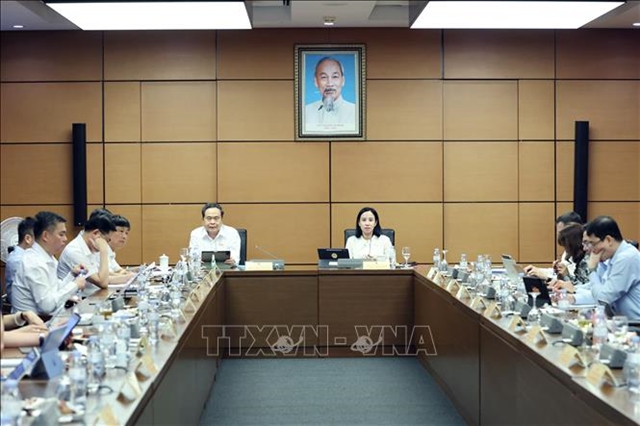
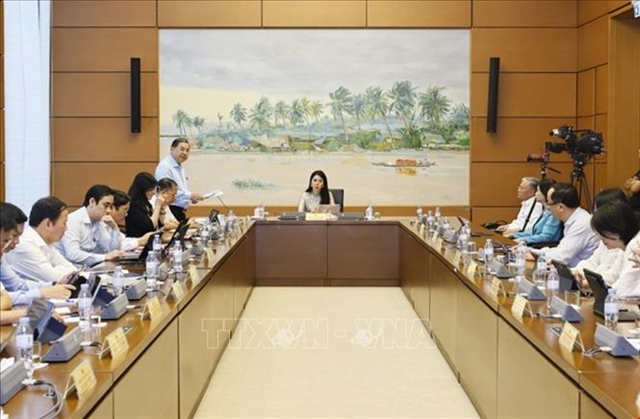
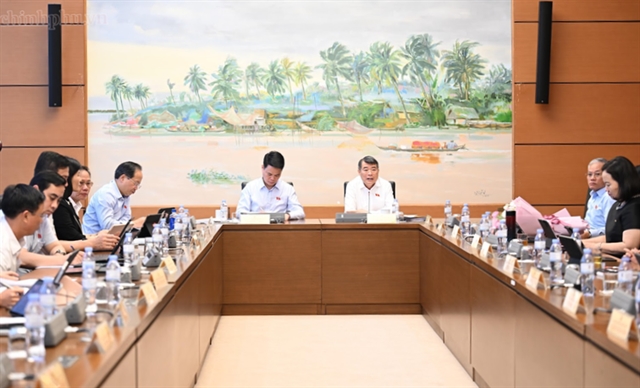
| NA President Trần Thanh Mẫn speaks at the NA group discussion on Tuesday. — VNA/VNS Photo |
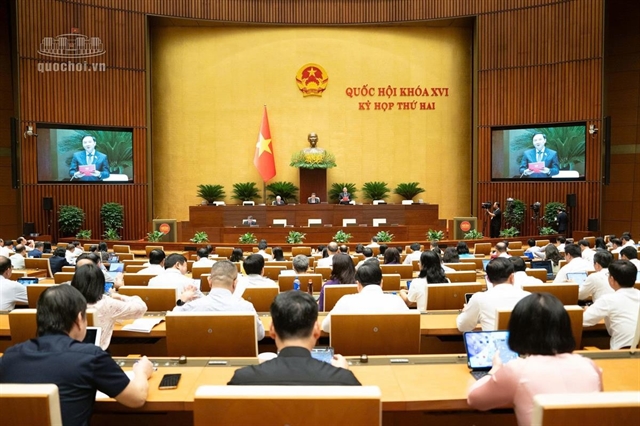
HÀ NỘI — Lawmakers held group discussions on Tuesday on the draft law amending a number of articles of the Electricity Law to ensure transparent electricity pricing, accelerate investment procedures and balance the interests of the State, businesses and consumers.
Joining a group discussion during the second session of the 16th National Assembly, NA President Trần Thanh Mẫn said the Electricity Law No. 61, which took effect on February 1, 2025, has revealed practical obstacles. He noted that the Government proposed amending and supplementing several provisions to address bottlenecks related to investment procedures, improve electricity pricing mechanisms, direct power purchase agreements (DPPAs) and offshore wind power development.
He highlighted five areas for further refinement in the draft law: limiting amendments to urgent bottlenecks while maintaining policy stability; clarifying electricity pricing principles and risk allocation to prevent shifting risks to households and businesses; fully assessing the impacts of time-of-use pricing and removing cross-subsidies, particularly on electricity bills and business costs; clearly defining key provisions in the law, including DPPA mechanism, renewable energy certificates (RECs) and criteria for special mechanisms for urgent power projects, rather than granting overly broad powers to subordinate legislation; and tightening cost controls, transparency and accountability to prevent arbitrary “ask-and-give” practices.
Speaking at another group discussion, Prime Minister Lê Minh Hưng said several key laws on planning, investment, land and bidding have been revised, with many provisions directly affecting the electricity sector. He said further amendments to the Electricity Law are needed to ensure legal consistency and address practical problems.
He noted that Việt Nam’s goal of double-digit economic growth, driven by science and technology, innovation and digital transformation, will sharply increase electricity demand, particularly with the expansion of high-tech industries, foreign investment and data centres. The revised law must provide a legal framework for mobilising investment and developing power generation and transmission infrastructure in a coordinated manner to meet long-term development needs.
The PM stressed the need to streamline administrative procedures and shorten project preparation and implementation times. He said power generation must be developed alongside transmission grids to ensure generating capacity is fully utilised. Power supply and grid investment should be planned together in major economic zones, industrial centres and areas with high electricity demand to ensure stable supplies for production and business.
The amendments must both mobilise resources to meet rising electricity demand and protect national interests and people’s rights while ensuring a transparent investment environment, he said, noting that the Government will task the Ministry of Industry and Trade with fully considering lawmakers’ and appraisal agencies’ feedback and reviewing draft implementing decrees and circulars to ensure consistency, feasibility and effective implementation once the law takes effect.
Deputy Đào Chí Nghĩa from Cần Thơ City said electricity price stability is a major public concern now. He called for clearer provisions on transmission grid investment, investor selection and electricity pricing to balance the interests of the State, businesses and consumers.
Meanwhile, Deputy Hoàng Văn Tuyên from Hải Phòng city supported a transparent electricity pricing mechanism that accurately reflects costs, calling for careful assessment of the impact of gradually eliminating cross-subsidies among customer groups and regions, particularly on residents in disadvantaged areas.
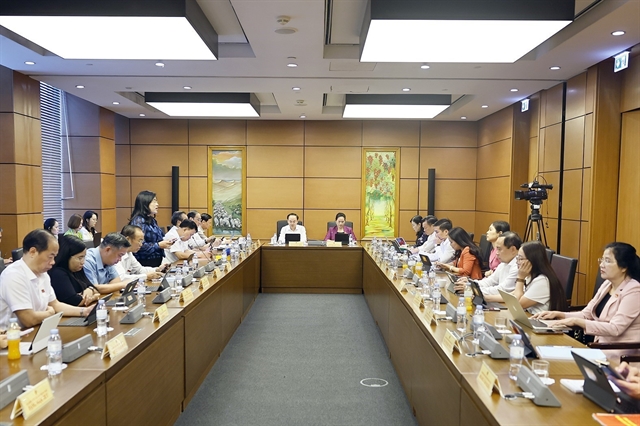
The same day afternoon, NA deputies discussed in group sessions the draft law on amending and supplementing a number of articles of laws on trade, competition, foreign trade management, consumer protection, physical training and sports, tourism, libraries, cinema, cultural heritage, advertising and the press. — VNA/VNS
Politics & Law
 Politics & Law
 Politics & Law
 Politics & Law
 Politics & Law
 Politics & Law
 Politics & Law
 Politics & Law
 Politics & Law
 Politics & Law
 Politics & Law
 Politics & Law
 Politics & Law
 Politics & Law
 Politics & Law