 Economy


Hội An to begin Japanese language education at two schools
1.
HÀ NỘI — The proposed amendments to the Law on Securities have sparked debate over how to regulate controlled testing of new financial products and technologies, with National Assembly deputies calling for more precise rules on investor safeguards, liability exemptions and the authority to approve experimental models.
The proposals were raised during a National Assembly discussion on October 28.
|
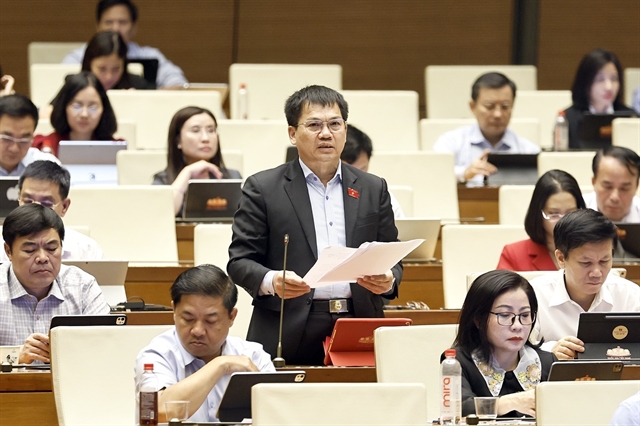
| Dương Khắc Mai, a deputy from Lâm Đồng Province, speaks at the National Assembly discussion on Wednesday. — VNA/VNS Photo |
Dương Khắc Mai, a National Assembly deputy from Lâm Đồng Province, supported creating space to test new technologies, products, services and business models in the securities sector. However, he said the law should establish minimum investor protection principles rather than leave key safeguards to sub-laws.
Participation in a sandbox should be voluntary, with participants receiving full information and clear warnings about the scope and level of risk. Customer assets should be accounted for separately, while personal and transaction data must be protected.
Mai also called for mechanisms to receive and resolve complaints and procedures for transferring assets, data and contracts, as well as settling outstanding customer claims, if testing is suspended or ends.
He stressed that investors accepting ordinary market risks after receiving adequate information should not allow participating organisations to avoid responsibility for their own errors, violations or system failures.
"Self-assumption of risk must not exclude compensation liability arising from fault, violations, fraud or incidents attributable to the organisation," he argued.
Mai proposed that sandbox certificates specify the scope, eligible participants, duration, limits and suspension criteria of each test. Liability exemptions should not apply to fraud, deliberate violations or the disregard of known risks.
Tô Ái Vang, a deputy from Cần Thơ City, said unclear legal boundaries between unavoidable technological risks and administrative violations could discourage regulators from approving innovative financial models. This could lead capital and technological expertise to move to other countries.
She cited the Mekong Delta's need for substantial investment to adapt to climate change, arguing that new fintech-based financing models could help mobilise funds for farmers and businesses if they could be tested under a clear legal framework.
Vang proposed that organisations and individuals participating in or managing a sandbox should be exempt from civil and administrative liability for losses caused by objective technological factors, provided they had fully complied with risk-control procedures approved by the competent authorities.
She also called for mechanisms to promote technology risk insurance as a means of protecting investors.

|
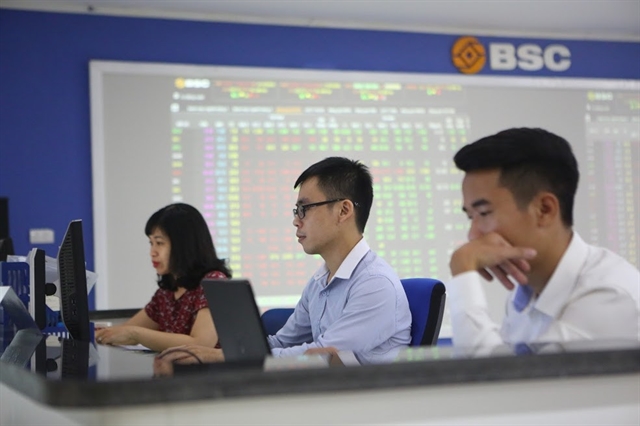
| An investor conducts a transaction at a securities firm's trading office. |
Nguyễn Phương Thủy, a deputy from Hà Nội, called for consistency between the amended Securities Law, the Law on Science, Technology and Innovation, and legislation governing the digital technology industry.
She highlighted differences between the existing law's maximum sandbox period of three years, with one extension of no more than three years, and a draft Government decree proposing a five-year period with multiple extensions.
Longer testing periods could increase investors' and the market's exposure to risk, while periods that are too short might not provide sufficient evidence to assess complex technologies, she said.
Thủy urged lawmakers to clarify the authority, procedures and limits for approving exemptions and to distinguish force majeure events from deliberate violations.
Dedicated support for innovative start-ups
Trần Hoàng Ngân, a deputy from HCM City, proposed a separate testing mechanism and a dedicated listing board or category for innovative start-ups. Such businesses often face greater risks and may not yet have standardised financial statements and audits, he said, requiring a more flexible framework to attract venture capital.
Responding to lawmakers, Finance Minister Ngô Văn Tuấn said the drafting body would take their comments on controlled testing into account and consider recognising mechanisms already provided under science and technology legislation.
He said the amended Securities Law would focus on specific conditions and market requirements for the securities sector, aiming to support market development while ensuring that new services, products and business models were implemented with maximum safety and minimum legal risk. Matters outside the sector's specific scope would remain subject to existing regulations. — BIZHUB/VNS
Economy
 Economy
 Economy
 Economy
 Economy
 Economy
 Economy
 Economy
 Economy
 Economy
 Economy
 Economy