 Economy

Việt Nam, Cambodia seek to bolster all-round ties: PMs
1.
|
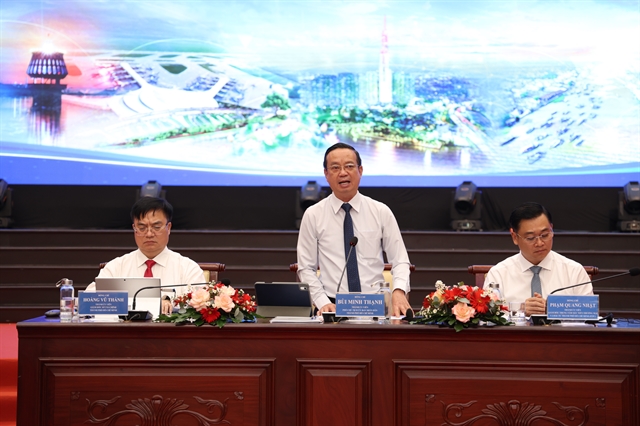
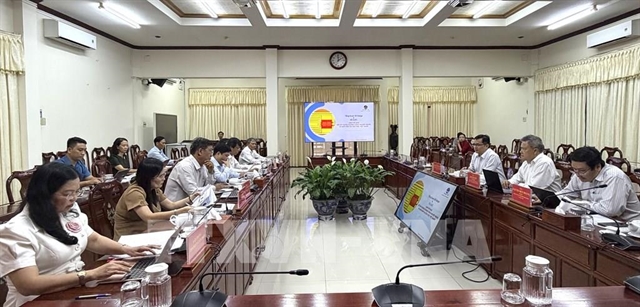
| Vice Chairman of the HCM City People’s Committee Bùi Minh Thạnh (C) speaks at the conference. — Photo courtesy of ITPC |
HCM CITY — Regional connectivity is no longer an option but an essential requirement for development. By linking infrastructure, markets, capital, technology, talent and supply chains, HCM City, and the southeastern and the Mekong Delta regions can leverage their complementary strengths to create a larger, more competitive and dynamic economic space.
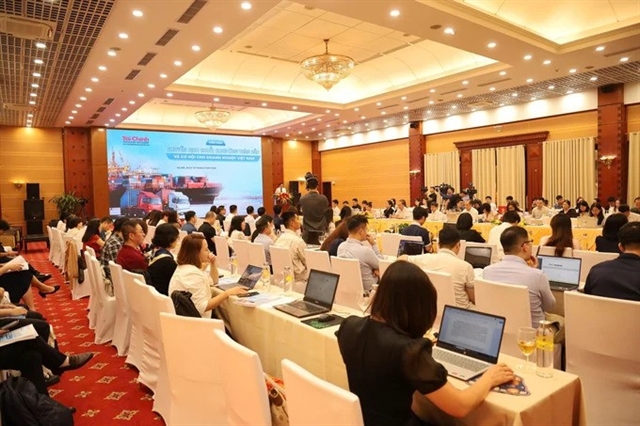
This sentiment was shared at a conference on investment connectivity and development cooperation between HCM City and localities in the southeastern and Mekong Delta regions on September 17.
Speaking at the event, Vice Chairman of the HCM City People’s Committee Bùi Minh Thạnh said the southeastern region has strengths in industry, urban development, logistics and services, while the Mekong Delta is strong in agriculture, fisheries, energy and the ecological economy. HCM City has advantages in markets, finance, science and technology, innovation, human resources and international connectivity.
“By connecting planning with infrastructure, urban areas with logistics, capital with projects, technology with production, and products with markets, we can create a much more competitive development space than if each locality develops separately,” he said.
HCM City therefore aims to work with other localities to shift from promoting investment in individual localities to building a regional investment ecosystem.
The city should not only attract investment for itself but also serve as a hub for connecting and allocating resources across a broader development space. Investors should be able to access opportunities not only in HCM City but across the two regions.
Phạm Quang Nhật, Director of the Investment and Trade Promotion Centre of HCM City, said Resolution No 27-NQ/TW dated August 28, 2026, identifies regional development as a way of organising national growth, with development space structured around functions, strengths and connectivity rather than administrative boundaries.
He said investors increasingly assess entire value chains, from research and development and production to raw materials, energy, logistics, markets and human resources, as well as the time required for administrative procedures and the agencies responsible for them.
In the initial stage, HCM City and localities could focus on three value chains: high-tech industry linked to seaports, airports and logistics; agriculture and fisheries linked to deep processing, cold chains, branding and exports; and clean energy, the circular economy and climate change adaptation, he said.
Investment promotion should shift from providing project lists to developing viable opportunities with detailed information on planning, land, infrastructure, utilities, logistics, procedures and implementation timelines. Inter-regional projects could be tracked through a digital investment promotion platform, allowing investors to see opportunities across value chains, he added.
Businesses seek greater certainty
Đinh Hồng Kỳ, Vice Chairman of the HCM City Union of Business Associations, said investment decisions increasingly depend on the quality of the investment environment, value-chain connectivity and the implementation capacity of authorised agencies rather than individual incentives.
Businesses are looking beyond land and labour costs and tax incentives to logistics, energy, human resources, supply chains, digital transformation, environmental requirements and market access.
|
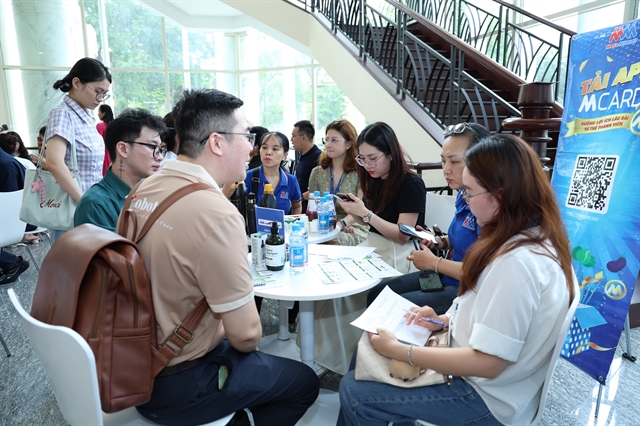
| Businesses from HCM City and the southeastern region and the Mekong Delta exchange information on the sidelines of the conference. — VNS Photo |
The biggest concern is uncertainty, Kỳ said. Investors may accept higher costs if they know how long procedures will take, when infrastructure will be completed, which agency is responsible and whether commitments will be implemented consistently.
He called for transparent, stable and predictable investment conditions, together with a single focal agency to coordinate large projects and oversee the resolution of obstacles.
Kỳ also proposed replacing investment “calling lists” with viable opportunities containing specific information on locations, planning, land, infrastructure, utilities, logistics, procedures and implementation timelines. The region could also establish a shared investment information “window” through which investors could access projects and related value-chain opportunities.
Đặng Hồng Anh, Chairman of the Vietnam Young Entrepreneurs’ Association and Vice Chairman of Thành Thành Công Group, said the private sector should participate more actively in emerging fields such as digital infrastructure, data centres, semiconductors, green energy and high-tech agriculture.
Localities should prepare clean land, ensure stable power supplies for technology projects and consider suitable policies on tax, land rents and regulatory sandboxes, he said. Administrative reform, genuine one-stop mechanisms, funds for technology and green transformation, and long-term credit were also needed.
“Time is one of the biggest costs for businesses. If procedures take two or three years, investment opportunities and competitiveness in the global market can be lost,” Anh said.
Large corporations should also be encouraged to act as anchors, bringing small and medium-sized enterprises deeper into supply chains.
Etsuko Eto, Senior Director of Corporate Planning at AEON Vietnam, said: “Early information sharing, regular dialogue and effective coordination between government and business are especially valuable. They allow investors to assess opportunities more accurately, identify issues earlier and implement projects more efficiently. In our experience, this kind of practical engagement can make a meaningful difference to investment execution.”
Each locality has distinct strengths, so investment models should be tailored to local conditions while strengthening regional connectivity, she said, adding that AEON plans to accelerate investment in HCM City and the Mekong Delta.
Thạnh urged government agencies, localities and businesses to focus on identifying inter-regional programmes and projects with strong growth potential for 2026–30; building practical links among localities, businesses, investors, financial institutions, universities and technology centres based on market demand and project effectiveness; and shifting from “connections at conferences” to “connections after conferences”, with clear focal points, timelines and results.
“The city will proactively connect markets, businesses, financial institutions, science and technology, innovation, high-quality human resources and international partners, while working closely with other localities to turn their respective potential and advantages into concrete projects, value chains and development outcomes,” he said. — VNS
Economy
 Economy
 Economy
 Economy
 Economy
 Economy
 Economy
 Economy
 Economy
 Economy
 Economy
 Economy
 Economy
 Economy
 Economy