 |
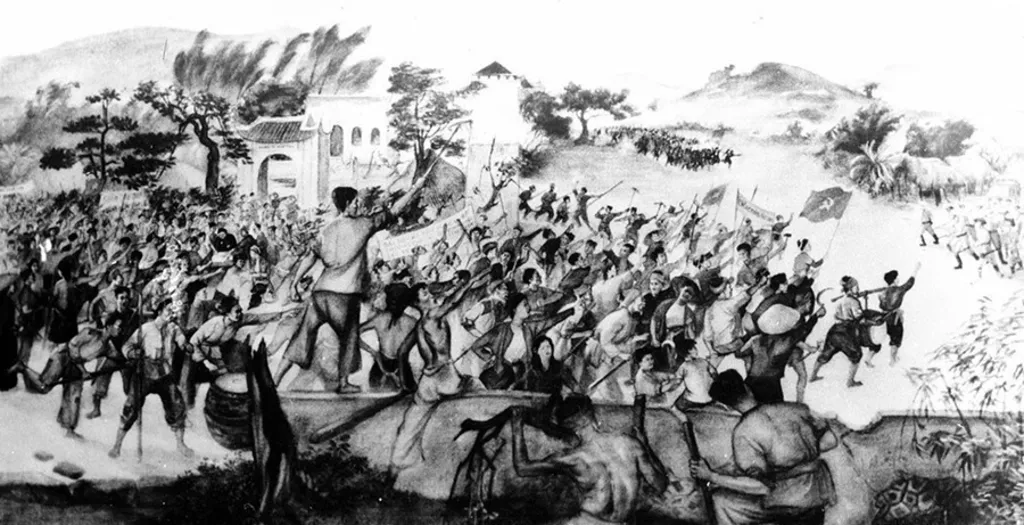
| The revolutionary movement of 1930–31, which culminated in the Nghệ Tĩnh Soviet movement, was the first general rehearsal for the Vietnamese revolution under the leadership of the Party of the working class and became a glorious milestone in the country’s revolutionary history. VNA/VNS Photo |
The victory demonstrated the Party’s political resolve and strategic vision, as well as its ability to adapt to rapidly changing circumstances and seize the right moment to launch the nationwide uprising in 1945. It remains one of the greatest achievements of the Party, armed forces and people, and an enduring epic in Việt Nam’s struggle for national liberation.
Leadership of the Party
After years of searching for a path to national salvation, Nguyễn Ái Quốc embraced Marxism-Leninism, which became the ideological foundation for the Vietnamese revolution.
In 1924, he left the Soviet Union for Guangzhou, China, where he founded the Việt Nam Revolutionary Youth League. The organisation brought together patriotic young people and intellectuals and provided political training to nurture a new generation of communist revolutionaries.
On February 3, 1930, Nguyễn Ái Quốc chaired a conference to unify the country’s communist organisations and establish the Communist Party of Việt Nam.
The Party’s establishment marked a major milestone in the Vietnamese revolution, creating a political nucleus capable of bringing together the nation’s strength and aligning its struggle with the broader revolutionary movement of the time. It laid the decisive foundation for subsequent victories, beginning with the success of the nationwide General Uprising in August 1945.
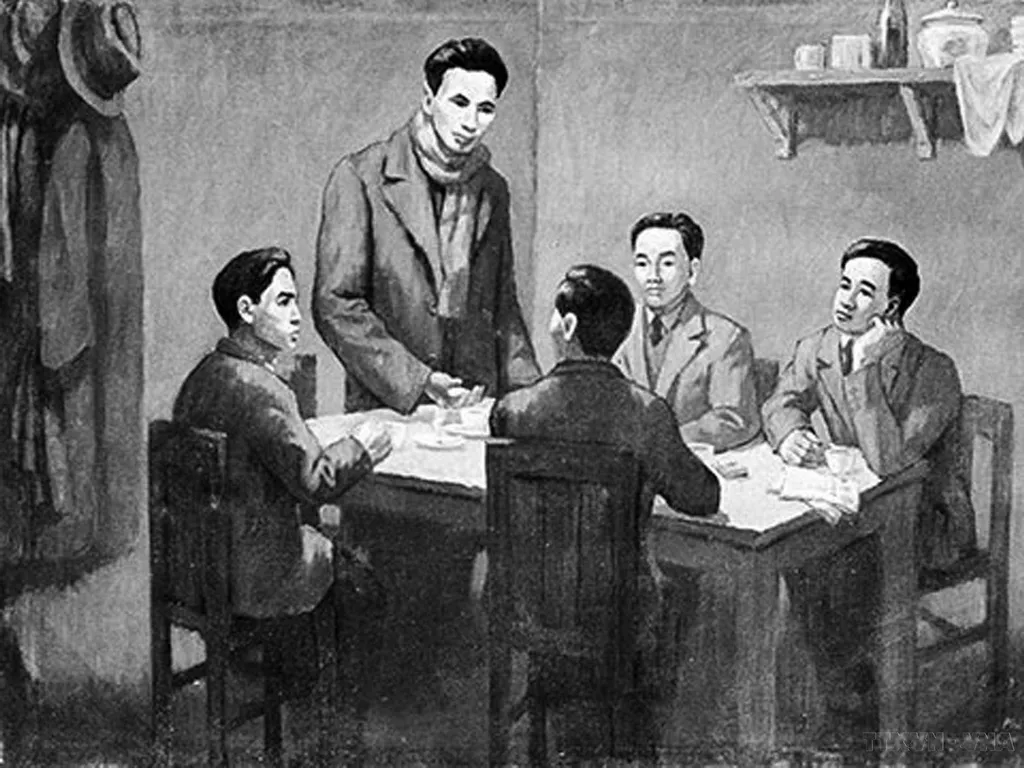 |
| Nguyễn Ái Quốc, representing the Communist International, chairs a conference in Hong Kong, China, from January 6 to February 7, 1930, to unify communist organisations and establish the Communist Party of Việt Nam. VNA/VNS Handout Photo |
On March 9, 1945, the Japanese military overthrew the French colonial administration and assumed sole control of Indochina. Three days later, the Party Central Committee issued the historic directive Japan and France Fight Each Other and Our Action, identifying Japanese fascism as the immediate enemy of the revolution.
The Party subsequently launched a vigorous anti-Japanese movement, creating favourable conditions for a general uprising to seize power.
Nguyễn Ái Quốc returned to Việt Nam in January 1941 after more than 30 years abroad.
In May that year, he convened the eighth plenum of the Party Central Committee, which adjusted the revolutionary strategy to suit the new circumstances and placed national liberation above all other tasks.
The meeting advocated strengthening national unity and bringing together all social classes, political organisations, ethnic groups and patriotic individuals to fight French colonialism, Japanese fascism and their collaborators.
It also decided to establish the League for the Independence of Việt Nam, commonly known as the Việt Minh Front. By uniting different social groups and political forces, the Việt Minh helped build a broad national unity bloc and mobilise the population for the struggle for independence.
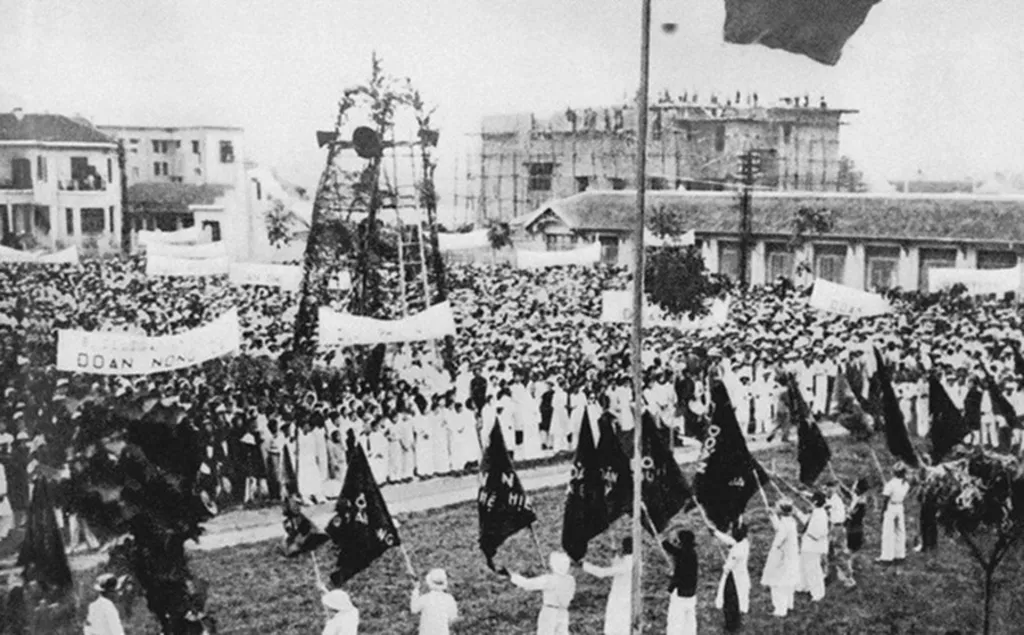 |
| The democratic movement of 1936–39 opposed colonial reactionaries, their supporters, fascism and war, while demanding freedom, food, clothing and peace. It helped generate a revolutionary upsurge and is regarded as a rehearsal for the victory of the August Revolution in 1945. The photo shows a rally marking International Workers’ Day at the Hà Nội Exhibition Grounds, now the Việt Nam-Soviet Friendship Labour Cultural Palace, in May 1938. |
By mid-April 1945, Hồ Chí Minh and the Party Central Committee convened the Northern Military Conference, which decided to merge the Việt Nam Propaganda Unit of the Liberation Army and the National Salvation Army into the Việt Nam Liberation Army. Both the political and armed revolutionary forces continued to expand.
Between 1940 and 1945, the Party also directed the establishment and consolidation of revolutionary bases. The largest was the Việt Bắc base, which covered much of six mountainous provinces in the north. Other armed resistance bases were established across the country.
These areas provided strategic locations for building revolutionary forces and served as command centres for preparations for the uprising.
By the pre-uprising period, preparations had been made in political organisation, armed forces, revolutionary bases and public mobilisation. Vietnamese people, particularly members of national salvation organisations, were ready to fight and make sacrifices for independence.
Seizing the historic opportunity
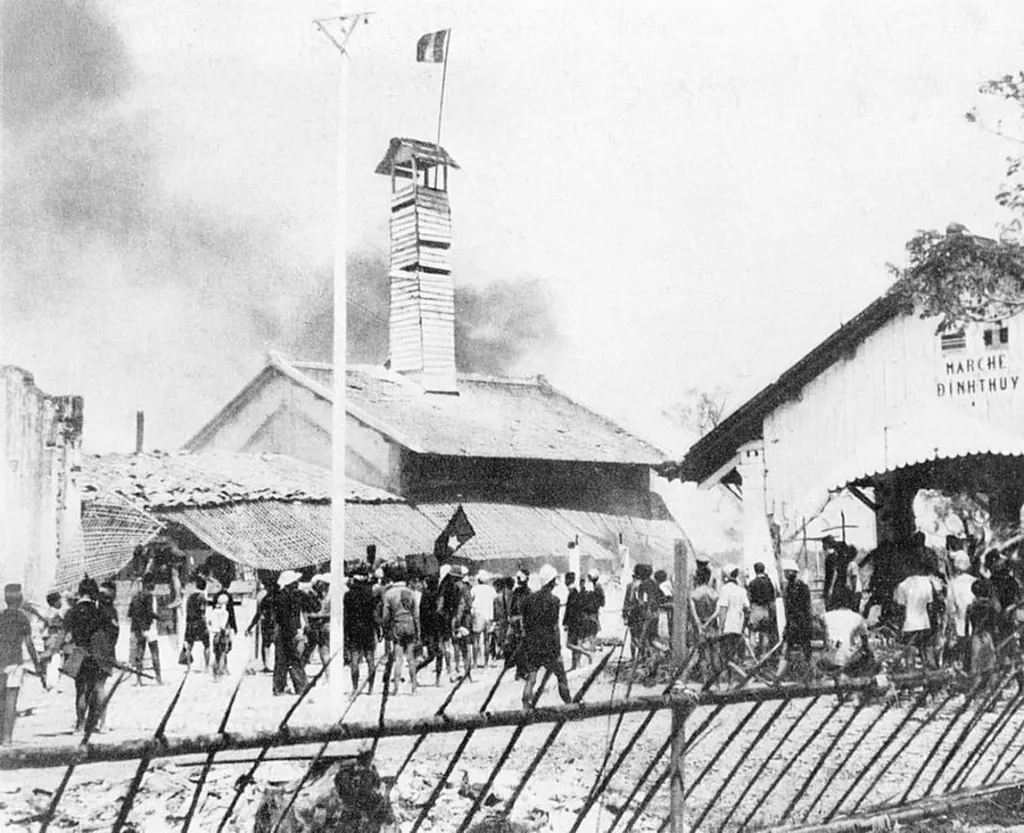 |
| The Southern Uprising breaks out in several southern provinces on November 23, 1940. Together with the Bắc Sơn Uprising, it was described as “gunfire signalling the nationwide uprising” and served as the second general rehearsal for the August Revolution of 1945. |
Meanwhile, the revolutionary movement had reached its peak. Local uprisings had already succeeded in many areas, while political and armed forces across the country were prepared to act.
On August 16, the National People’s Congress convened in Tân Trào and approved a resolution to seize power nationwide, along with the Việt Minh’s ten major policies. It also established the National Liberation Committee, which served as the provisional revolutionary government of Việt Nam, with Hồ Chí Minh as its president.
Hồ Chí Minh then issued an appeal urging the entire nation to rise up, declaring that the decisive hour for the country’s destiny had arrived and that the Vietnamese people must use their own strength to liberate themselves.
Responding to the appeal and acting under the Party’s leadership, people across the country rose up as one. Thanks to years of preparation and the timely decision to act, the August Revolution achieved victory within a remarkably short period.
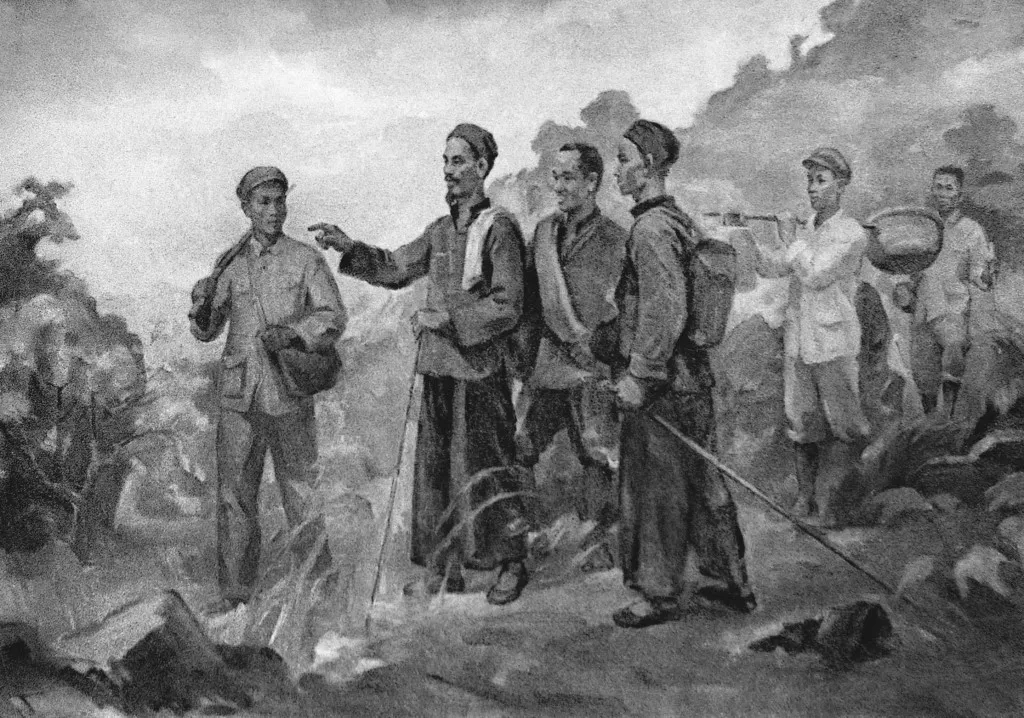 |
| Leader Nguyễn Ái Quốc and his comrades Lê Quảng Ba, Phùng Chí Kiên, Thế An, Đặng Văn Cáp and Hoàng Văn Lộc cross Border Marker 108 on the Việt Nam-China border and arrive in Pác Bó, Trường Hà Commune, Hà Quảng District, Cao Bằng Province, on January 28, 1941. The location offered secrecy, protection from local people and an escape route. |
The victory of the August Revolution represented the combined strength of national unity, patriotism and the indomitable will of the Vietnamese people under the Party’s leadership.
It also demonstrated the resolve and political acumen of the Party and President Hồ Chí Minh in identifying an appropriate revolutionary path, preparing the necessary forces and acting at the decisive moment.
The revolution ushered in a new era of national independence and socialism. It was a historic leap forward in the development of the Vietnamese nation.
The victory showed that a small country with a strong tradition of patriotism, self-reliance, solidarity and creativity could achieve a transformation of immense historical importance when led by a revolutionary party with a clear strategy and deep public support.
The revolution ended French colonial rule, Japanese occupation and the feudal regime. Việt Nam was transformed from a colony into an independent country governed as a democratic republic, while its people rose from colonial subjects to free citizens and masters of their own nation.
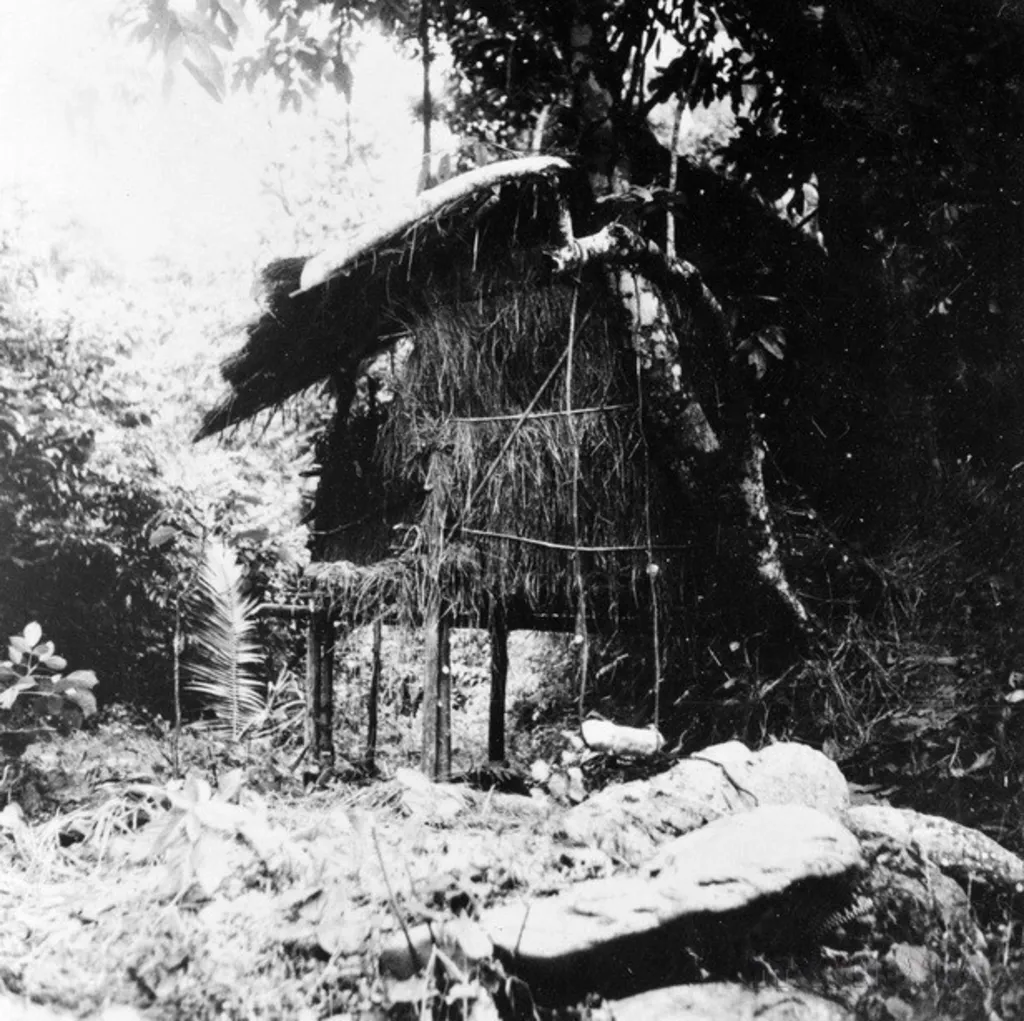 |
| Khuổi Nậm Hut in Pác Bó, Trường Hà Commune, Hà Quảng District, Cao Bằng Province, where the eighth plenum of the Indochinese Communist Party Central Committee was held in May 1941. The meeting placed national liberation above all other tasks and decided to establish the Việt Minh Front. |
One of those lessons is the need to adjust revolutionary policies to changing domestic and international circumstances while maintaining consistent strategic objectives.
Another is the importance of recognising and making full use of opportunities. Hồ Chí Minh’s ability to identify the brief historic opening in August 1945 and act decisively remains a valuable lesson for national development in the present and future.
The revolution also affirmed the importance of mobilising the entire population, promoting self-reliance, harnessing the people’s creativity and expanding international cooperation.
At the same time, its legacy highlights the need to strengthen national defence and people’s security, maintain political and social stability and preserve a peaceful environment for development.
Eighty-one years after the Vietnamese people took control of their own destiny, the revolutionary spirit and historic lessons of August 1945 remain a powerful source of strength. They continue to guide the Party, State and people as Việt Nam enters a new stage of development and writes new chapters in its national history. VNS
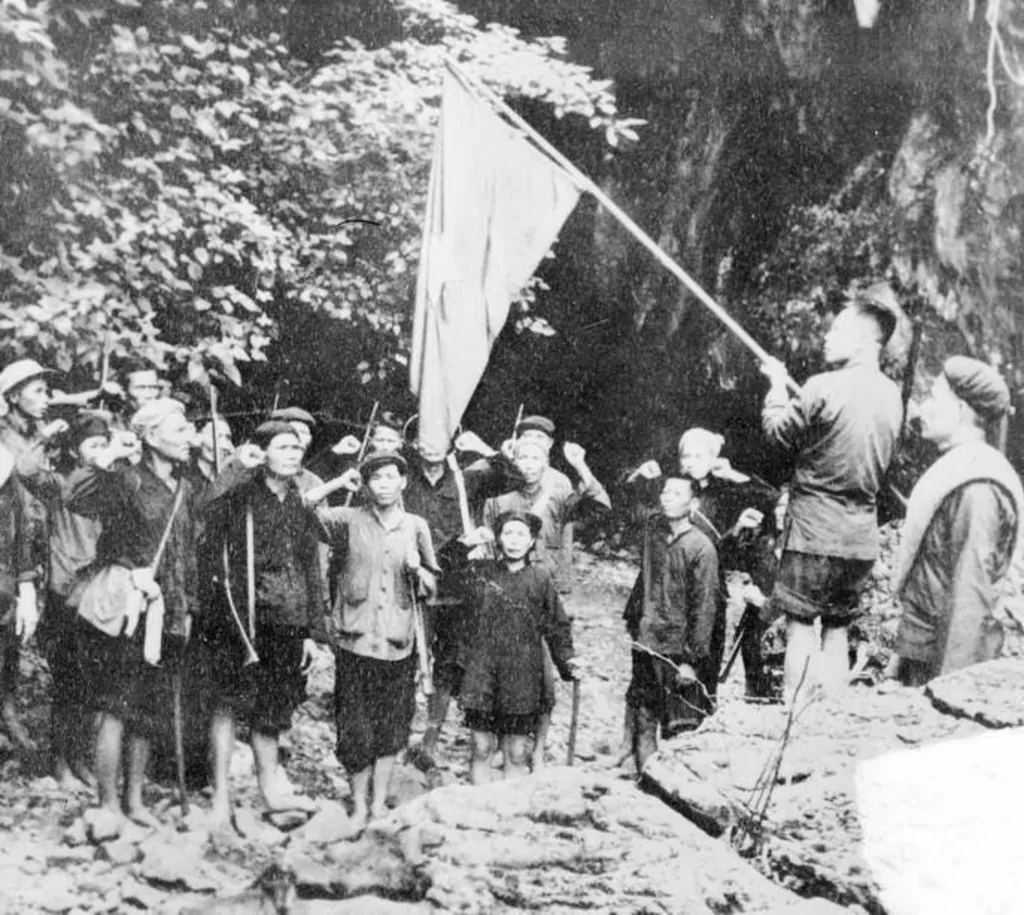 |
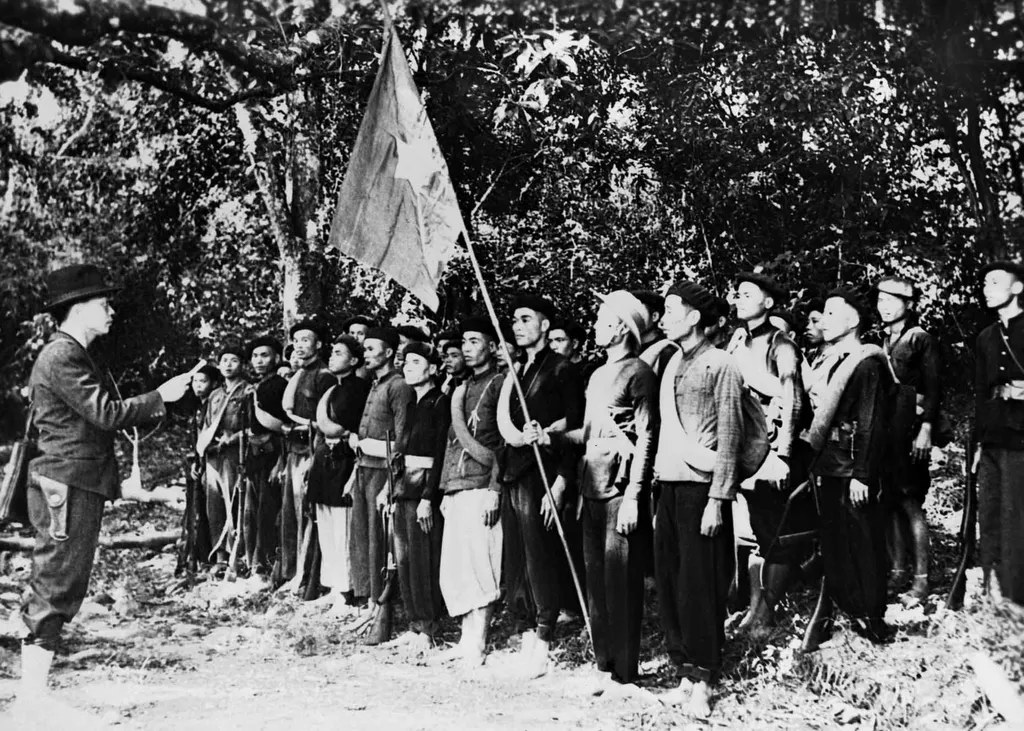
| Việt Nam’s first guerrilla unit under Party leadership is established in Bắc Sơn, Cao Lạng Province, in 1940. |
 |
| The Việt Nam Propaganda Unit of the Liberation Army, the forerunner of the Việt Nam People’s Army, is established in Cao Bằng Province on December 22, 1944, under the command of Võ Nguyên Giáp, creating a new situation in the revolutionary armed struggle. |
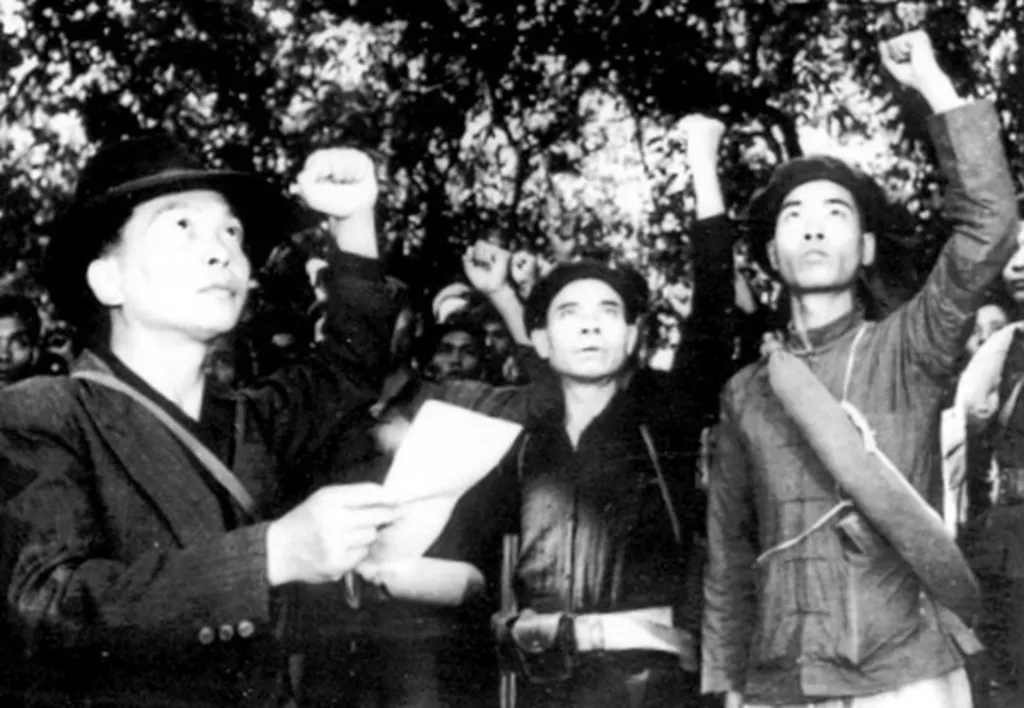 |
| Võ Nguyên Giáp reads the oath at the founding ceremony of the Việt Nam Propaganda Unit of the Liberation Army on December 22, 1944. |
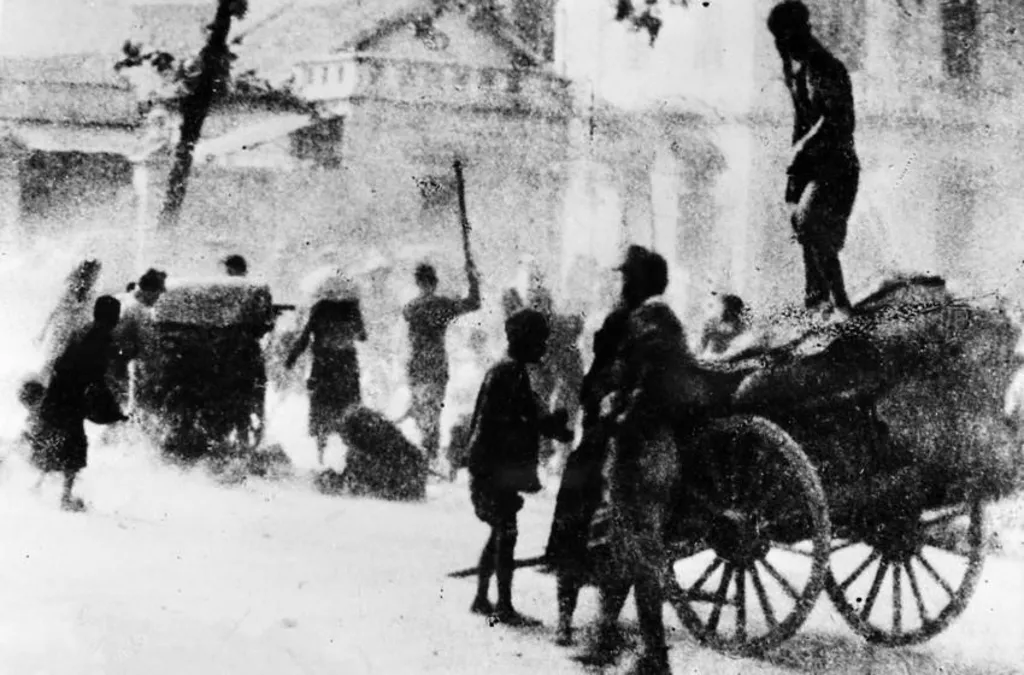 |
| After Japan overthrew the French colonial administration and took sole control of Indochina on March 9, 1945, the Party Central Committee’s Standing Board issued the directive Japan and France Fight Each Other and Our Action. A revolutionary upsurge subsequently spread to many areas, while the six-province Việt Bắc liberated zone was established. The photo shows people raiding Japanese rice warehouses to relieve the famine. |
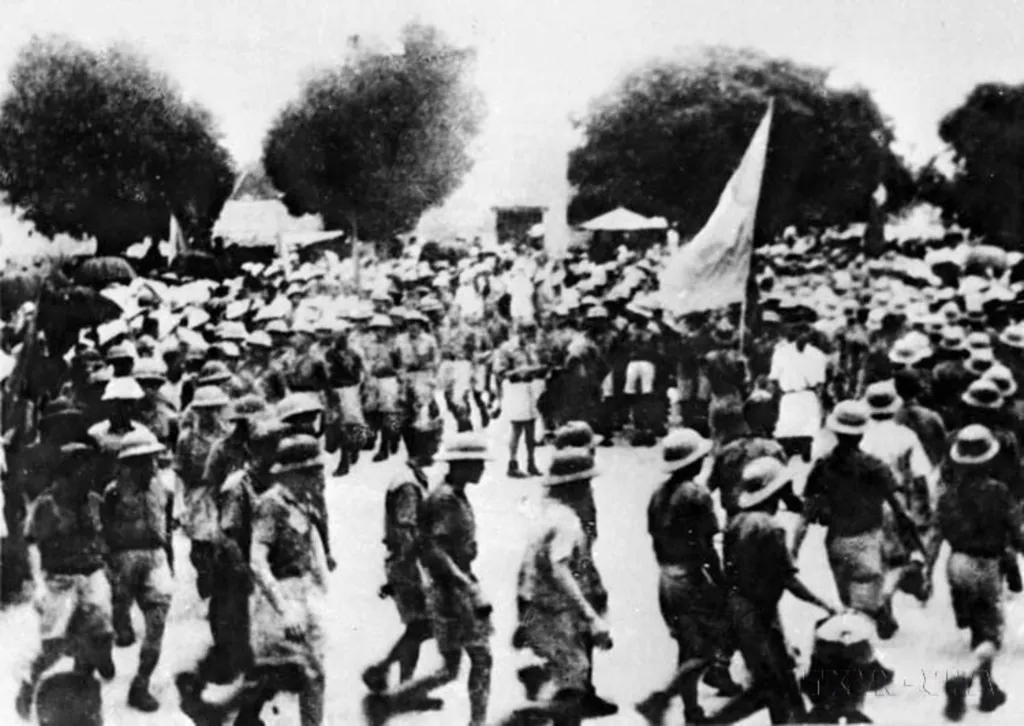 |
| On August 14, 1945, the Việt Minh General Headquarters issued an appeal declaring that Japan had surrendered to the Allies and the time for a general uprising had come. The photo shows the Ba Tơ guerrilla unit advancing towards Quảng Ngãi Town on the same day to join local people in an uprising to seize power. |
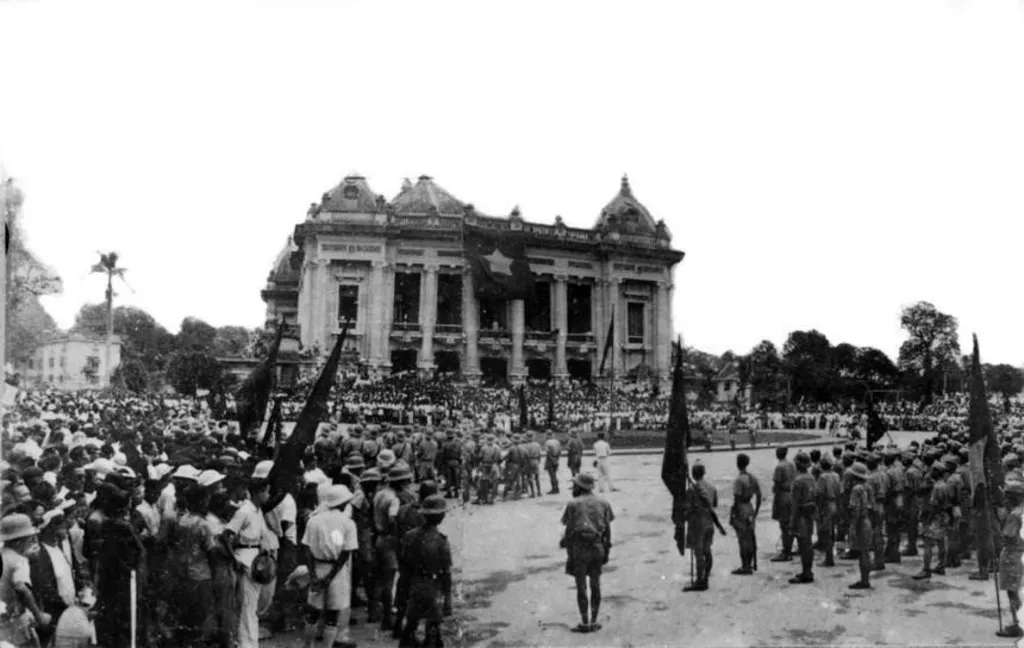 |
| The Việt Minh Front holds a rally attended by tens of thousands of people at the square in front of the Hà Nội Opera House. |
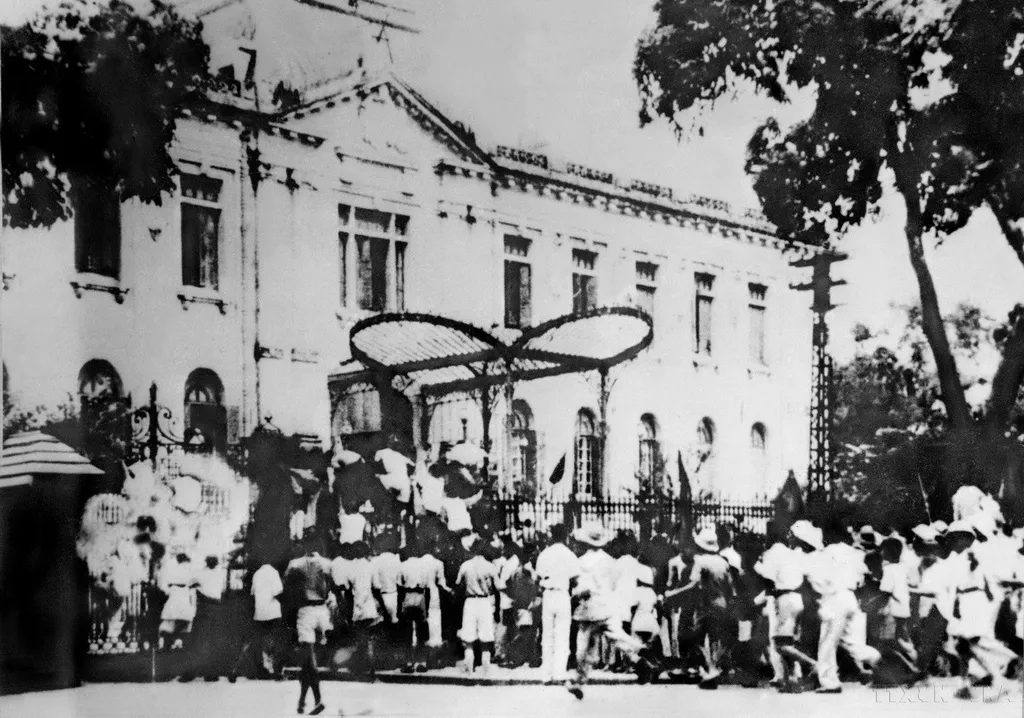 |
| Revolutionary crowds and self-defence forces seize the Tonkin Palace, also known as the Bắc Bộ Palace, on August 19, 1945, marking the success of the August Revolution in Hà Nội. |
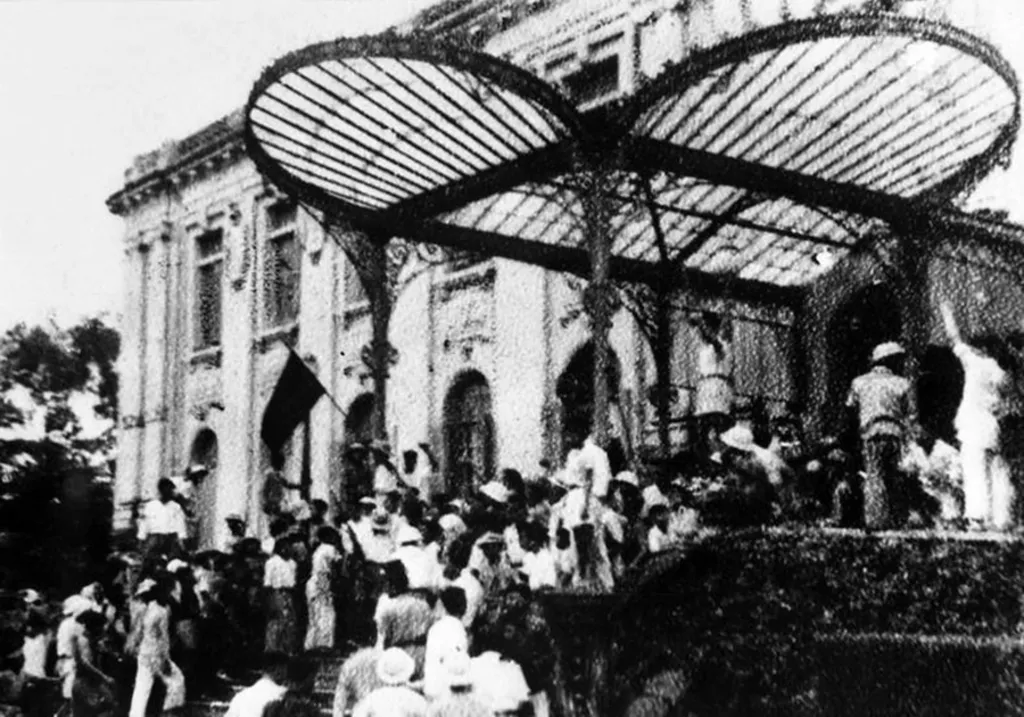 |
| Following a rally at the square in front of the Hà Nội Opera House, residents of the capital seize the Bắc Bộ Palace, the headquarters of the French-backed administration, marking the success of the August Revolution in Hà Nội. |
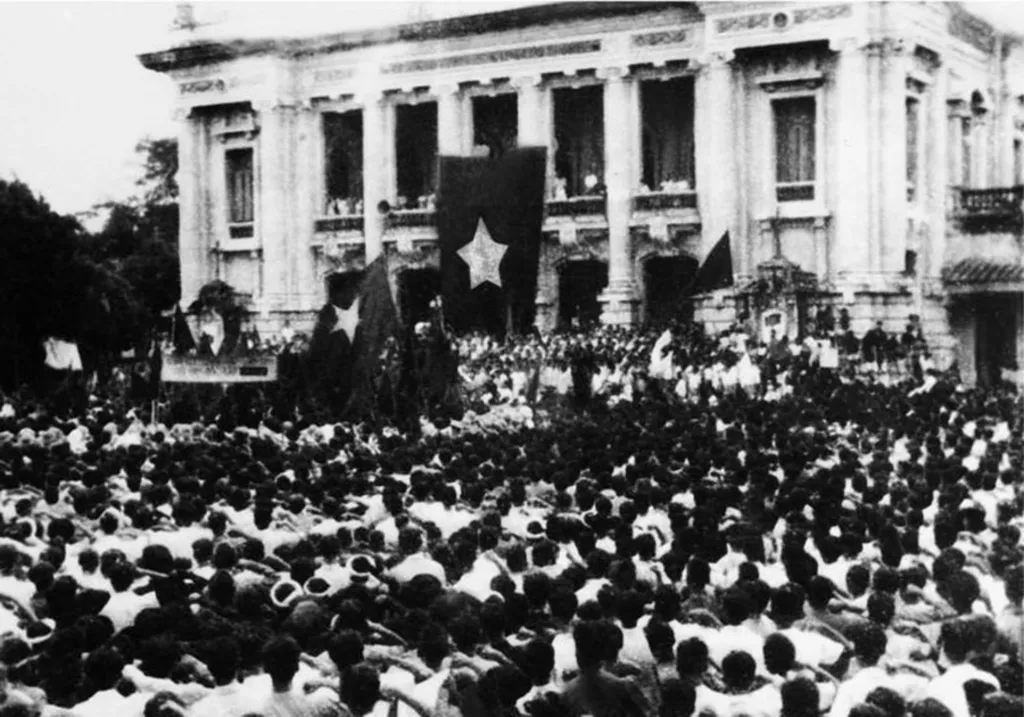 |
| Hundreds of thousands of people from Hà Nội and neighbouring provinces converge on the square in front of the Hà Nội Opera House on August 19, 1945, for an unprecedented revolutionary rally in support of the general uprising to seize power. |
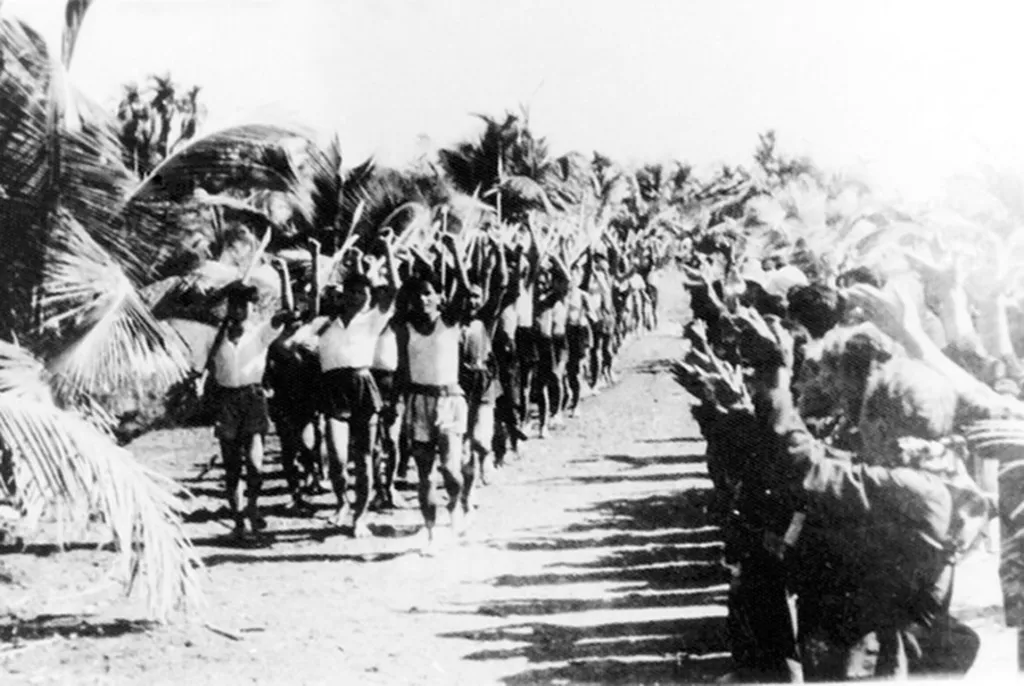 |
| The Vanguard Youth organisation is established in the South on June 1, 1945. Operating under the Party’s direction, the movement played an active role in mobilising young people and preparing forces for the August 1945 General Uprising. |
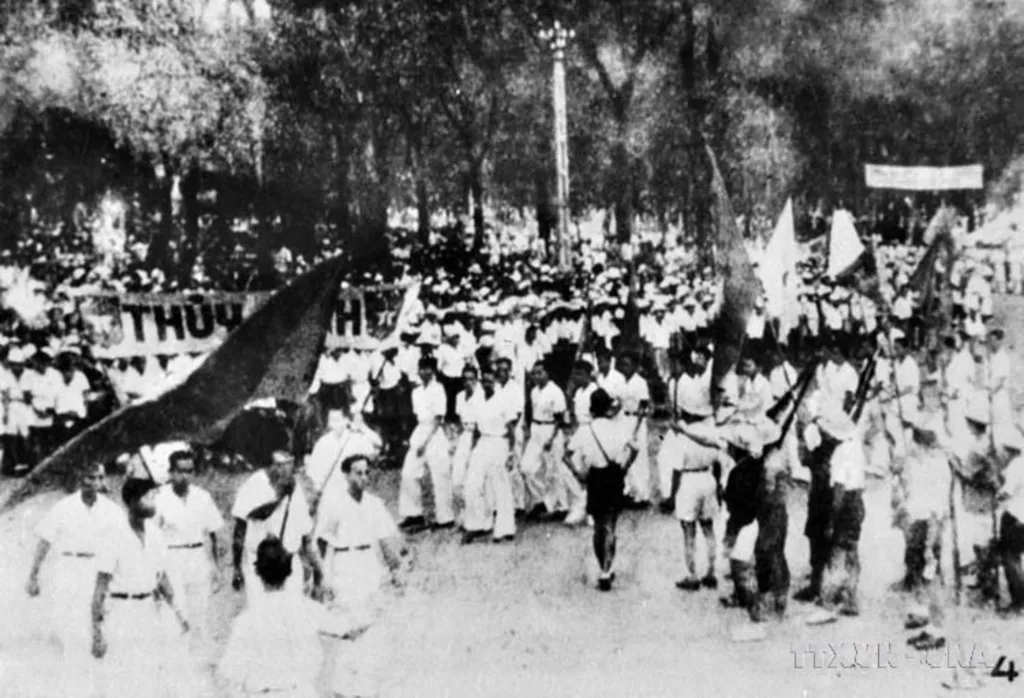 |
| Sài Gòn residents launch a general uprising to seize power on August 25, 1945, in response to the call from the Party Central Committee and President Hồ Chí Minh. |
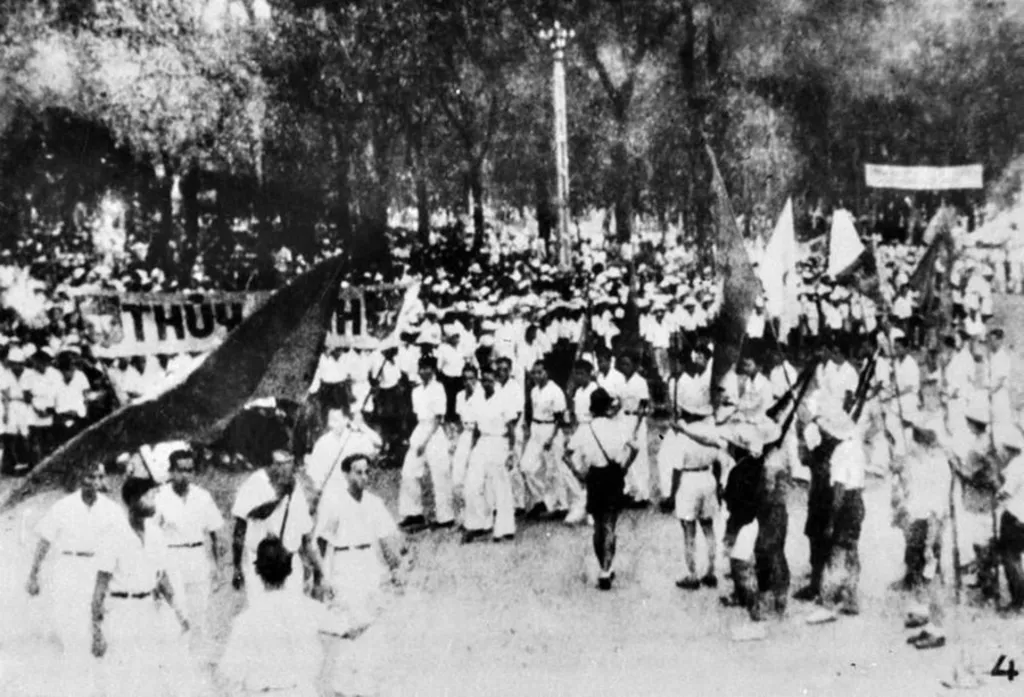 |
| Sài Gòn residents launch a general uprising to seize power on August 25, 1945, in response to the call from the Party Central Committee and President Hồ Chí Minh. |
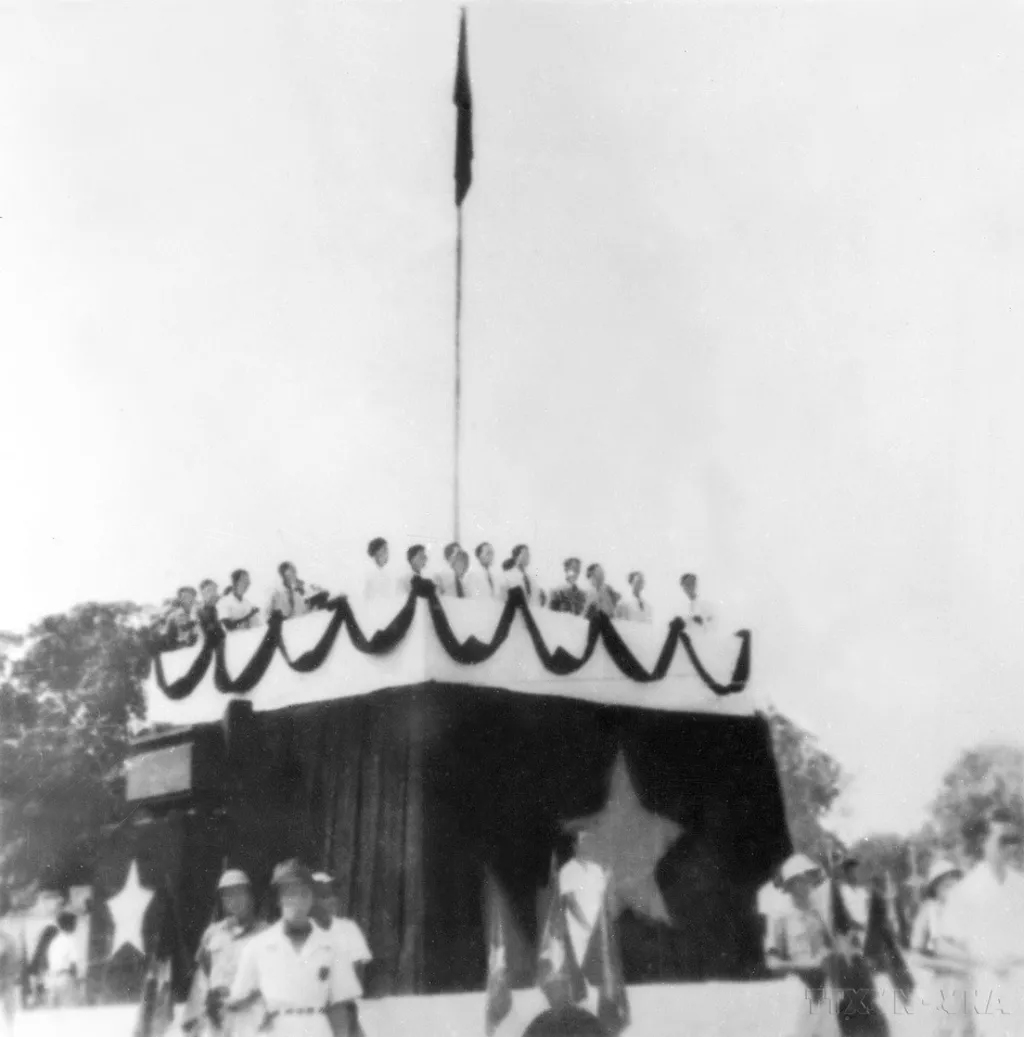 |
| President Hồ Chí Minh reads the Declaration of Independence at Ba Đình Square in Hà Nội on September 2, 1945, proclaiming the establishment of the Democratic Republic of Việt Nam, the first people’s democratic state in Southeast Asia. |
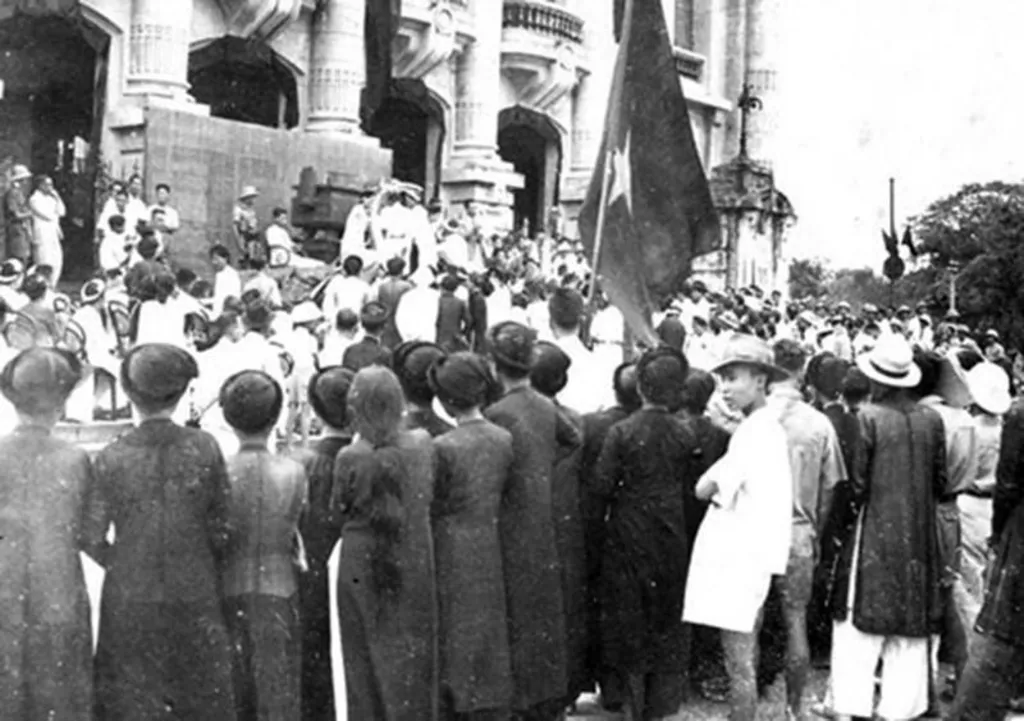 |
| The newly established revolutionary government faced enormous challenges following the August General Uprising. Public communications encouraged people to defend the revolution, independence and freedom, while undertaking three major tasks: fighting hunger, illiteracy and foreign aggression. The photo shows President Hồ Chí Minh’s letter to people nationwide on September 17, 1945, explaining the importance of Gold Week and calling for public contributions to support the revolutionary government. |
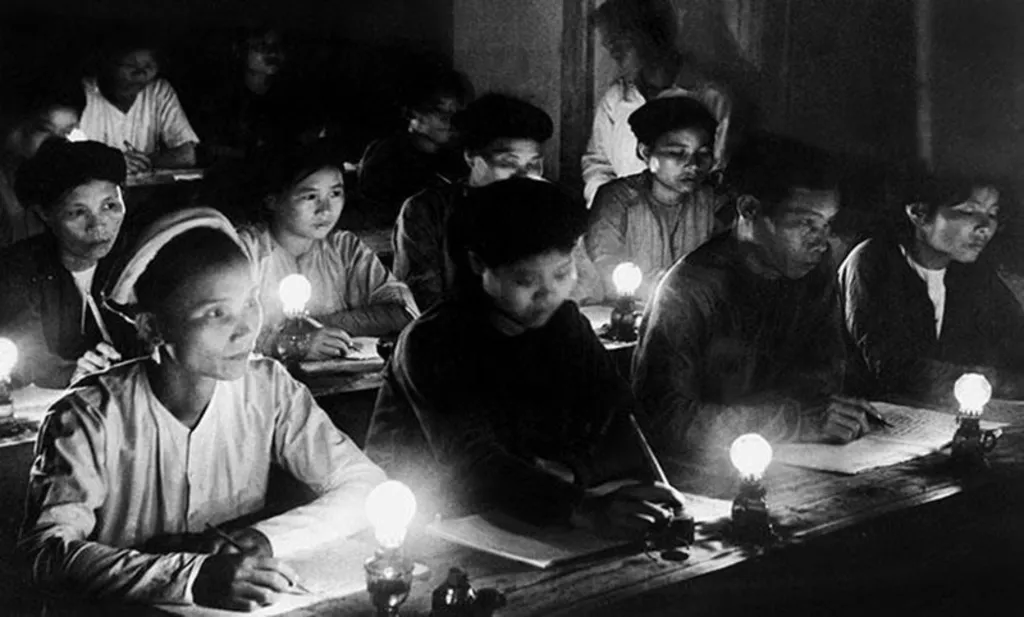 |
| In November 1945, the Party Central Committee issued the directive Resistance and National Reconstruction, calling for the consolidation of the government, resistance against French colonial aggression, the eradication of illiteracy, education reform and the building of a new culture based on scientific, national and popular principles. Within a year, two million people had become literate. The photo shows a mass literacy class in Hà Nội during the early days of independence. |
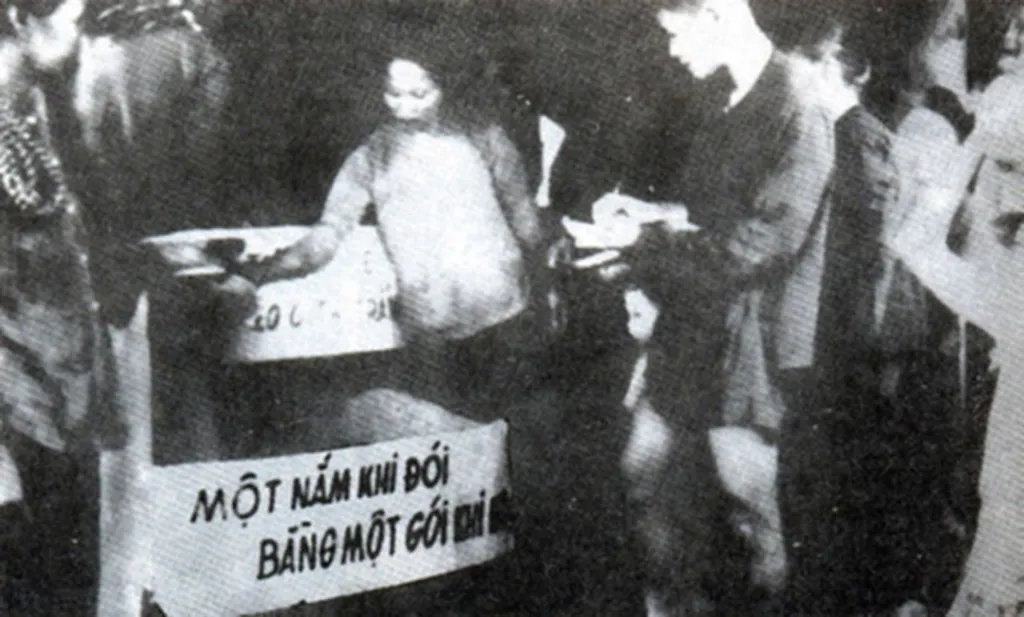 |
| The Party Central Committee’s November 1945 directive Resistance and National Reconstruction called for relief funds and rice reserves, expanded land reclamation and production, and donations to assist impoverished people. The photo shows the nationwide “Rice Jar to Fight Hunger” movement, inspired by the saying “A handful when hungry is worth a package when full”. |
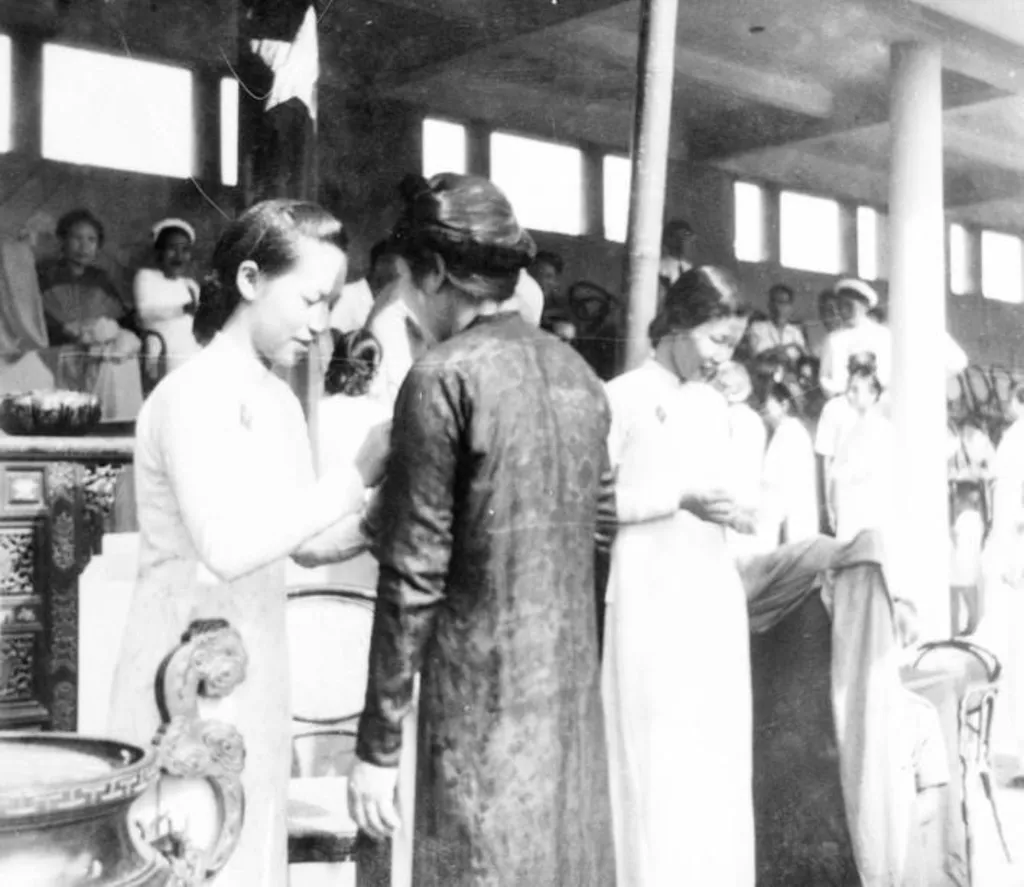 |
| The Party Central Committee’s November 1945 directive Resistance and National Reconstruction called for relief funds and rice reserves, expanded land reclamation and production, and donations to assist impoverished people. The photo shows the nationwide “Rice Jar to Fight Hunger” movement, inspired by the saying “A handful when hungry is worth a package when full”. |
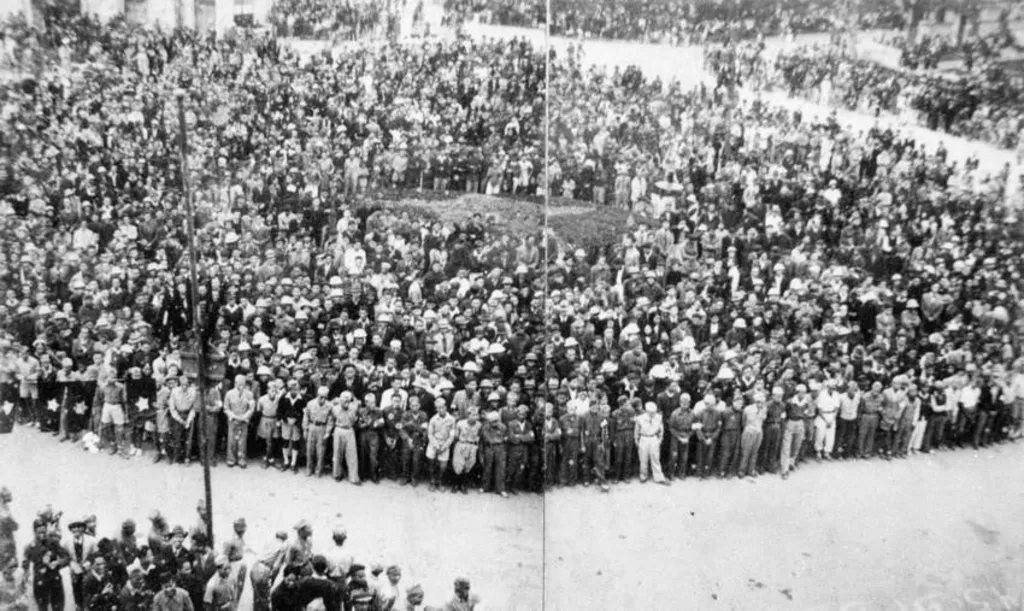 |
| Residents of Hà Nội gather at the square in front of the Opera House to support the Provisional Coalition Government led by President Hồ Chí Minh on January 1, 1946. |
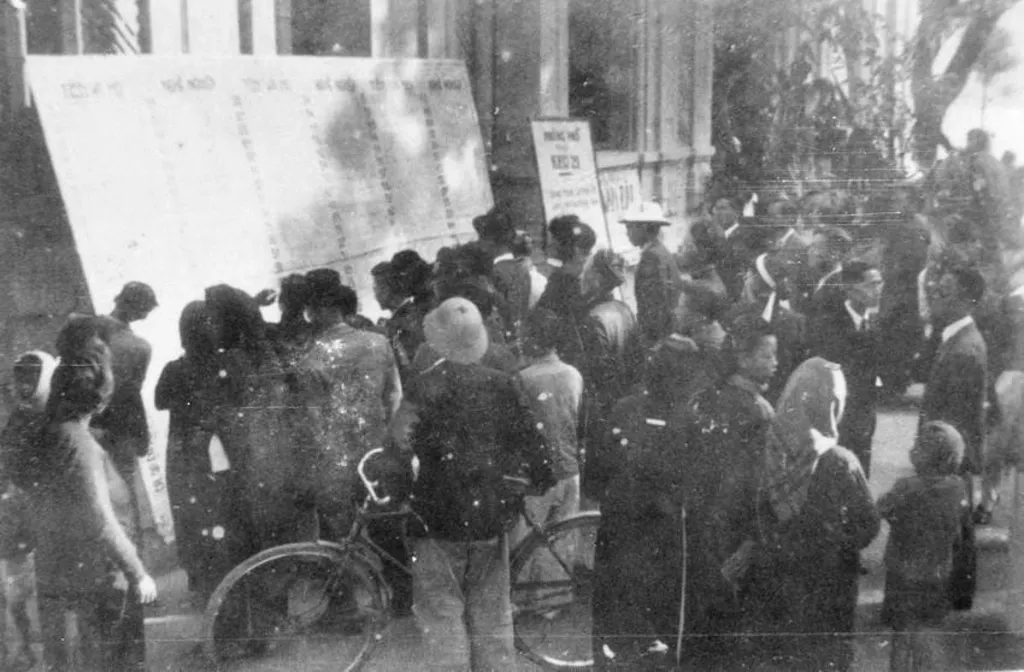 |
| Working people in Hà Nội campaign for the country’s first general election. |
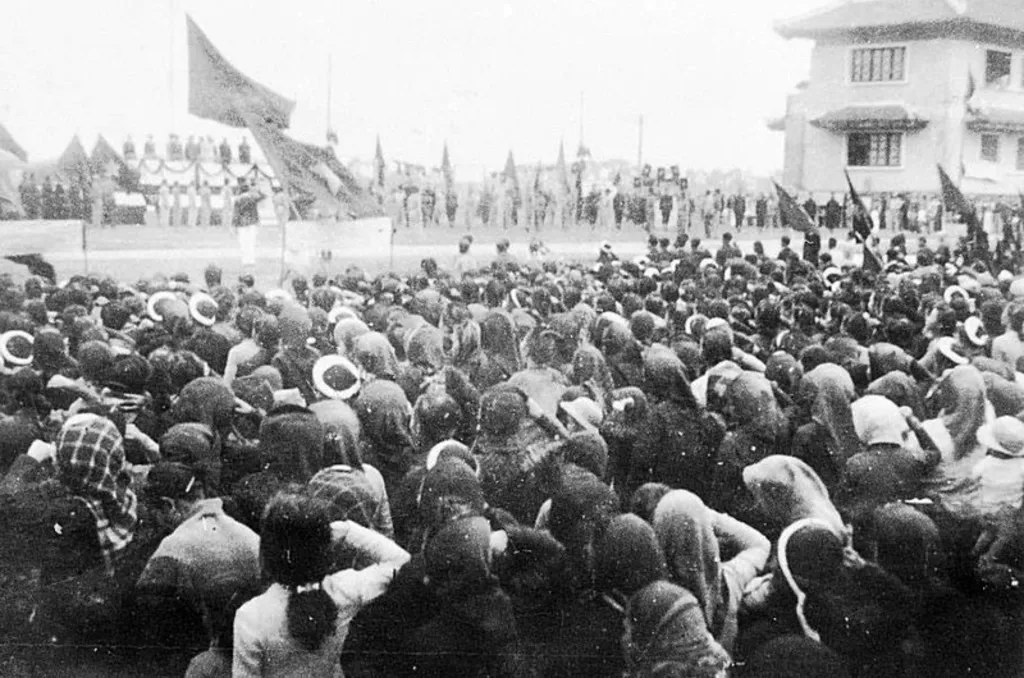 |
| Tens of thousands of Hà Nội residents gather at the Central Education Campus, now Hà Nội University of Science and Technology, on January 12, 1946, to welcome President Hồ Chí Minh and other newly elected members of the first National Assembly. |
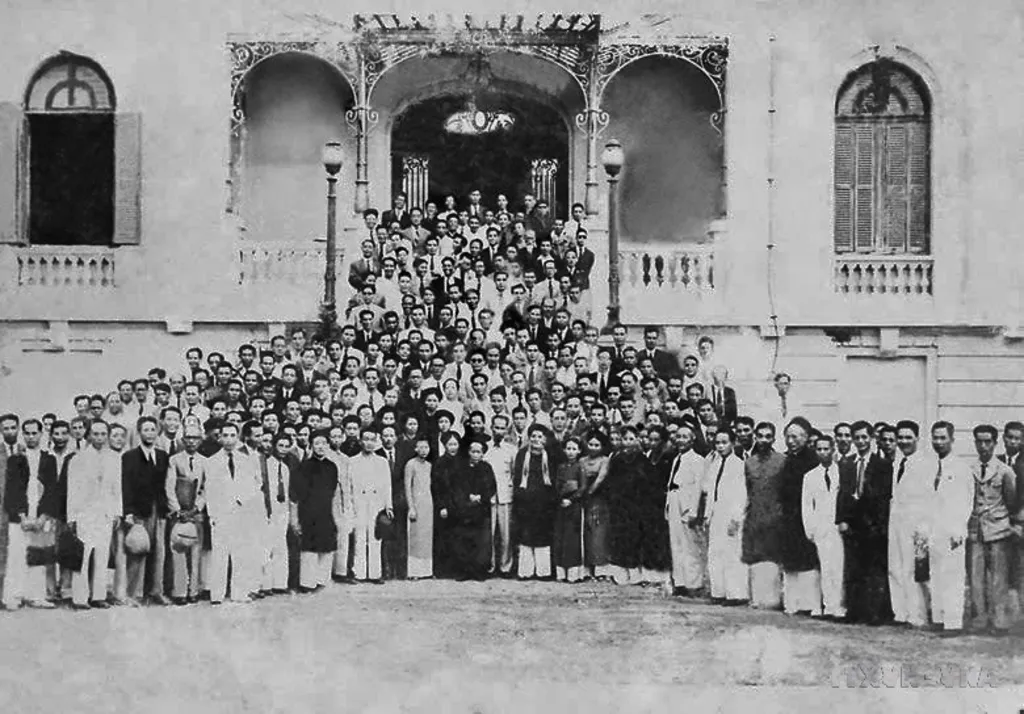 |
| Delegates attend the first session of the first National Assembly of the Democratic Republic of Việt Nam at the Hà Nội Opera House on March 2, 1946. |
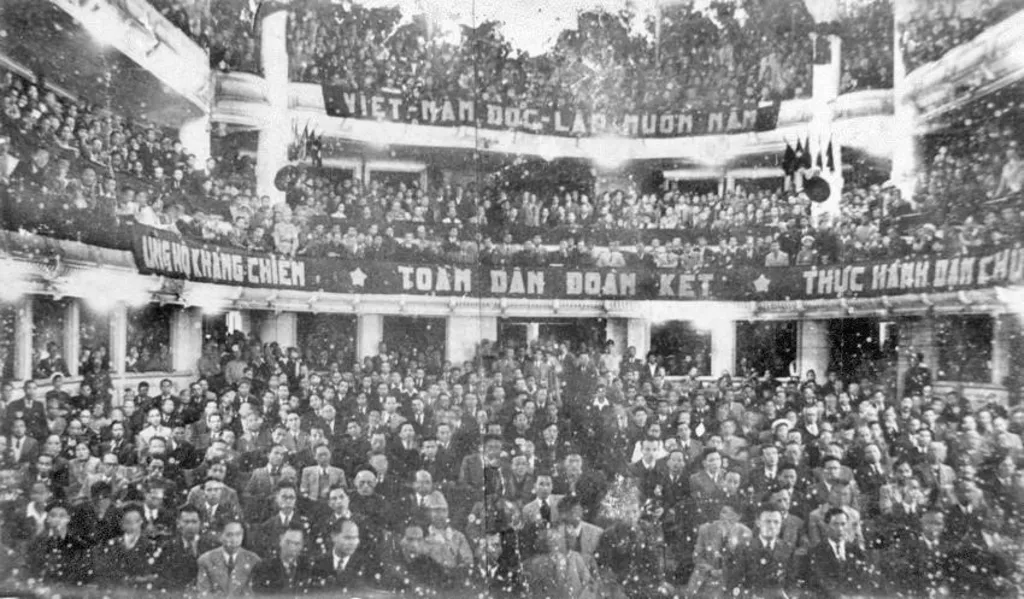 |
| Only five months after independence was won, Vietnamese citizens aged 18 and above nationwide responded to President Hồ Chí Minh’s appeal and voted in the first general election to elect the National Assembly under democratic and progressive principles. The photo shows the opening of the first session of the first National Assembly in Hà Nội on March 2, 1946. |
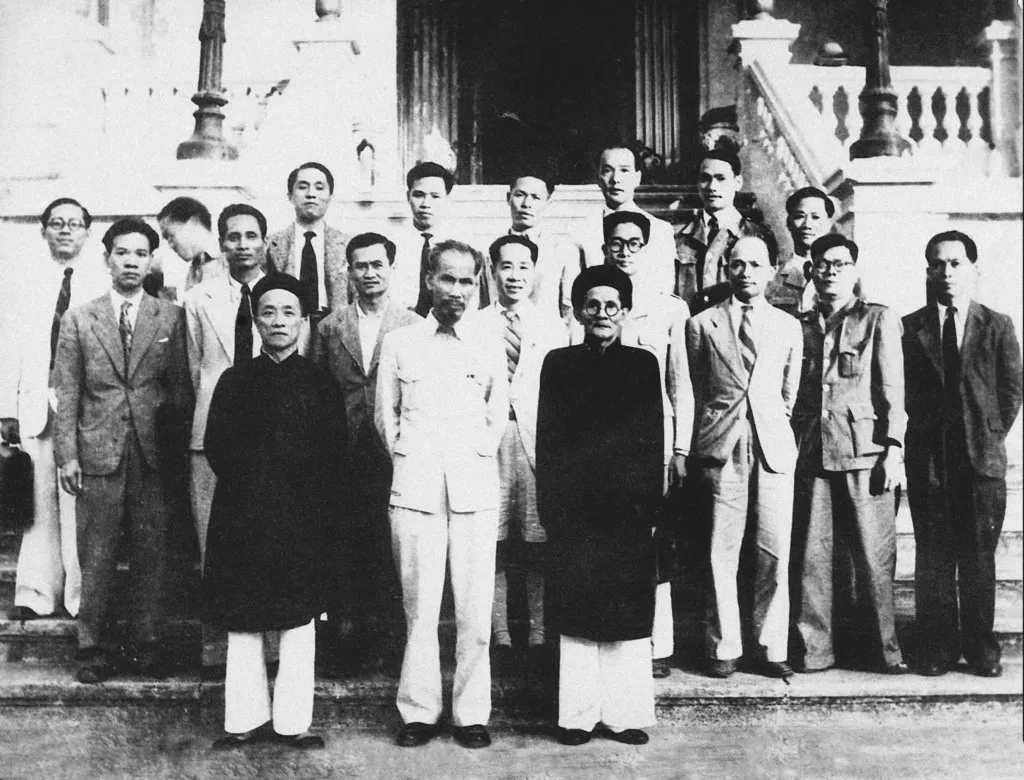 |
| The Government of the Democratic Republic of Việt Nam is elected at the second session of the first National Assembly, held from October 28 to November 9, 1946. |