 |
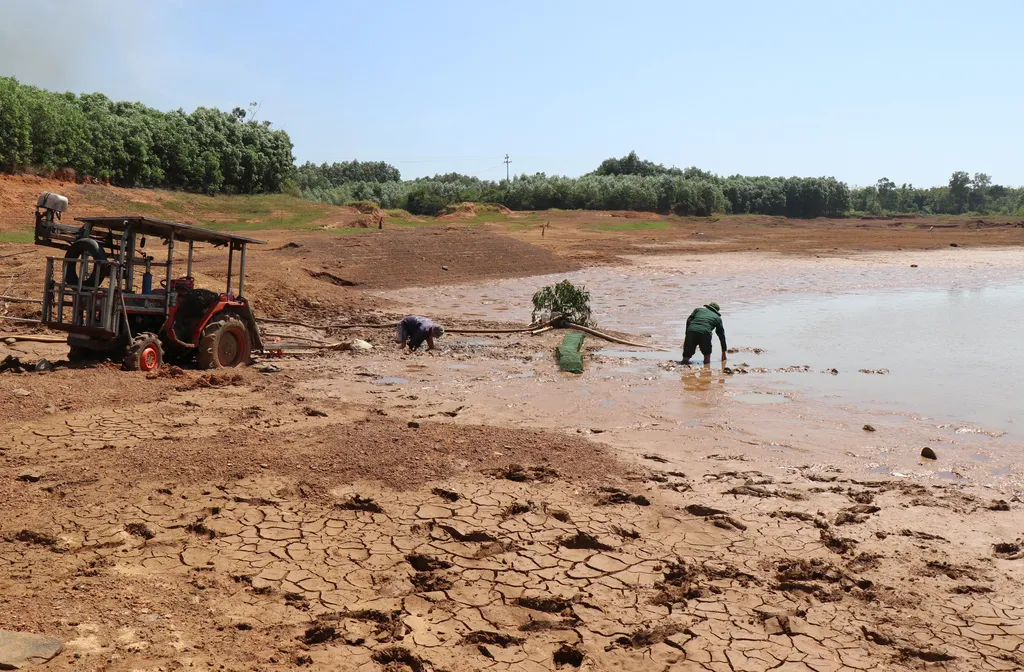
| The bed of the An Hội Reservoir in Đông Sơn Commune, Quảng Ngãi Province, is dry and deeply cracked. VNA/VNS Photos |
QUẢNG NGÃI Persistent heat and drought have pushed reservoirs across eastern Quảng Ngãi Province to critically low levels, threatening thousands of hectares of summer-autumn rice as farmers scramble to find enough water to save their crops.
Đông Sơn Commune has 14 reservoirs supplying water for the summer-autumn crop. After months of persistent heat and drought, however, most have been severely depleted, with seven already reaching dead storage levels.
An Hội, one of the commune’s largest reservoirs, covers 14ha and normally supplies irrigation water to about 55ha of summer-autumn rice.
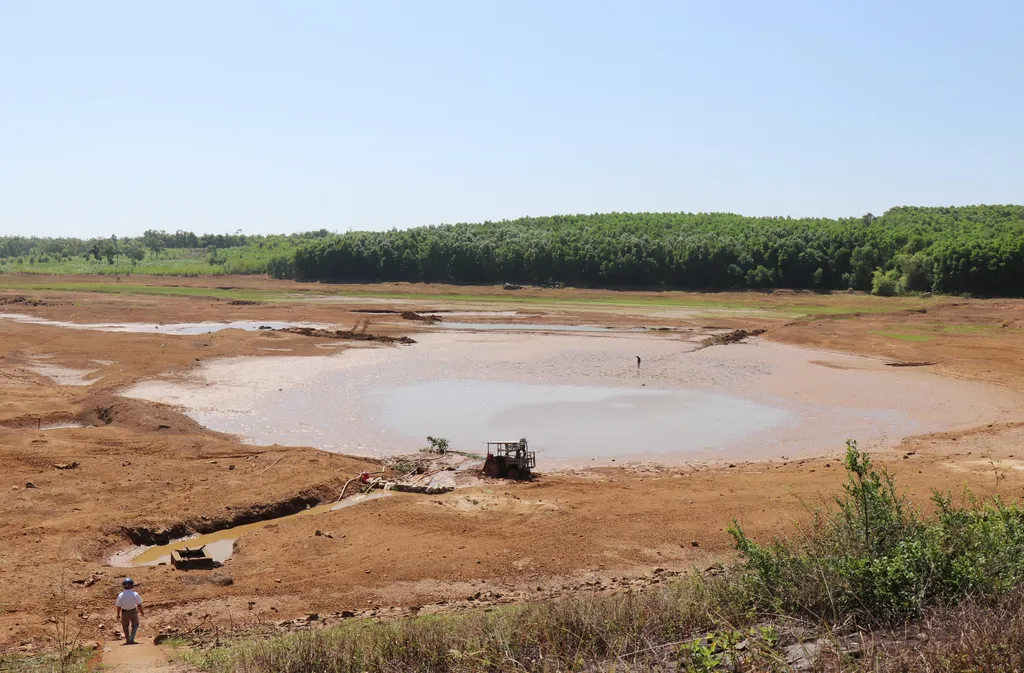
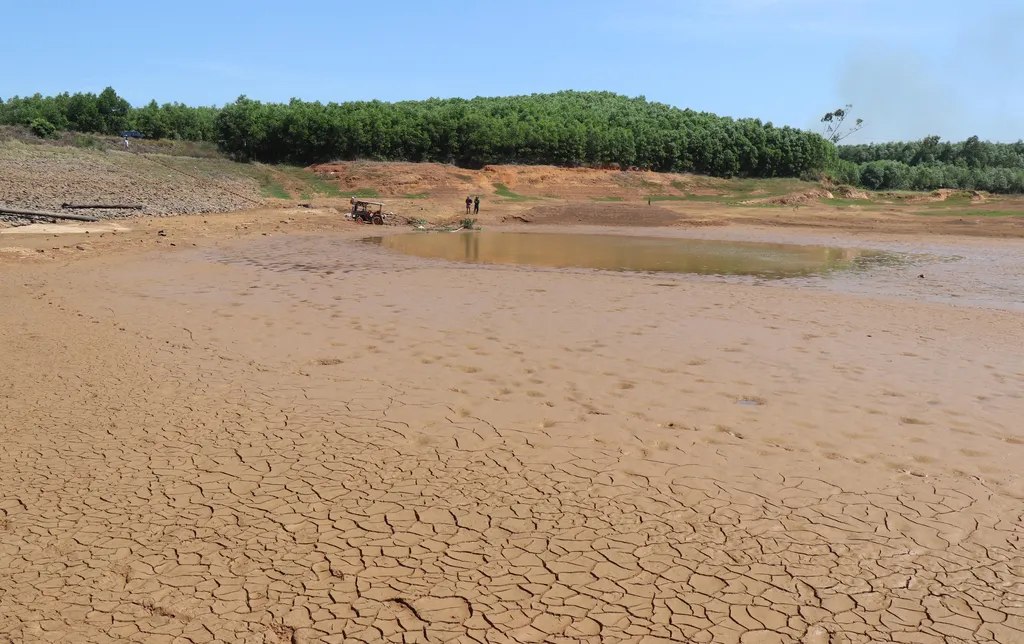
Four days ago, the Bình Thanh Đông Agricultural Cooperative installed a pump in the middle of the reservoir to draw out what little water remained and irrigate 25ha of drought-stricken rice.
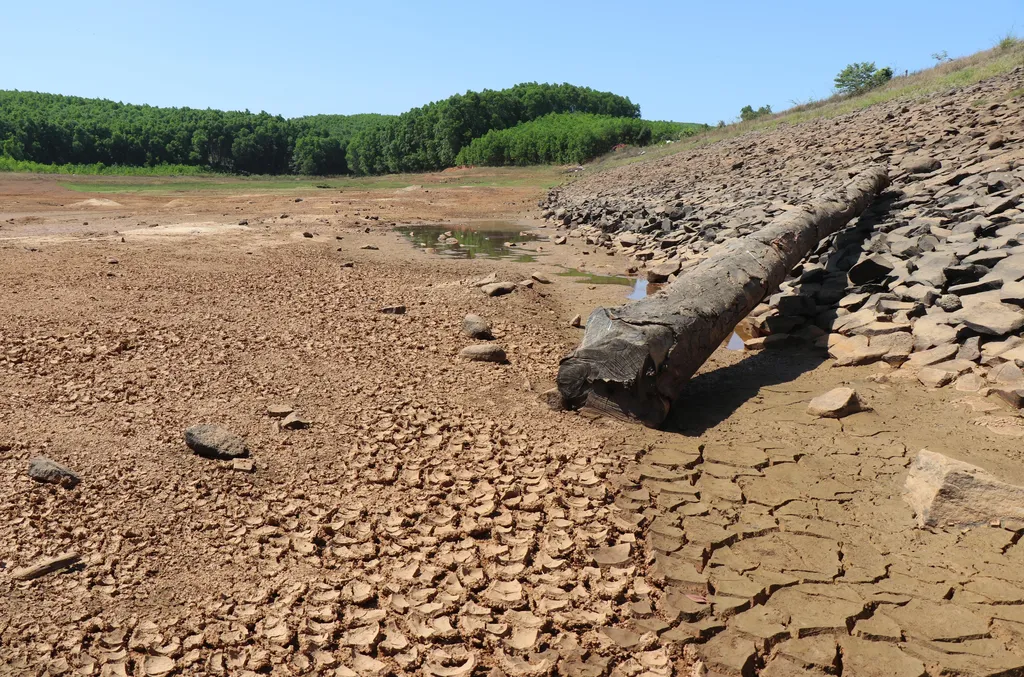
The pump has since stopped working after the water receded beyond its reach. The reservoir bed now lies cracked and bare, broken only by mounds of earth rising from the parched ground. Channels dug across the bed to direct the remaining water towards the pump have also dried up.
The cooperative now plans to move the pump to the Dìu Gà reservoir in another effort to supply the affected fields. But Dìu Gà is also nearing exhaustion, and its remaining water is expected to last no more than another day or two.
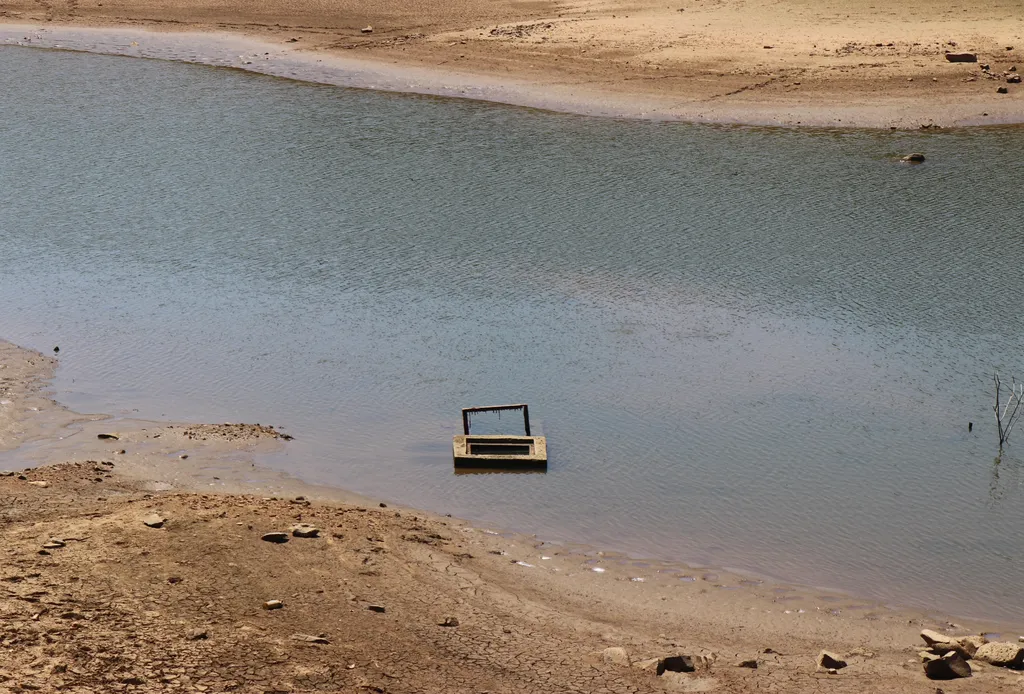 |
| The Dìu Gà Reservoir in Đông Sơn Commune, Quảng Ngãi Province, has fallen to its dead storage level. |
The Hố Lùng, Hố Chuối and Gia Hội reservoirs are in much the same condition.
Nguyễn Thuỷ, a farmer from Tham Hội 1 Village, grows three sào, or about 1,500sq.m, of rice traditionally irrigated with water from the An Hội reservoir.
His crop is now flowering and requires about three more rounds of irrigation to produce a reasonable yield, but the reservoir has run dry.
In an effort to save the crop, his family has dredged an earthen canal and bought another pump, together with about 100m of piping to carry water from the canal to their field. The additional costs have placed the family under considerable financial strain.
Huỳnh Văn Hai, deputy director of the Bình Thanh Đông Agricultural Cooperative, said no rain had fallen since the crop was sown, while prolonged, intense heat had caused water levels to fall rapidly.
“Drought occurs every year, but it has been decades since the An Hội reservoir dried up completely as it has this season,” Hai said.
“Farmers are extremely worried. The cooperative is giving priority to pumping water to rice fields that are now flowering, but some fields located far from irrigation sources may be completely lost.”
The crisis extends beyond Đông Sơn Commune.
The Hóc Sầm reservoir in Mộ Đức Commune, which supplies water to 93.55ha of summer-autumn rice, is also being rapidly depleted by the prolonged heat.
It has also installed four pumps to bring water from the Thạch Nham irrigation system, managed by Bình Sơn Irrigation Station No 1, into earthen canals leading to the parched fields.
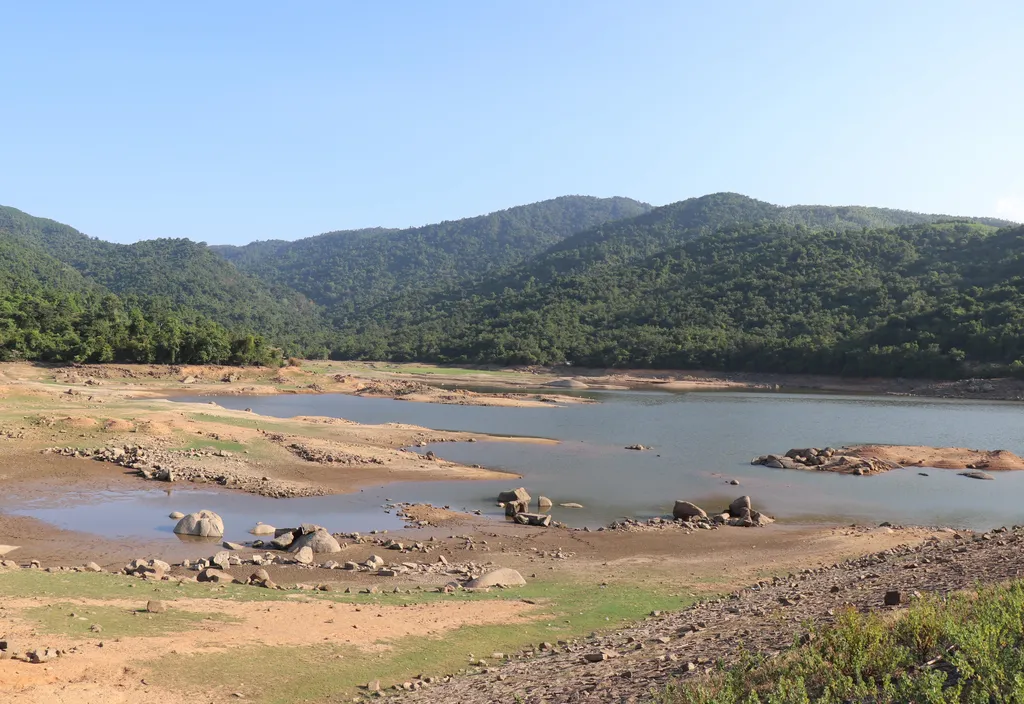 |
| Prolonged heat has severely depleted the Hóc Sầm Reservoir in Mộ Đức Commune, Quảng Ngãi Province. |
Its limited storage capacity and sharply declining water level have put the fields it serves at risk of severe irrigation shortages, according to the Quảng Ngãi Irrigation Works Management Company, which operates the reservoir.
Figures from the provincial Sub-department of Water Resources show that 127 reservoirs in eastern Quảng Ngãi are currently holding an average of just 35 per cent of their designed capacity.
The Nước Trong reservoir contains about 112.62 million cubic metres of water, equivalent to 38.9 per cent of its designed capacity.
The sub-department attributed the rapid decline in reservoir levels to intense heat compounded by south-westerly foehn winds, which have kept temperatures persistently high across the province.
Flows in rivers and streams, including those in the Trà Khúc River basin, also remain low, further reducing the amount of water available for storage and irrigation during the summer-autumn crop.
Race to protect rice at critical growth stages
With no respite from the heat in sight and reservoir levels continuing to fall, local authorities and agricultural cooperatives are scrambling to maintain irrigation supplies. Their immediate priority is to protect rice crops at the flowering and grain-filling stages, when water shortages can cause the greatest damage to yields.
The Bình Thanh Đông Agricultural Cooperative planted about 169ha of rice in the 2026 summer-autumn crop.
To secure water for 18ha of rice about to flower in the Ngõ Giám, Trạm Hạ Thế, Ngõ Chòi and Rộc Viền fields, the cooperative has mobilised residents to dredge approximately 800m of irrigation channels.
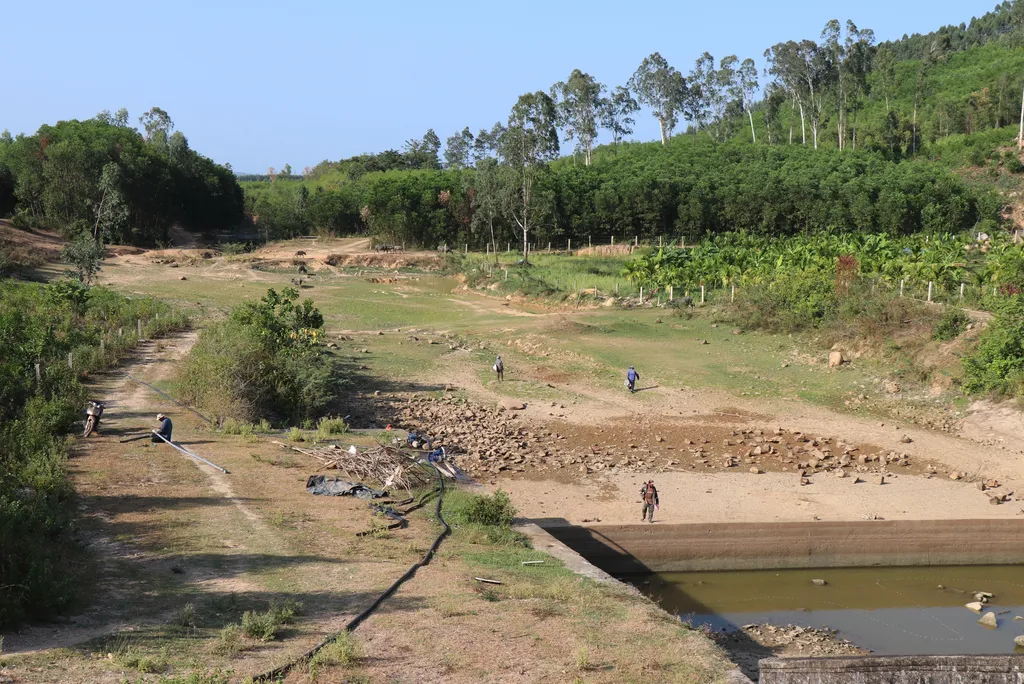 |
| Prolonged heat has severely depleted the Hóc Sầm Reservoir in Mộ Đức Commune, Quảng Ngãi Province. |
Water is also being pumped from reservoirs that have not yet run dry in an attempt to keep production going and limit farmers’ losses.
Nguyễn Tấn Sơn, director of the cooperative, said every available resource was being mobilised to combat the drought and save flowering rice.
Workers are being deployed as a priority to clear the earthen canal carrying water from the Thạch Nham system to drought-affected areas.
The cooperative has also asked the relevant authorities to fund drought-response work and support the dredging and upgrading of the An Hội reservoir. The work would increase its storage capacity and provide a more reliable long-term water supply for rice fields in Tham Hội 1 Village.
Võ Thanh Tuấn, standing vice-chairman of the Đông Sơn Commune People’s Committee, said some rice-growing areas were located at the far end of the main irrigation canals, while the commune’s reservoirs and diversion weirs were relatively small.
As a result, the risk of drought, water shortages and saltwater intrusion towards the end of the 2026 summer-autumn crop was very high, he said.
Commune authorities have inspected reservoirs and weirs and assessed the affected rice fields. Farmers have also been urged to use water sparingly, clear irrigation channels and draw on every available source, including ponds, reservoirs and wells.
Lê Văn Hậu, head of the Technical Division at the Quảng Ngãi Irrigation Works Management Company, said the company managed 24 reservoirs, 17 pumping stations and 128 canals with a combined length of 600km.
The reservoirs currently hold an average of 35 per cent of their designed capacity, down 2.17 percentage points from the previous week. Six are below 20 per cent, while some have only 10 per cent remaining.
The Sở Hầu reservoir in Nguyễn Nghiêm Commune and the Hóc Sầm reservoir in Mộ Đức Commune are of particular concern because of their low storage capacity and rapidly falling water levels.
The company has drawn up plans to pump water from the reservoirs’ dead storage once their usable reserves are exhausted in order to maintain supplies to nearby fields.
Water flowing to the Giang River diversion weir is also insufficient. The company has therefore brought the Tịnh Đông pumping station into operation to provide additional water for more than 90ha of rice normally irrigated by the weir.
Pumping systems have been serviced and plans for additional pumping stations approved to maintain irrigation supplies through the end of the summer-autumn crop.
The provincial Department of Agriculture and Environment has instructed authorities in eastern communes, wards and special zones, along with the irrigation company, to determine which areas can still be adequately irrigated and which will need to switch to other crops.
They must also identify drought-affected fields and areas where cultivation will have to stop because irrigation water is no longer available, and develop drought-response measures suited to the conditions of each locality and irrigation facility.
Local authorities and relevant agencies have been asked to use allocated funding, local budgets and other lawful resources to take urgent action against drought, water shortages and saltwater intrusion.
Priority must be given to rice in the flowering and grain-filling stages to keep farmers’ losses to a minimum. — VNS
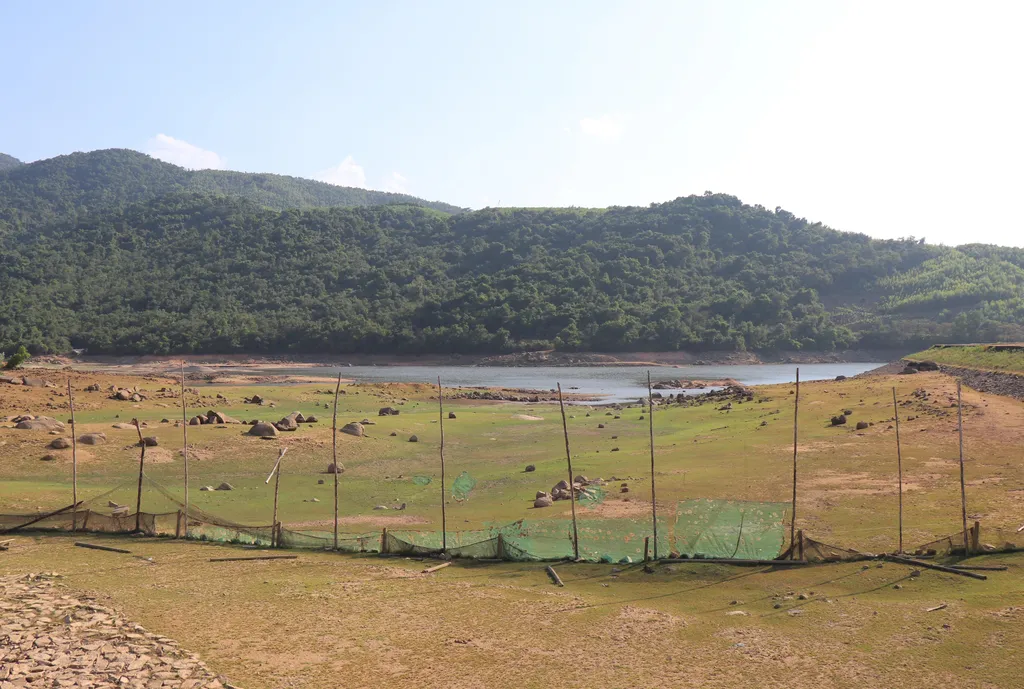 |
| Prolonged heat has severely depleted the Hóc Sầm Reservoir in Mộ Đức Commune, Quảng Ngãi Province. |
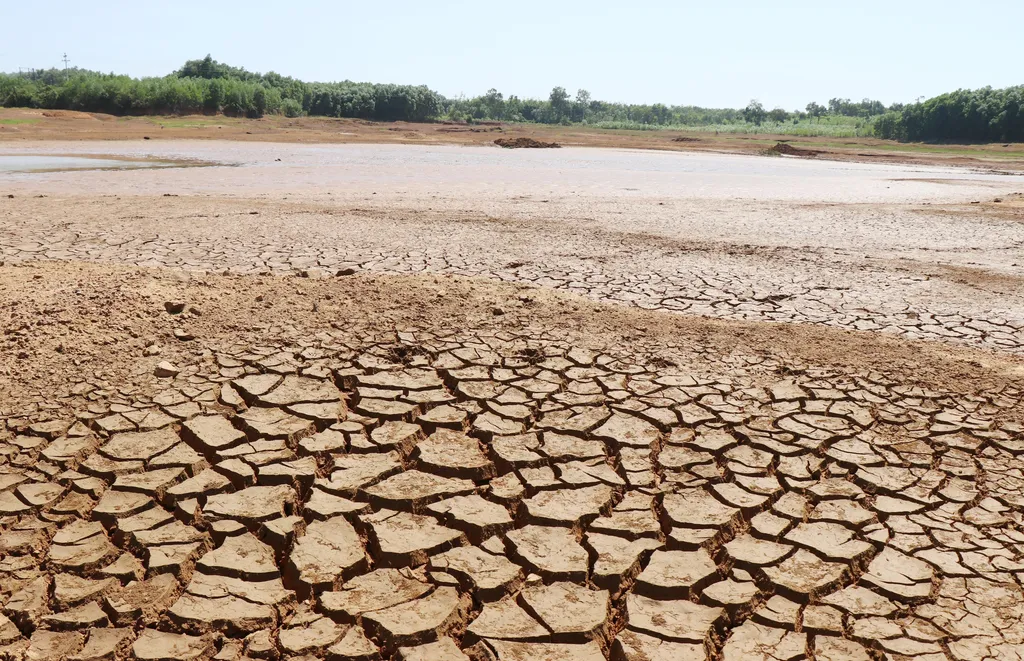 |
| With its bed now completely exposed, the An Hội Reservoir in Đông Sơn Commune can no longer supply irrigation water to the summer-autumn rice crop. |
 |
| With its bed now completely exposed, the An Hội Reservoir in Đông Sơn Commune can no longer supply irrigation water to the summer-autumn rice crop. |
 |
| With its bed now completely exposed, the An Hội Reservoir in Đông Sơn Commune can no longer supply irrigation water to the summer-autumn rice crop. |
 |
| With its bed now completely exposed, the An Hội Reservoir in Đông Sơn Commune can no longer supply irrigation water to the summer-autumn rice crop. |
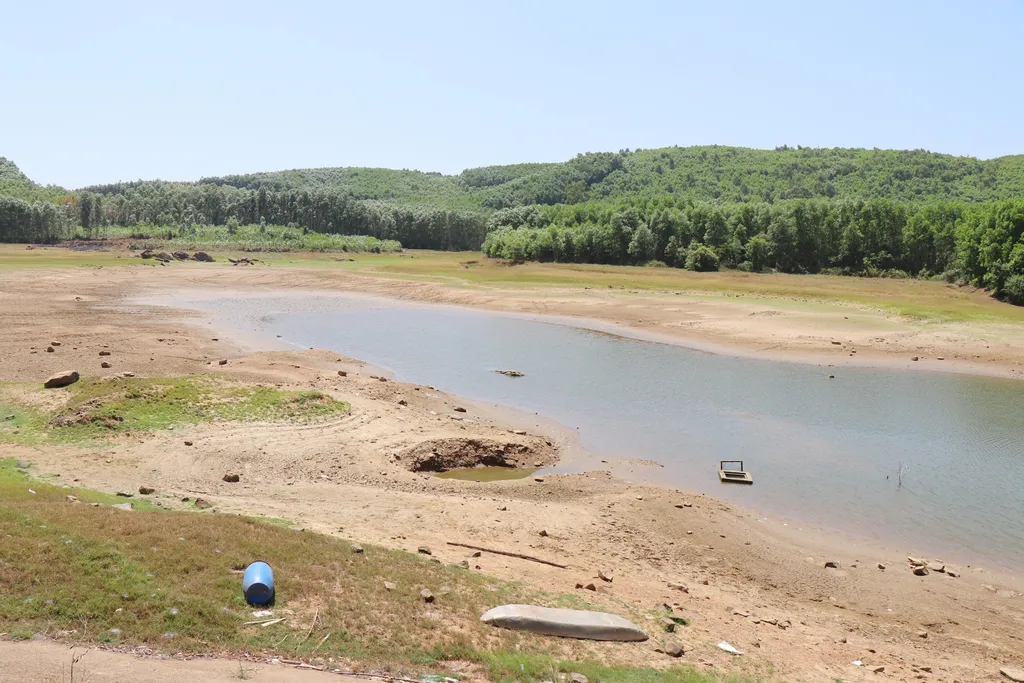 |
| The exposed bed of the Dìu Gà Reservoir in Đông Sơn Commune, Quảng Ngãi Province, after its water level fell to dead storage. |