 |
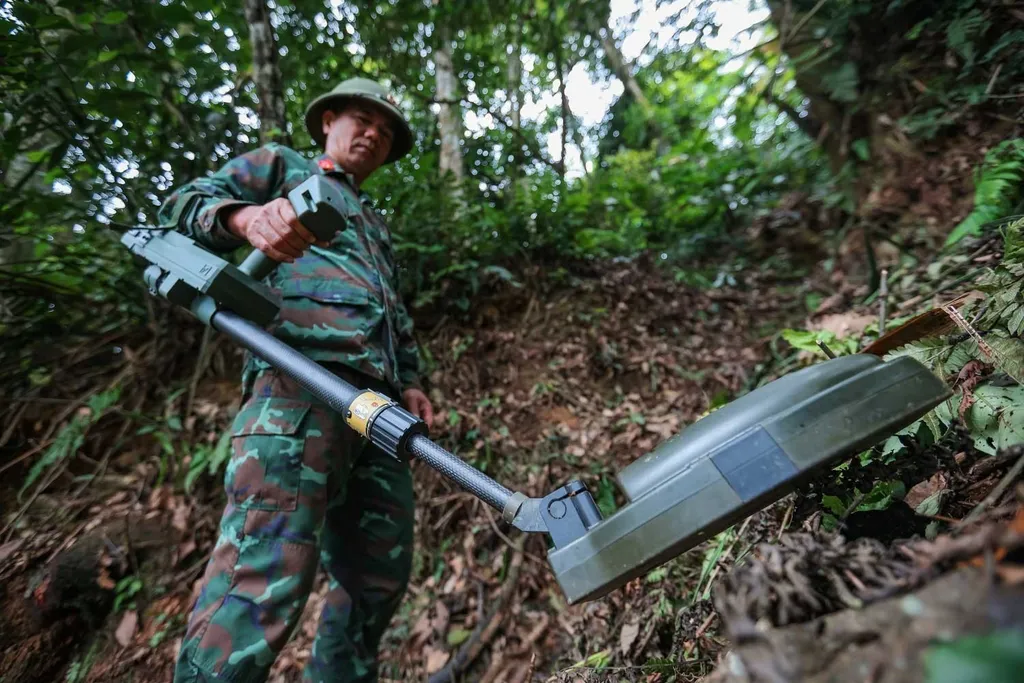
| Before the search begins at a site in Minh Tân Commune believed to contain martyrs’ remains, Major and professional serviceman Lê Văn Quyết carries out mine detection to ensure the area is free of mines and unexploded ordnance. VNA/VNS Photos |
HÀ NỘI — More than half a century after the war, around 300,000 martyrs’ graves in Việt Nam remain unidentified. As part of a nationwide effort to honour those who sacrificed their lives for the nation, authorities have launched the 500-Day Campaign to Accelerate the Search, Recovery and Identification of Martyrs’ Remains, bringing renewed hope to thousands of families still waiting for answers.
According to the Ministry of Home Affairs, Việt Nam has around 1.2 million war martyrs. More than 900,000 sets of remains have been recovered and laid to rest in cemeteries nationwide, while efforts continue to identify those whose names have yet to be restored.
To fulfil the nation's enduring responsibility to those who sacrificed their lives for independence and freedom, a nationwide campaign is underway to accelerate the search, recovery and identification of martyrs' remains.
From martyrs' cemeteries across the country to former battlefields in Laos and Cambodia, from painstaking field searches to the application of advanced DNA technology, all efforts are directed towards a common goal: restoring names to the fallen and reuniting them with their families and hometowns.
On April 2, at the Special National Relic Site of the Quảng Trị Ancient Citadel, the National Steering Committee for the Search, Recovery and Identification of Martyrs' Remains officially launched the 500-Day Campaign to Accelerate the Search, Recovery and Identification of Martyrs' Remains.
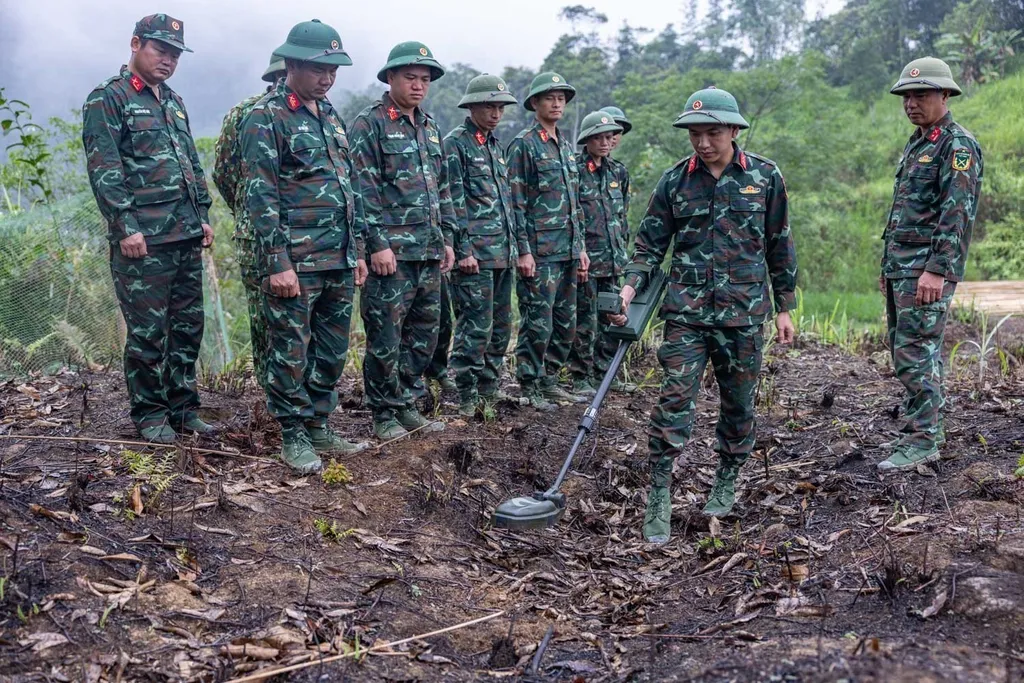 |
| Members of the Martyrs’ Remains Search and Recovery Team use mine detectors to ensure the area is free of mines and unexploded ordnance before beginning the search. |
The campaign aims to recover and repatriate approximately 7,000 sets of martyrs' remains, complete biological sample collection from unidentified graves in cemeteries nationwide, and conduct DNA analysis on around 18,000 samples.
Authorities will also establish and operate a national genetic database containing information on unidentified martyrs and their relatives to support identification efforts. At the same time, mine and unexploded ordnance clearance will be intensified in key search areas, including Vị Xuyên, Lào Cai, Lạng Sơn and other locations believed to contain martyrs' burial sites.
Running from March 15, 2026, to July 27, 2027, the campaign will culminate on the 80th anniversary of War Invalids and Martyrs Day, carrying forward a mission that is not only a matter of responsibility, but also one of remembrance, gratitude and national conscience.
New DNA technology brings fresh hope
Providing an update on the initial results of the 500-Day Campaign, Colonel Lê Văn Sơn said the Ministry of National Defence had mobilised maximum manpower and resources for the search and recovery of martyrs’ remains. Thanks to the dedication and determination of officers and soldiers involved in the mission, 1,150 sets of remains have been recovered since the campaign began, including 226 in Việt Nam, 179 in Laos and 745 in Cambodia, as well as three mass graves discovered in Tuyên Quang Province.
In mine and unexploded ordnance clearance operations, the ministry has deployed 360 teams comprising nearly 5,000 personnel and supported by 1,131 pieces of equipment. So far, 4,076.6 hectares of a planned 22,725 hectares have been cleared, equivalent to 17.94 per cent of the overall target. In the core Vị Xuyên area of Tuyên Quang Province, 1,994.5 hectares out of 4,460 hectares have been cleared, achieving 44.72 per cent of the plan. Units are striving to complete clearance work in the core area by the end of 2026.
Regarding the collection of biological samples from martyrs’ remains, all 34 provinces and centrally governed cities have established nearly 300 sampling teams with a combined workforce of more than 3,700 personnel. Pilot sampling programmes have been completed and reviewed, paving the way for wider implementation. Local authorities are now accelerating the collection of samples from unidentified graves in martyrs’ cemeteries nationwide.
 |
| For every member of the search team, recovering the remains of martyrs from the former battlefield in Minh Tân Commune and returning them to their families is both a responsibility and a source of pride. |
Associate Professor Dr Phí Quyết Tiến, Director of the Institute of Biology under the Việt Nam Academy of Science and Technology, said mitochondrial DNA analysis has long been the primary method used to identify martyrs’ remains in Việt Nam. The technology is particularly effective in relatively limited cases, such as mass graves or cemeteries containing fewer than 100 martyrs, where relatives can be identified and traced for comparison.
However, as identification efforts expand in scale and involve multiple testing institutions, coordination has become increasingly important. At the same time, new solutions are needed to address the continuing deterioration of bone and DNA samples over time, while the recovery, storage and preservation of remains remain challenging in many areas.
“Experience from practical implementation shows that only around 22 per cent of samples yield DNA of sufficient quality for analysis using conventional methods,” Dr Tiến said.
“This figure is broadly consistent with results reported by other testing institutions across the country.”
To overcome these limitations, the Institute of Biology has developed a number of new approaches. Among them, the most promising and widely applied is SNP-based DNA analysis, which examines single nucleotide polymorphisms within genetic material.
“Previously, we analysed DNA fragments. Today, we can examine individual genetic markers. By harnessing advances in next-generation sequencing, we have developed the NGS-SNP platform, which enables genetic variations to be analysed at a much higher level of detail,” he said.
A pilot project at Trường Lĩnh Martyrs’ Cemetery in Cao Bằng Province showed that the proportion of samples yielding DNA suitable for analysis reached 87.3 per cent, nearly four times higher than that achieved using previous methods.
Notably, researchers identified two cases in which relatives’ DNA matched that of martyrs. The findings were subsequently verified using conventional techniques and produced consistent results.
The Institute of Biology announced the results with the support of relevant agencies, including the Department of Social Policy and local authorities. The achievement was later recognised as one of Việt Nam’s ten most outstanding science and technology events of 2025.
Dr Tiến described the results as highly encouraging, saying they demonstrate how advances in science and technology are creating new opportunities to identify martyrs and restore their names to future generations. VNS
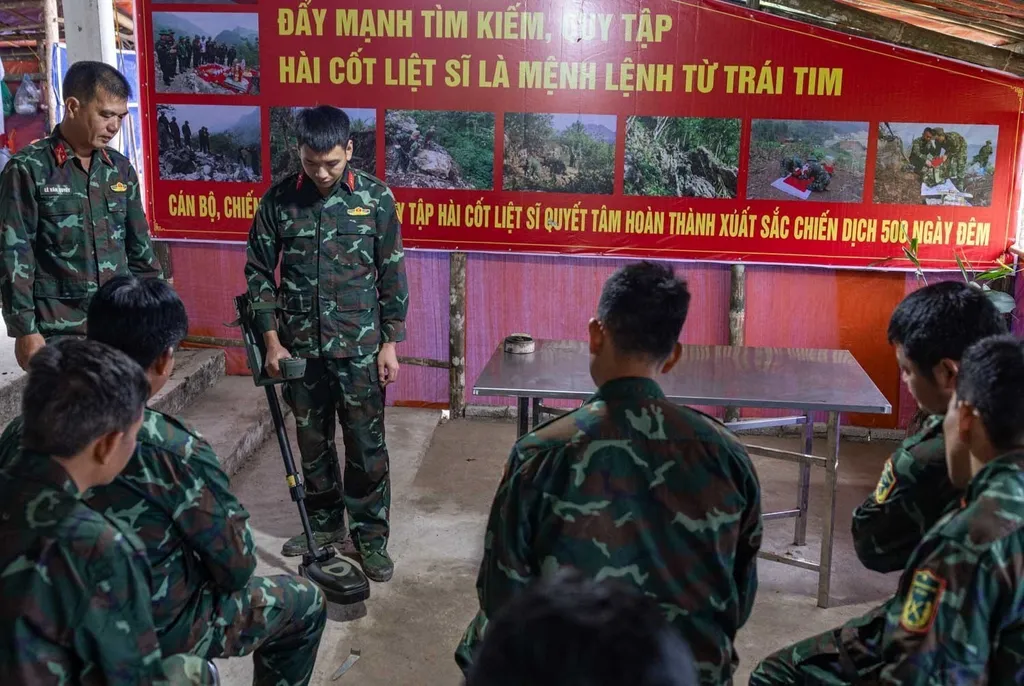 |
| Major and professional serviceman Lê Văn Quyết instructs team members in the use of mine detectors to ensure safety during search operations. |
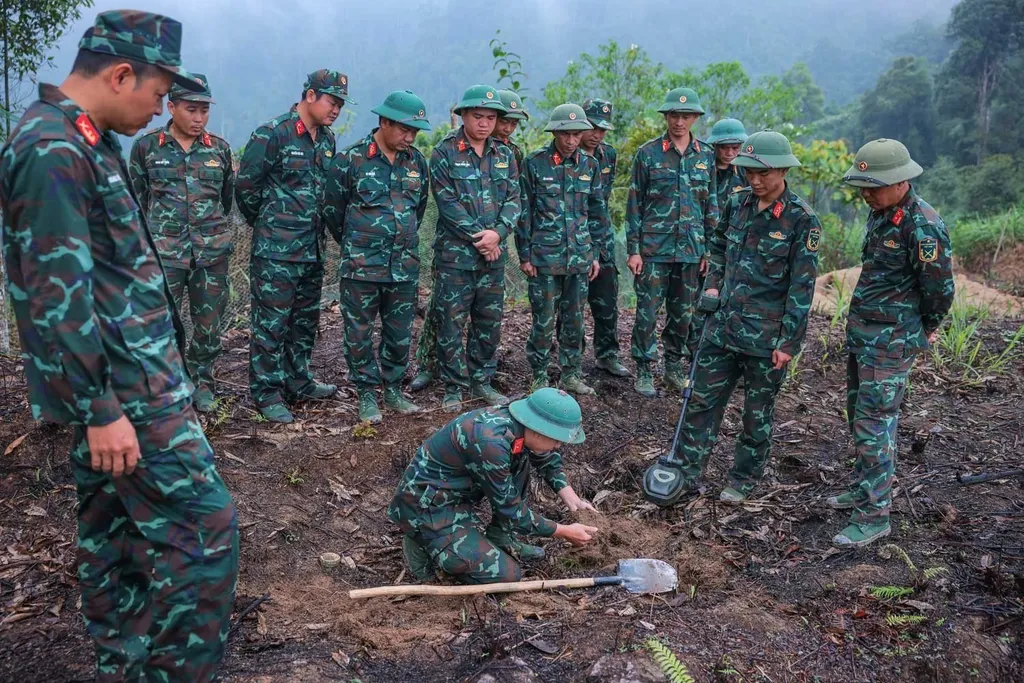 |
| Members of the Martyrs’ Remains Search and Recovery Team use mine detectors to locate and dispose of unexploded mines and ordnance in the search area, ensuring safe recovery operations. |
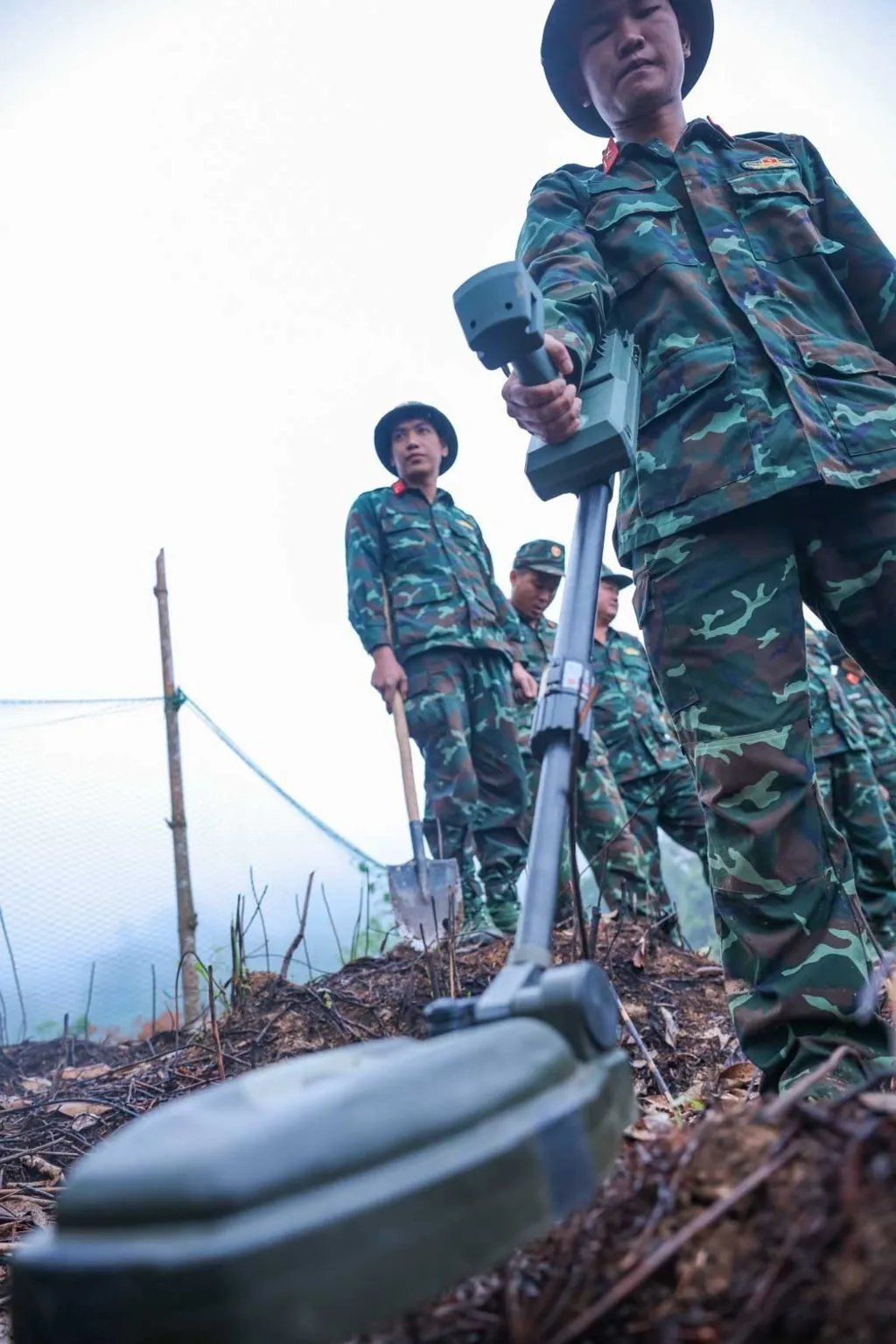 |
| Members of the Martyrs’ Remains Search and Recovery Team clear unexploded mines and ordnance to facilitate search operations while ensuring safety in the field. |
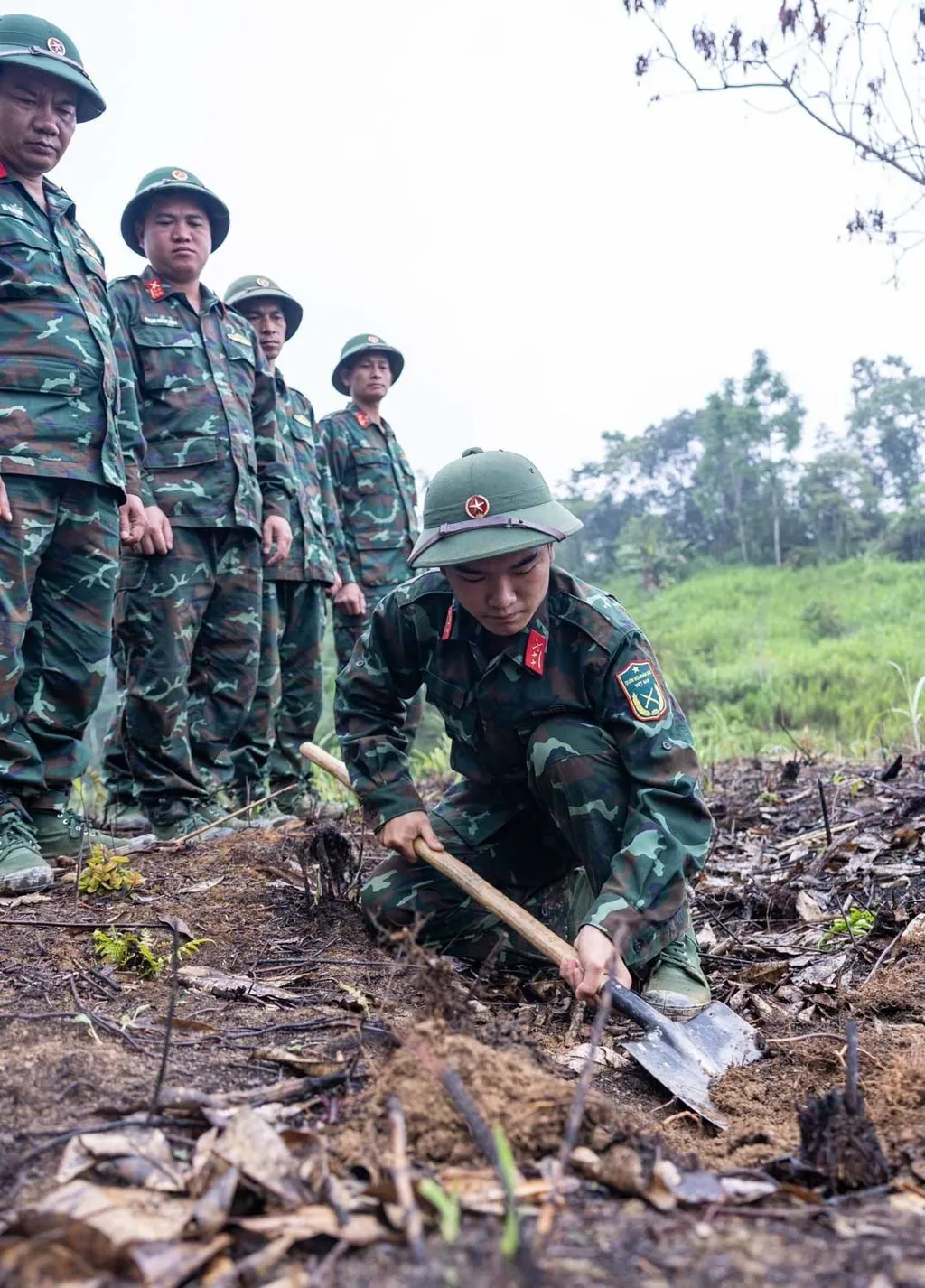 |
| Members of the Martyrs’ Remains Search and Recovery Team use mine detectors to locate and dispose of unexploded mines and ordnance in the search area, ensuring safe recovery operations. |
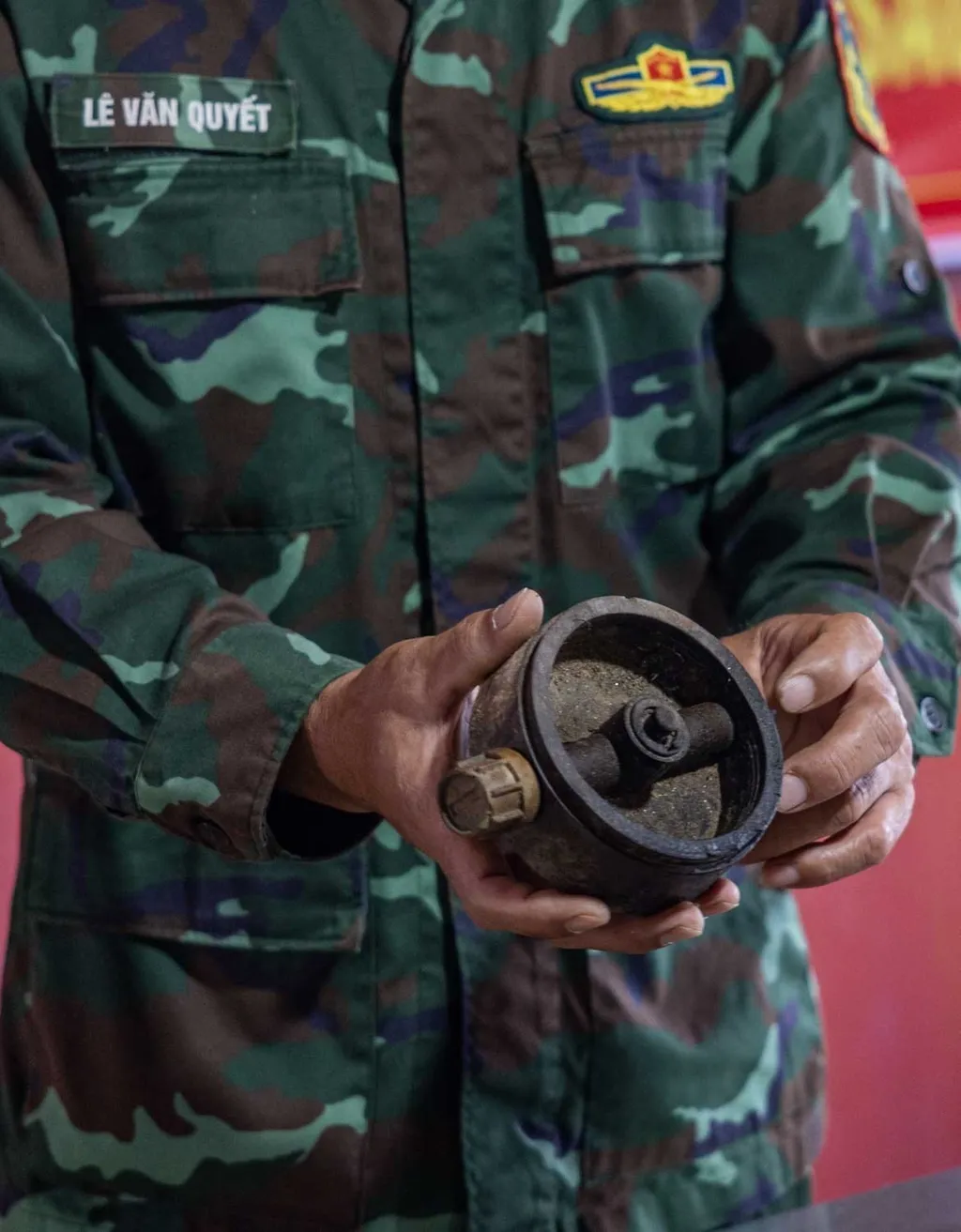 |
| An item of unexploded ordnance discovered during the operation has been safely disposed of. |
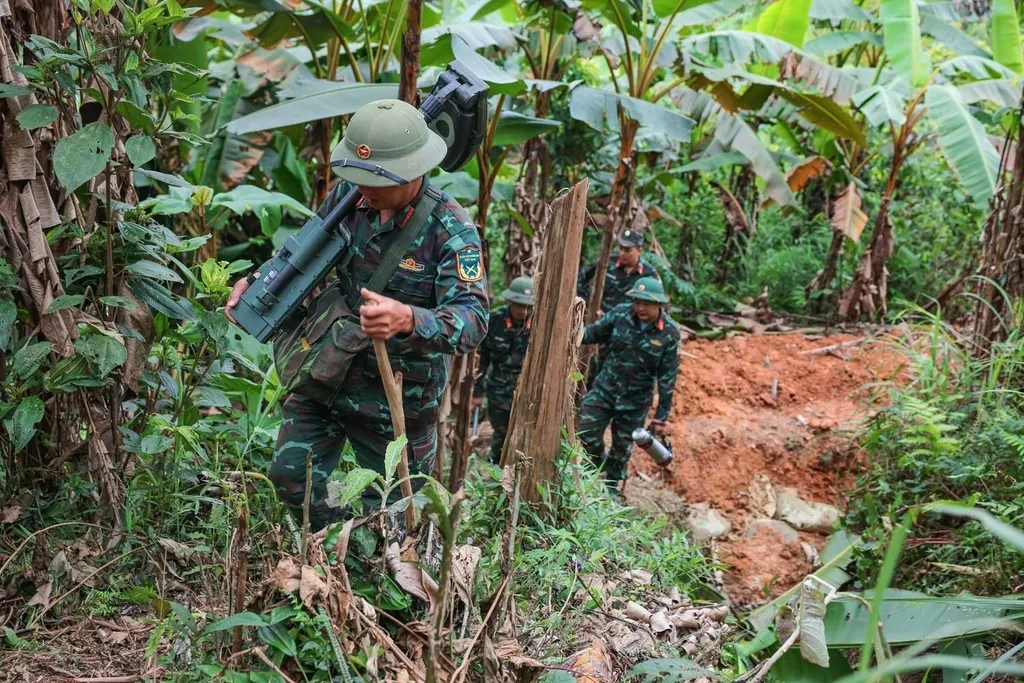 |
| Rugged mountainous terrain makes the journey to search sites challenging and arduous for team members. |
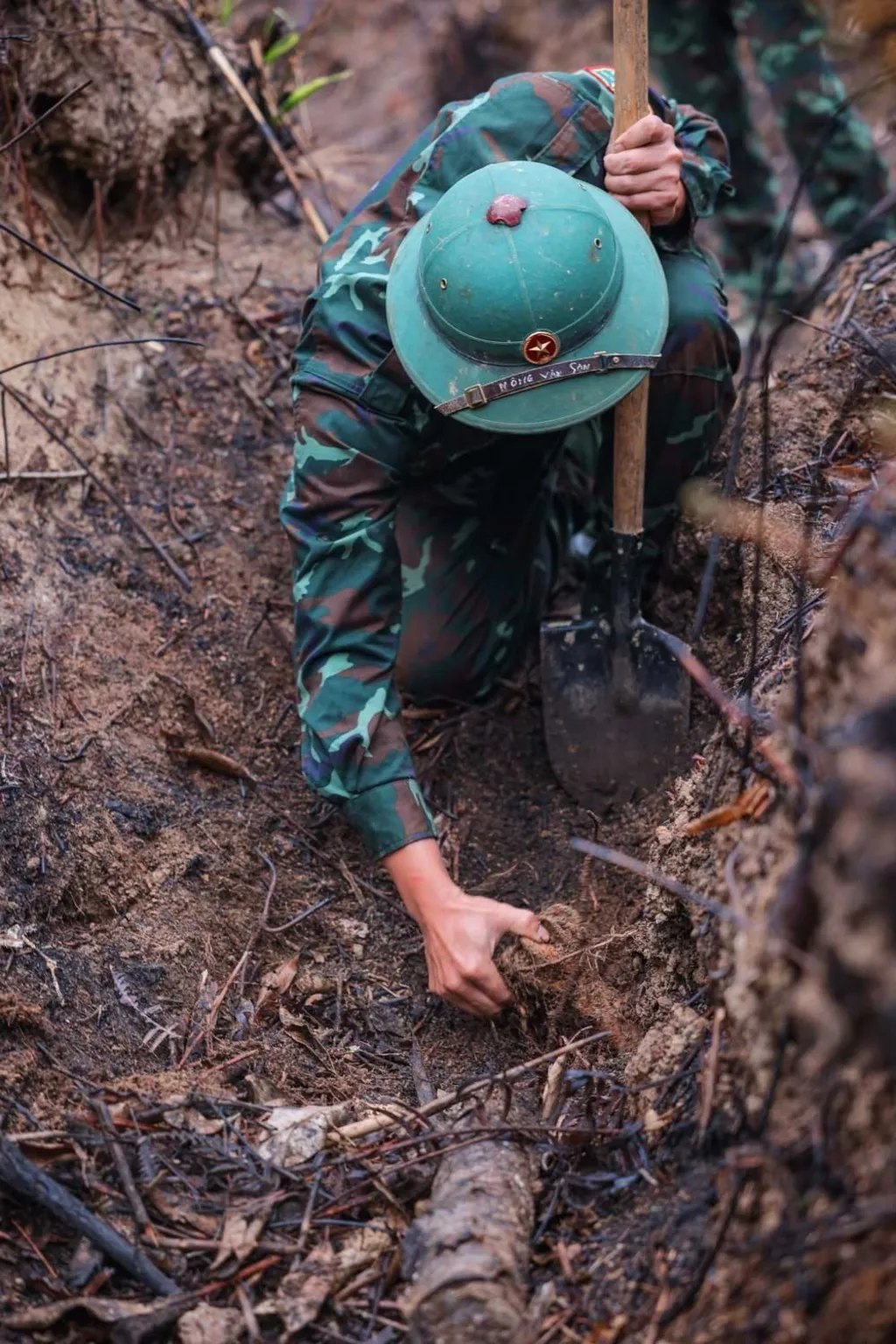 |
| Members of the Martyrs’ Remains Search and Recovery Team clear unexploded mines and ordnance to facilitate search operations while ensuring safety in the field. |
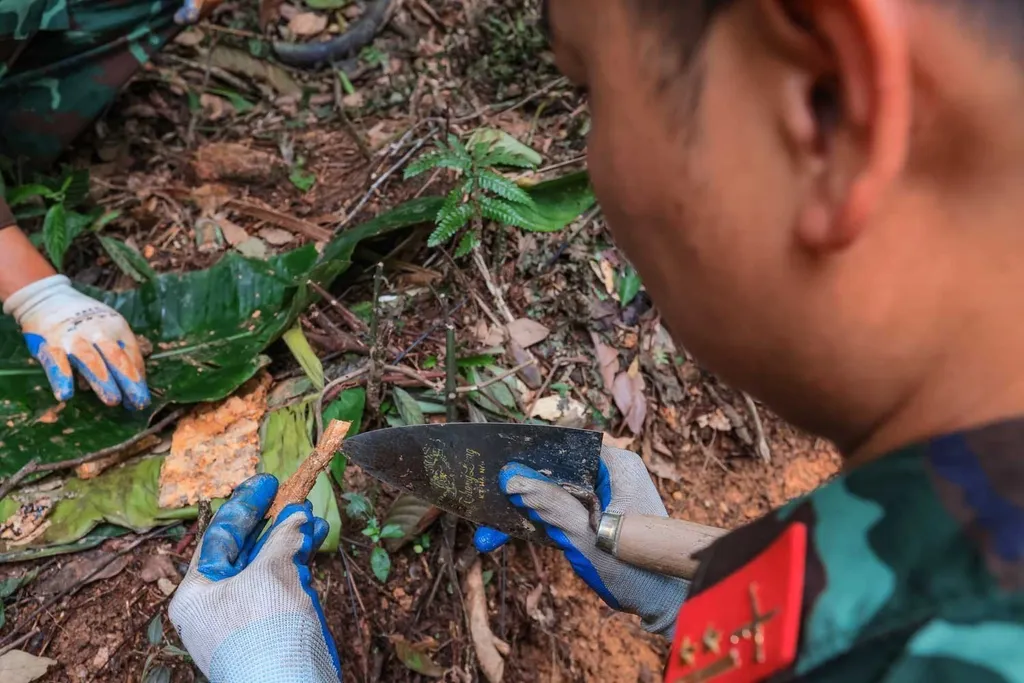 |
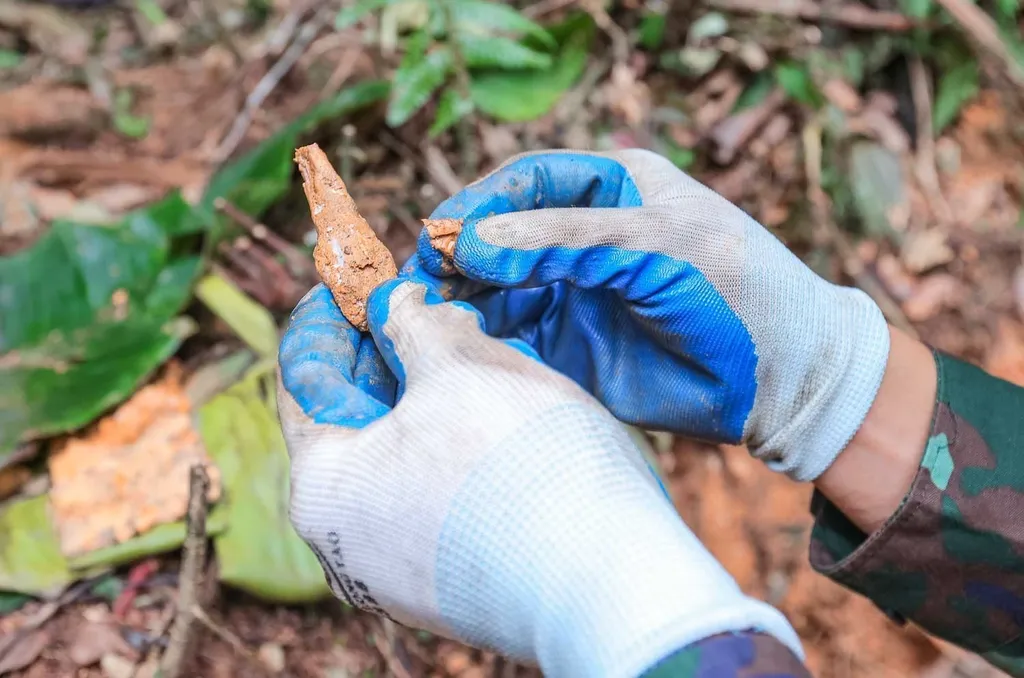
| Lieutenant Colonel Hoàng Vũ Dũng, deputy head of the Tuyên Quang Martyrs’ Remains Search and Recovery Team, examines a suspected human bone fragment at a site in Minh Tân Commune believed to contain martyrs’ remains. |
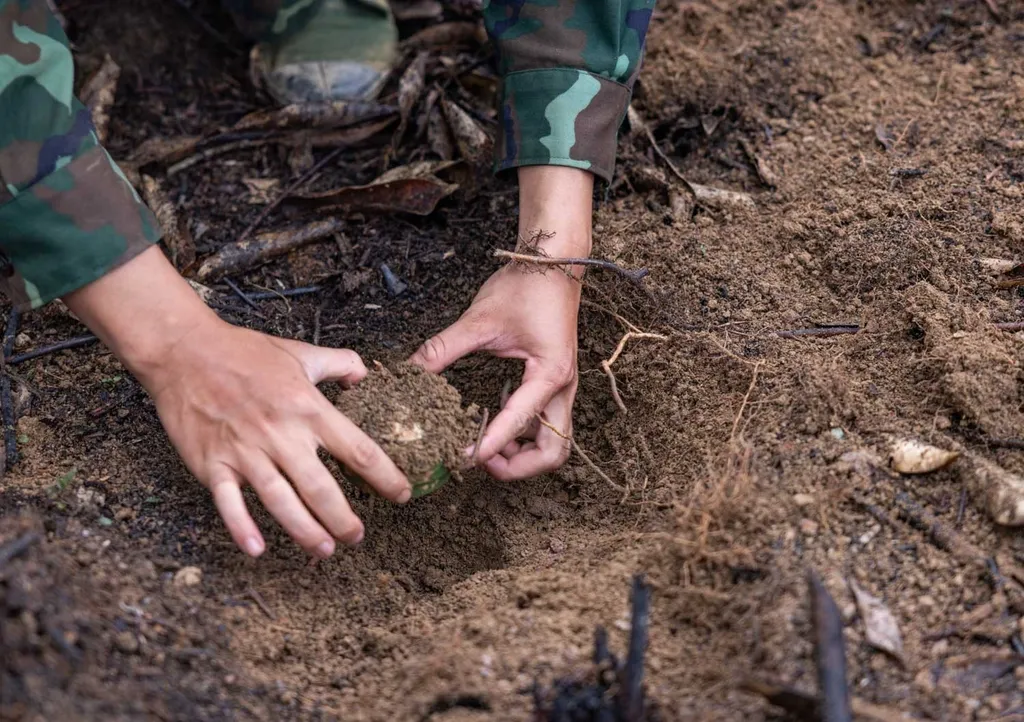 |
| Plastic-cased landmines left behind in many areas of the former Vị Xuyên battlefield continue to complicate search and recovery efforts. |
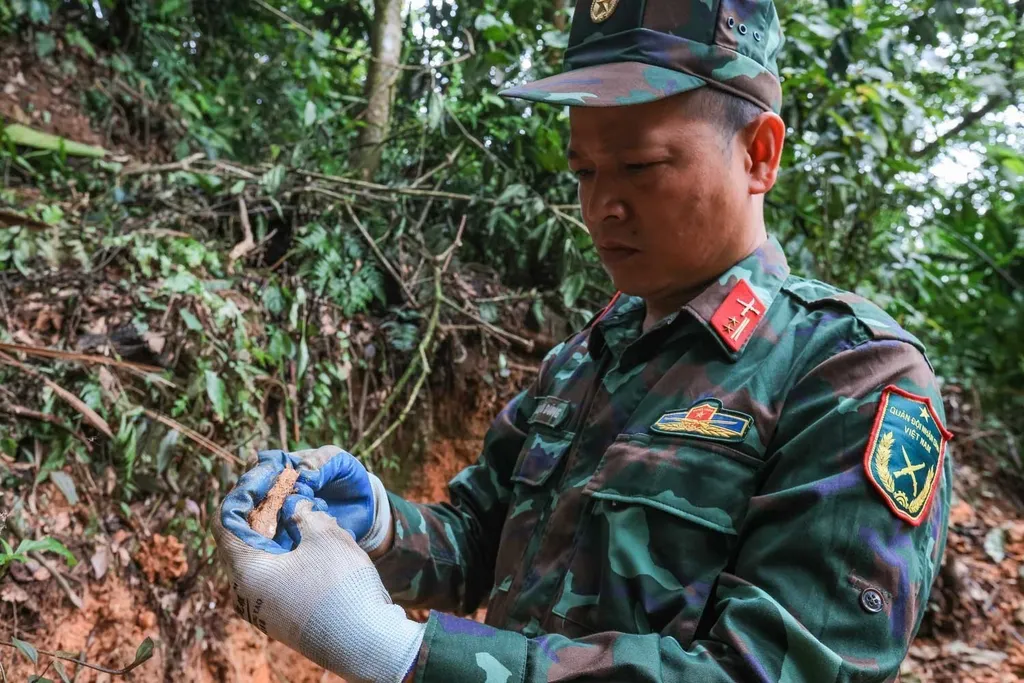 |
| Lieutenant Colonel Hoàng Vũ Dũng, deputy head of the Tuyên Quang Martyrs’ Remains Search and Recovery Team, examines a suspected human bone fragment at a site in Minh Tân Commune believed to contain martyrs’ remains. |
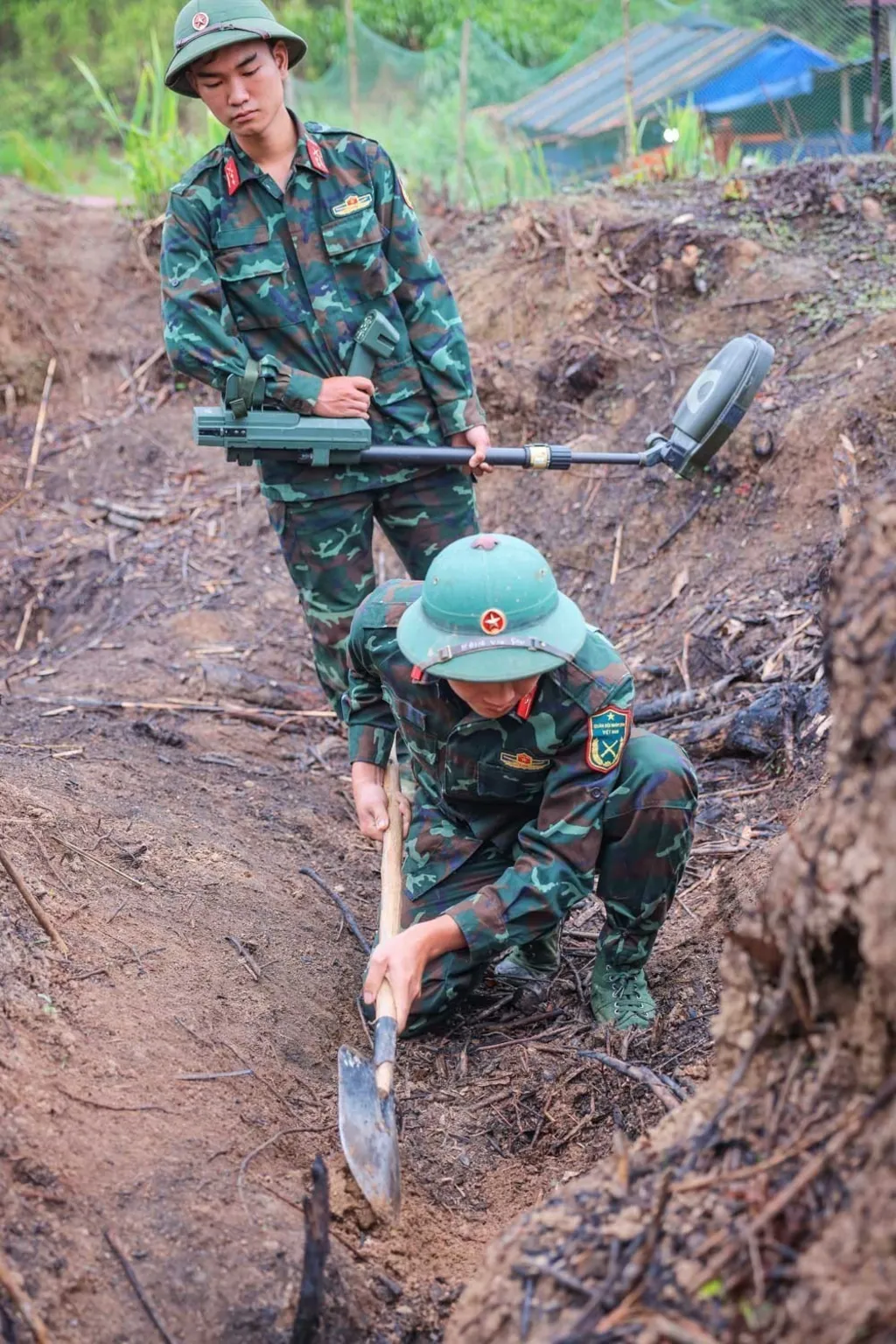 |
| Members of the Martyrs’ Remains Search and Recovery Team clear unexploded mines and ordnance to facilitate search operations while ensuring safety in the field. |
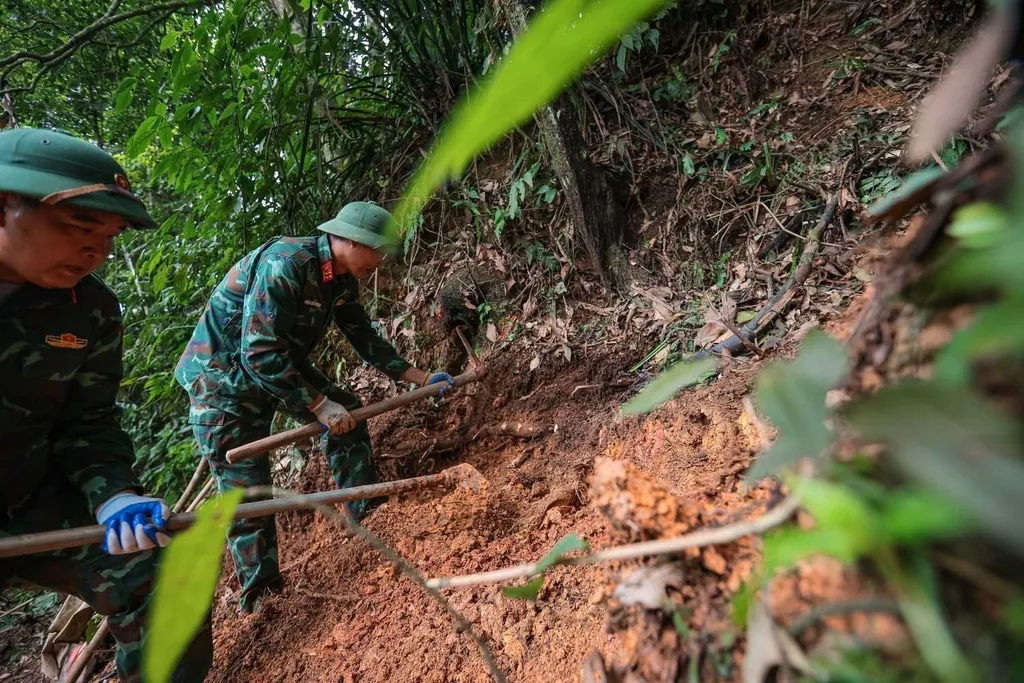 |
| Members of the Martyrs’ Remains Search and Recovery Team clear unexploded mines and ordnance to facilitate search operations while ensuring safety in the field. |
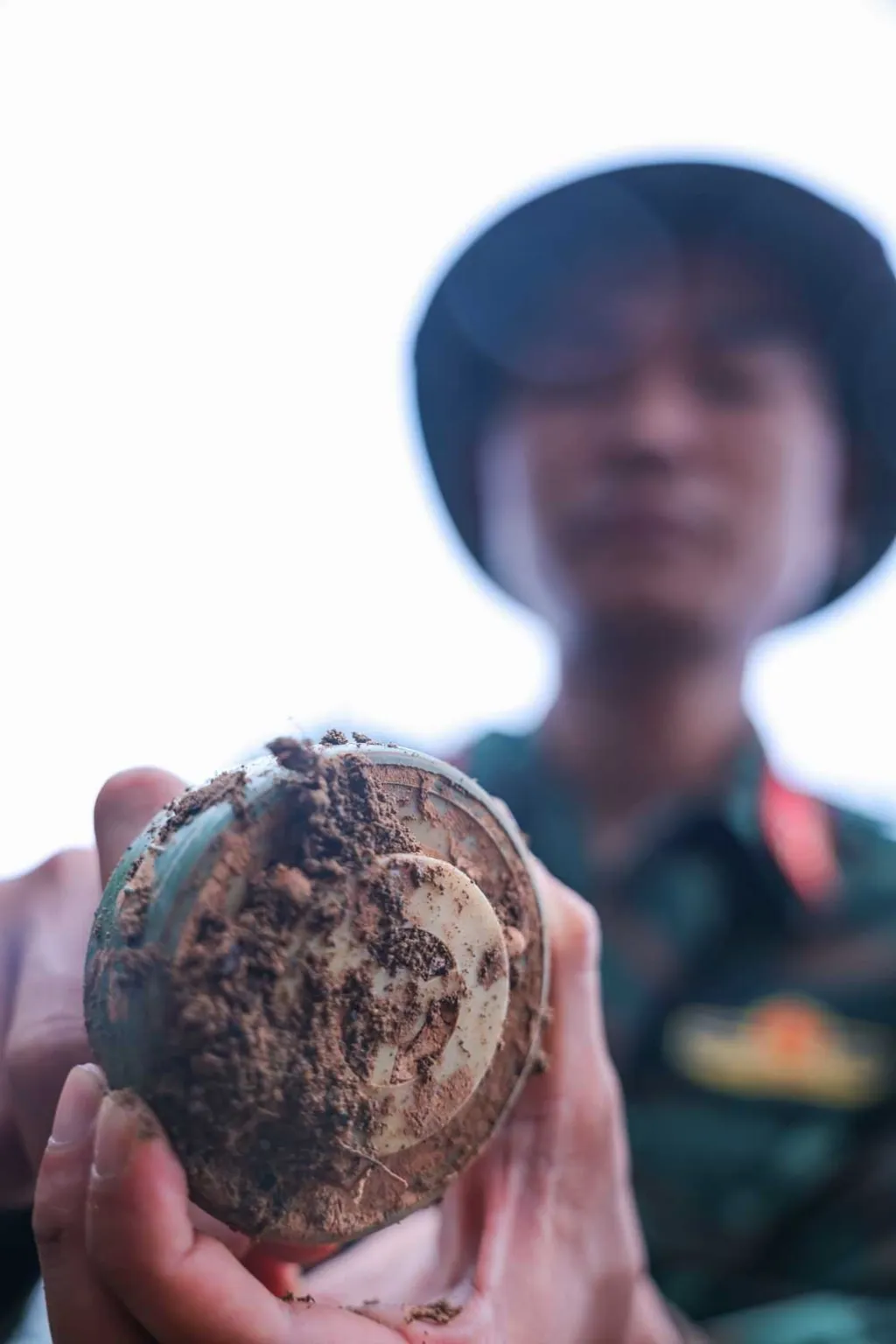 |
| Plastic-cased landmines left behind in many areas of the former Vị Xuyên battlefield continue to complicate search and recovery efforts. |
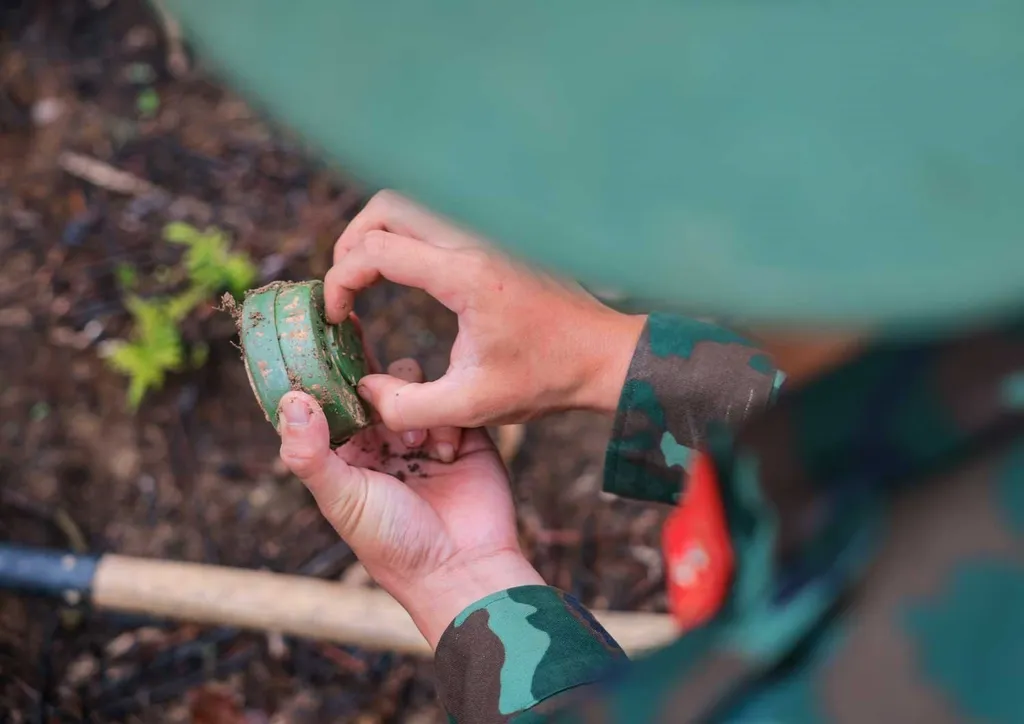 |
| Many plastic-cased landmines are difficult to detect using conventional equipment, increasing the risks and challenges of clearance operations. |
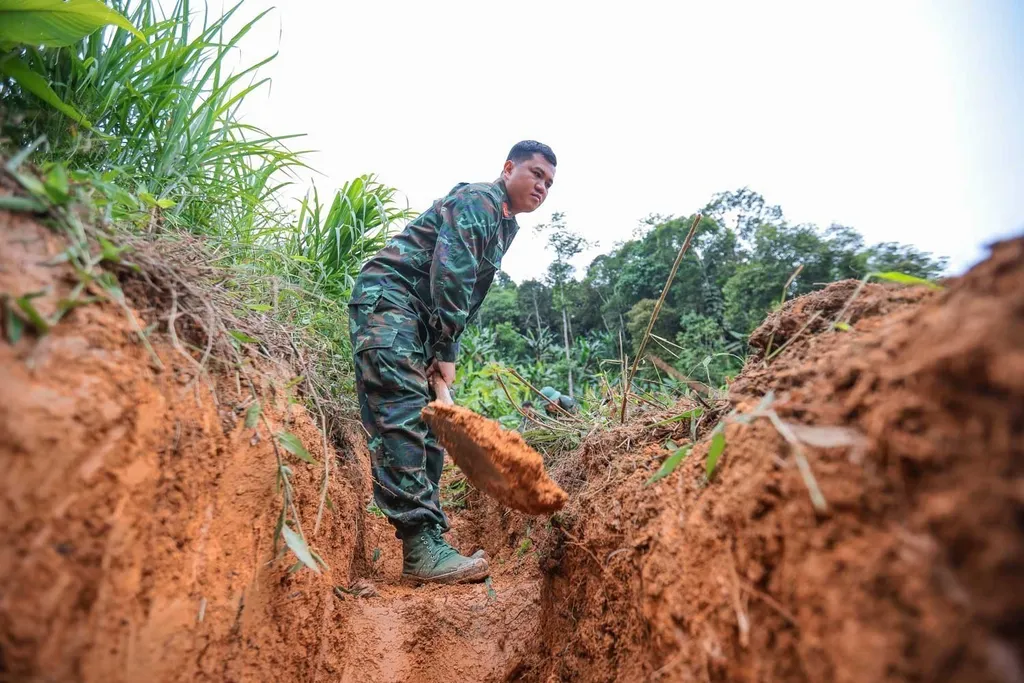 |
| Members of the Martyrs’ Remains Search and Recovery Team clear unexploded mines and ordnance to facilitate search operations while ensuring safety in the field. |
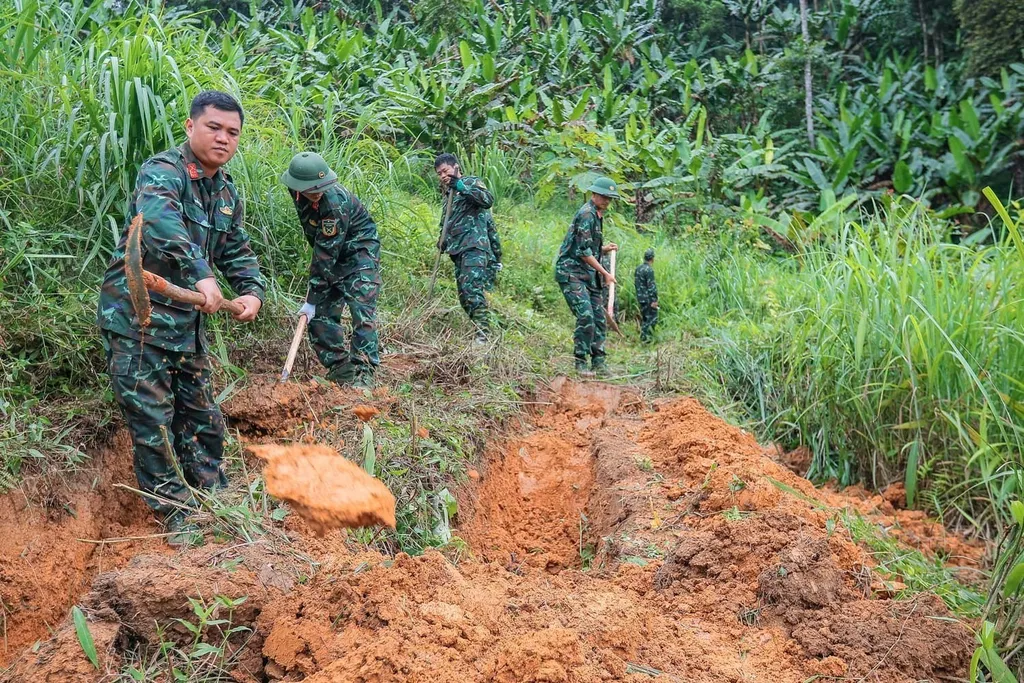 |
| Members of the Martyrs’ Remains Search and Recovery Team clear unexploded mines and ordnance to facilitate search operations while ensuring safety in the field. |
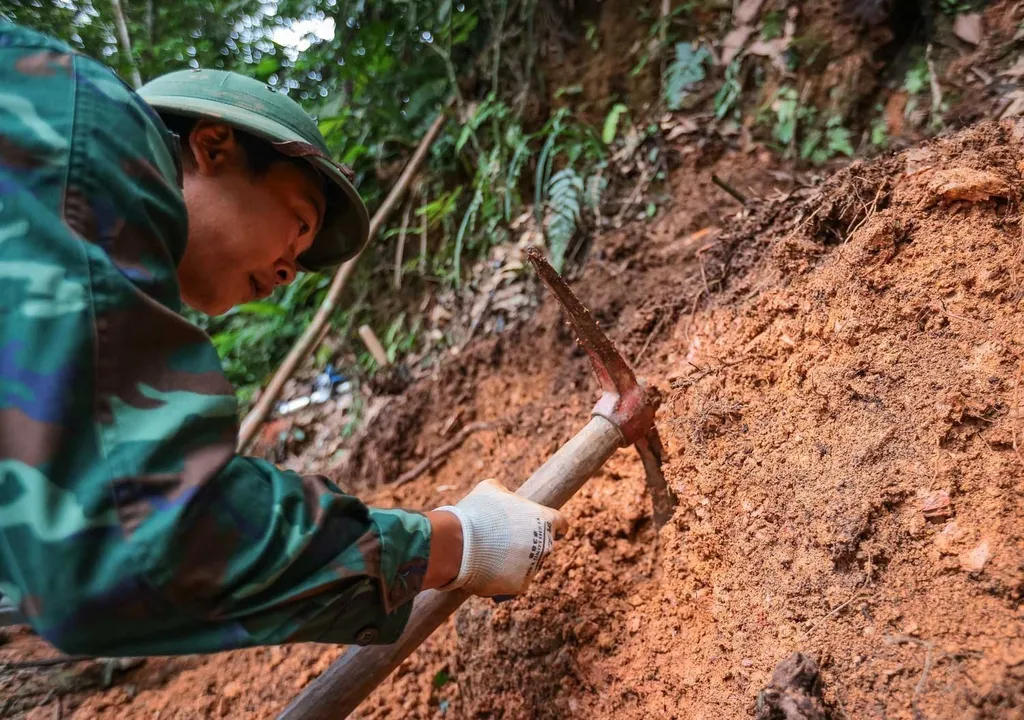 |
| Members of the Martyrs’ Remains Search and Recovery Team search an area in Minh Tân Commune suspected of containing martyrs’ remains. |
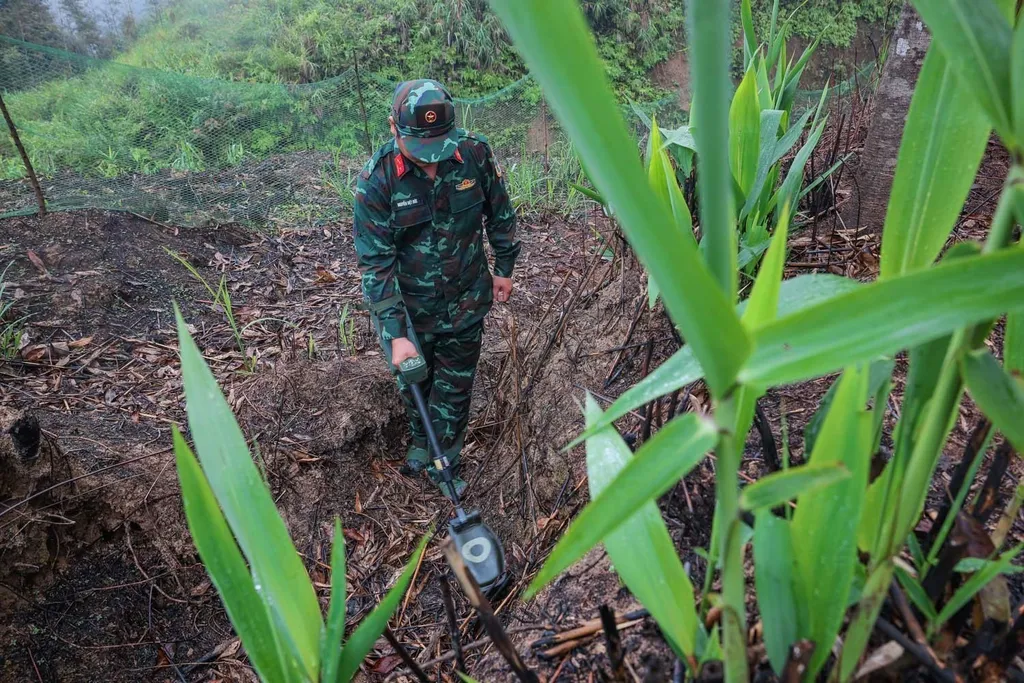 |
| Members of the Martyrs’ Remains Search and Recovery Team clear unexploded mines and ordnance to facilitate search operations while ensuring safety in the field. |
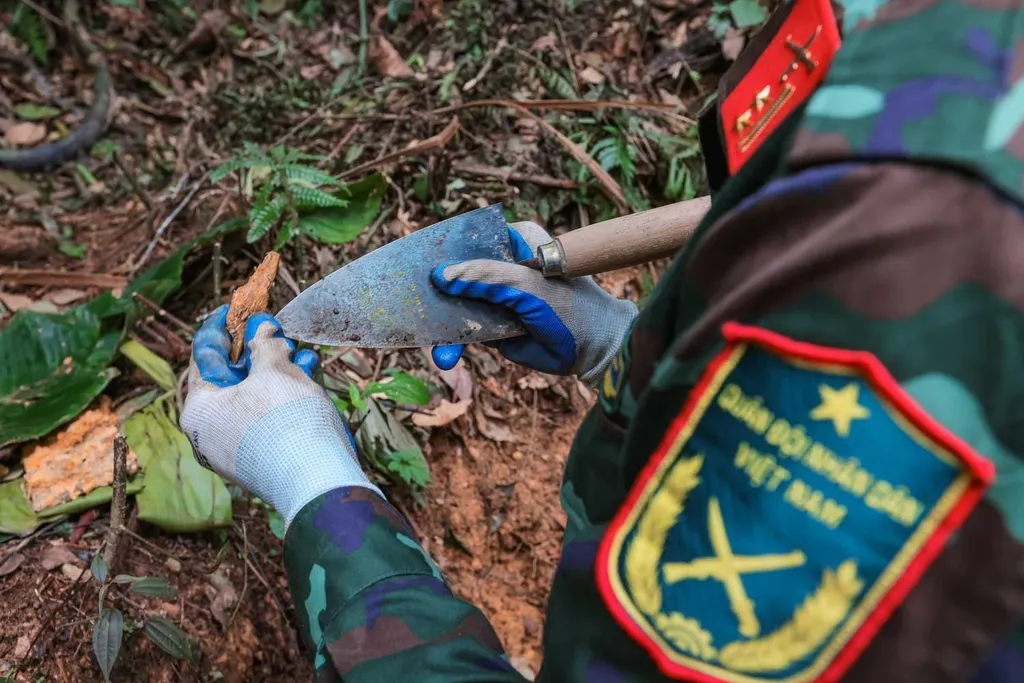 |
| Lieutenant Colonel Hoàng Vũ Dũng, deputy head of the Tuyên Quang Martyrs’ Remains Search and Recovery Team, examines a suspected human bone fragment at a site in Minh Tân Commune believed to contain martyrs’ remains. |