 |
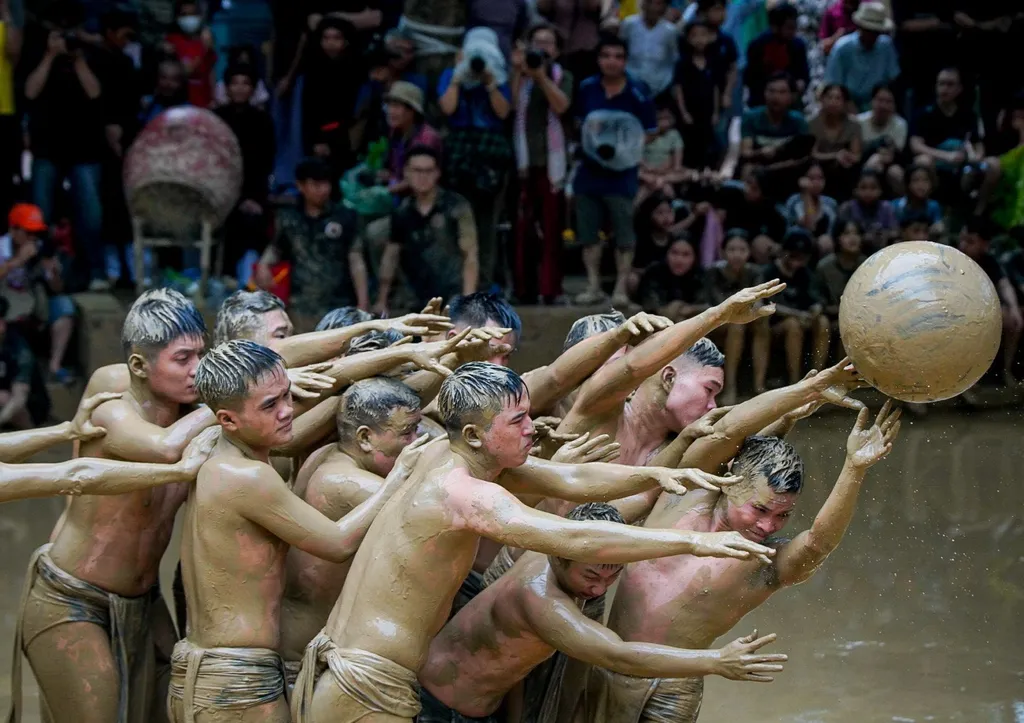
| For centuries, the Vân Village Water Wrestling Festival has been preserved by local residents as an integral part of their cultural and spiritual life. VNA/VNS Photos |
BẮC NINH Held every four years in Vân Village, Vân Hà Ward, Bắc Ninh Province, the Water Wrestling Festival takes place over three days, from the 12th to the 14th day of the fourth lunar month. Often described as a "living museum" of Kinh Bắc culture, the festival preserves unique local traditions passed down through generations.
The festival is associated with the legend of Đức Thánh Tam Giang, a legendary guardian deity of the Tam Giang region, who is said to have helped repel the Liang invaders in the sixth century. It recreates a historic battle in which evil spirits were subdued, while also reflecting ancient indigenous beliefs linked to the worship of the Sun God by wet-rice farming communities.
Across Bắc Ninh Province, a number of village festivals feature traditional ball-grabbing contests, including those in Hữu Mục, Lý Village, Phú Khê, Dĩnh Village and Bừng Village. However, the water ball wrestling festival is unique to Vân Village.
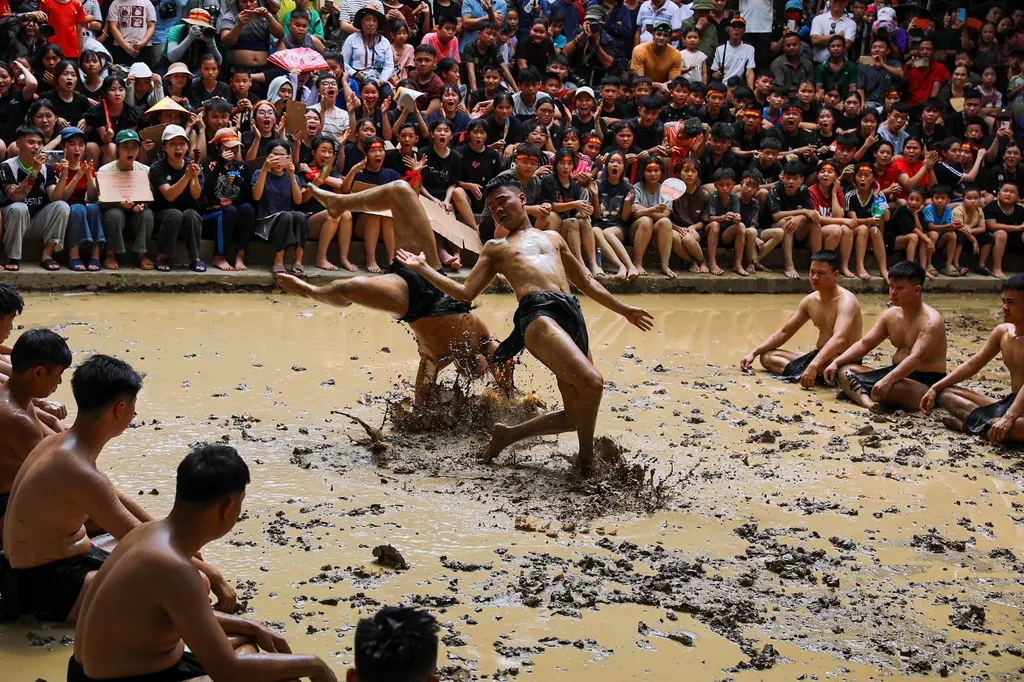
Unlike conventional sporting events held on grass or dry ground, the Vân Village festival is often described as one of a kind because it takes place on a muddy field covering about 200 square metres. At either end of the field is a pit roughly 80 centimetres deep and 50 centimetres wide.
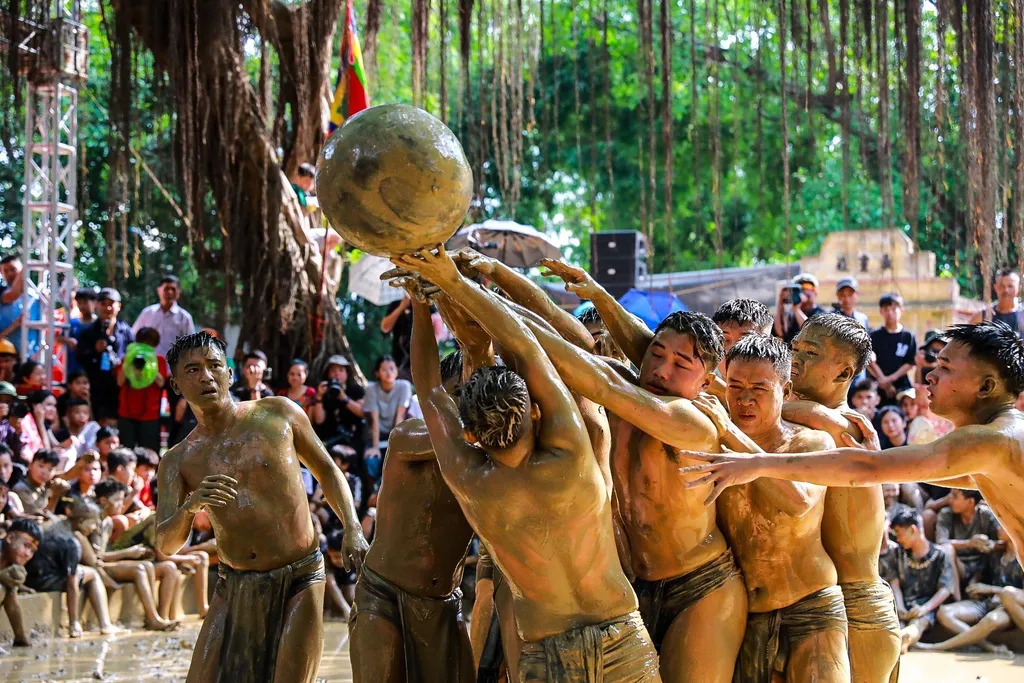
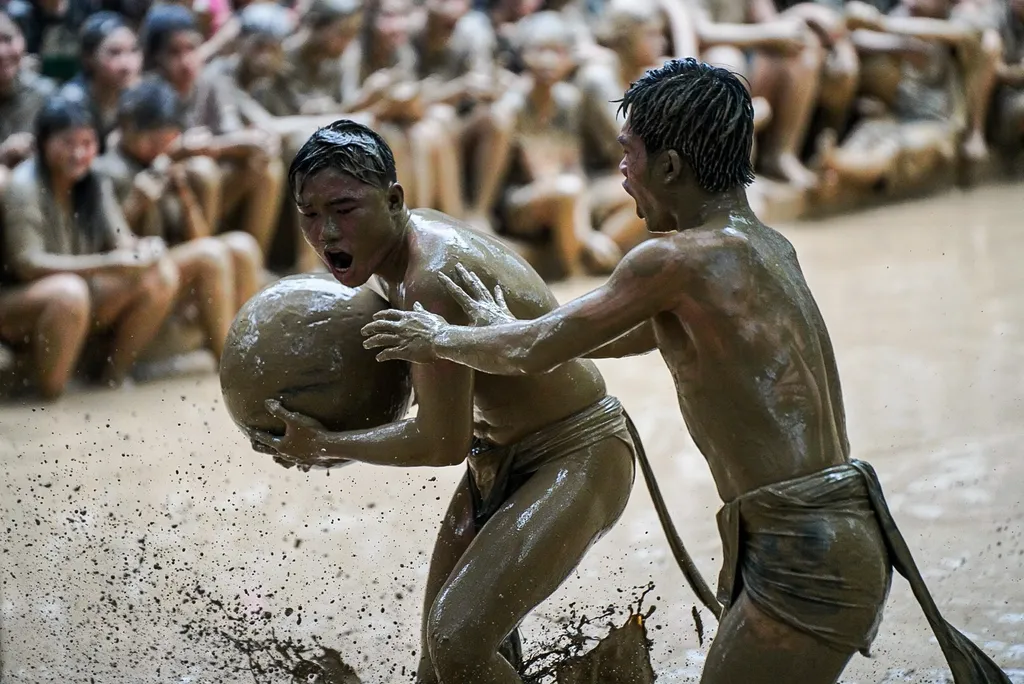
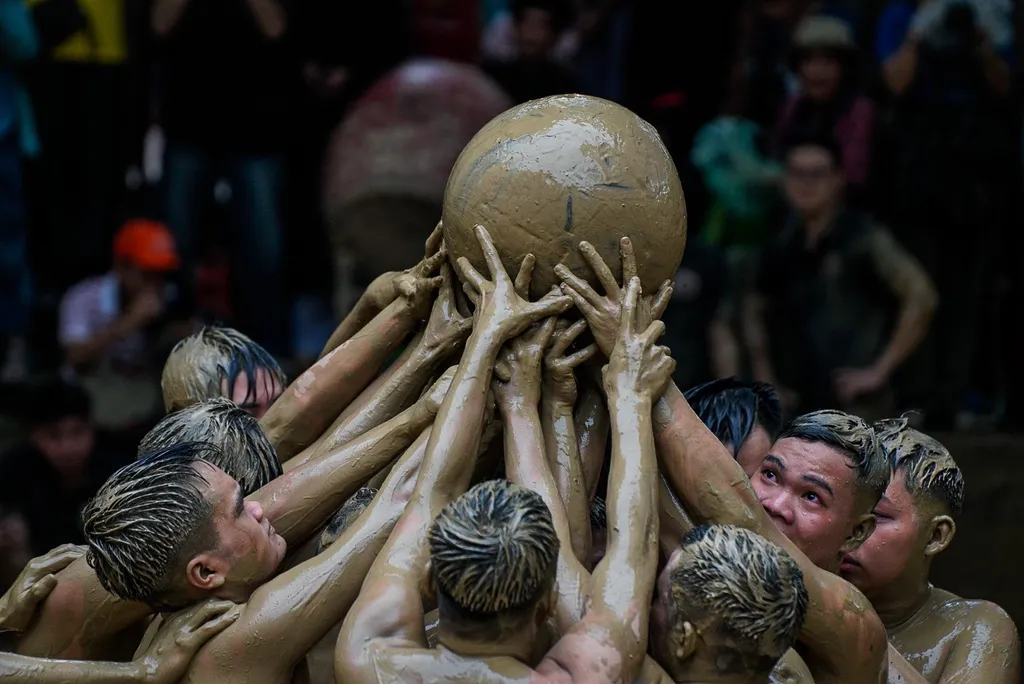
At the heart of the festival is a solid jackfruit-wood ball weighing nearly 20 kilograms, symbolising the sun, the source of life and vitality. Village elders say the ball currently used in the festival is more than 300 years old. It is carefully preserved and worshipped in the village temple and brought out only during the festival.
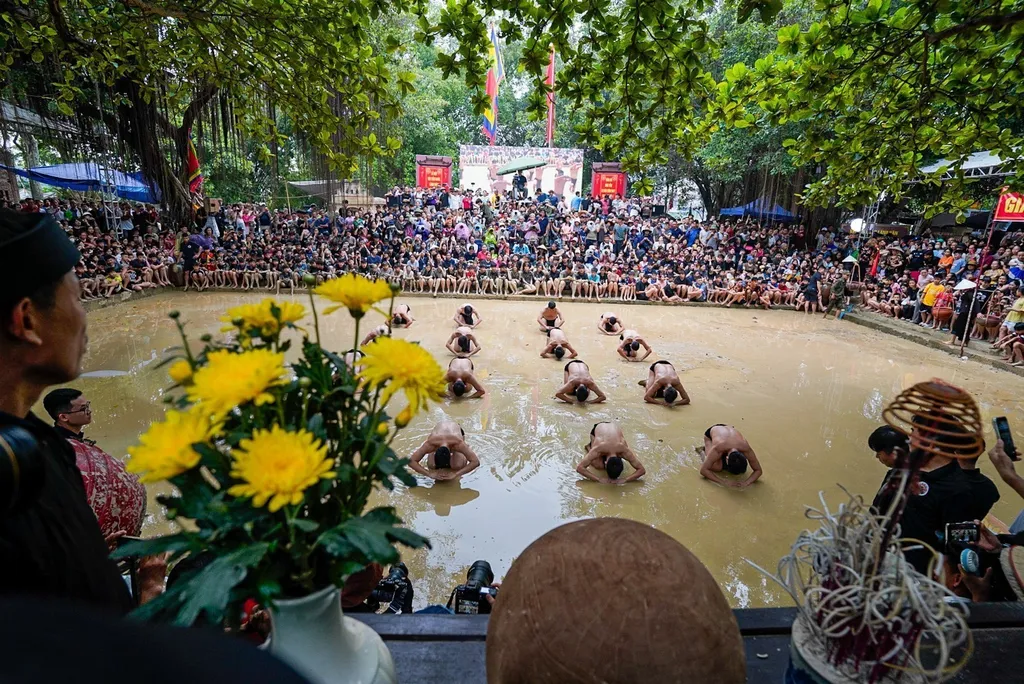 |
| Players perform the traditional ritual of drinking rice wine and eating watermelon before the match begins. |
When the festival concludes, the wooden ball is ceremonially carried back to the temple's inner sanctuary in a ritual known as hoàn cầu (ball-returning ceremony).
During the festival, 16 young men selected for their strength compete in the contest. They are divided into two teams, Giáp Hạ and Giáp Thượng, with eight players on each side. The players are known as quân cầu (the ceremonial players who compete in the ball-wrestling contest).
Diêm Đăng Tráng, a trainer of the quân cầu team in Vân Hà Ward, Bắc Ninh Province, said: "The players are carefully selected from local residential groups and must follow strict rules before the festival begins. They are trained in everything, from posture and movement to sitting positions and the techniques of the game itself.
"Having a son chosen to join the quân cầu team is considered a great honour and source of pride for local families. As a result, since the festival was revived in 2002 after a long interruption, it has consistently enjoyed strong community support and participation."
When the ceremonial drum sounds, the 16 players divide into two teams and run around the field in greeting, cheered on by villagers and visitors. The contest officially begins when the wooden ball is thrown onto the muddy field.
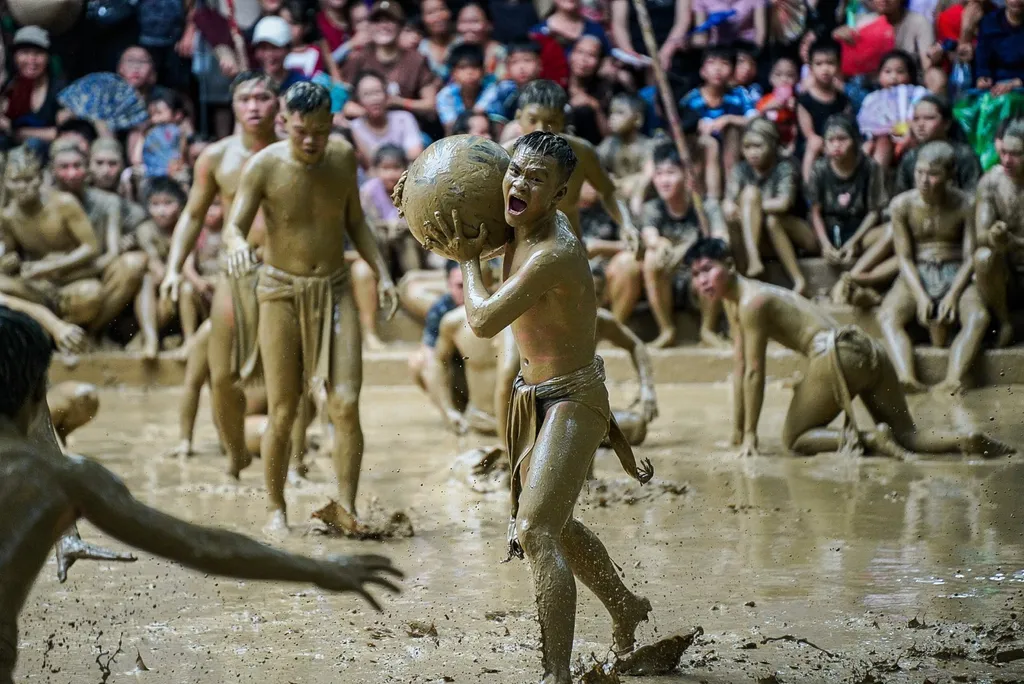 |
| Young men grapple fiercely around the wooden ball as mud splashes into the air with every sprint and collision. |
The two sides battle fiercely, fighting for every metre of ground as they attempt to drive the ball into their opponents' scoring pit, undeterred by the intense early-summer heat. As the ball becomes soaked with water, it grows increasingly slippery. At times, teammates even lift a player carrying the ball high above the crowd in an effort to evade defenders.
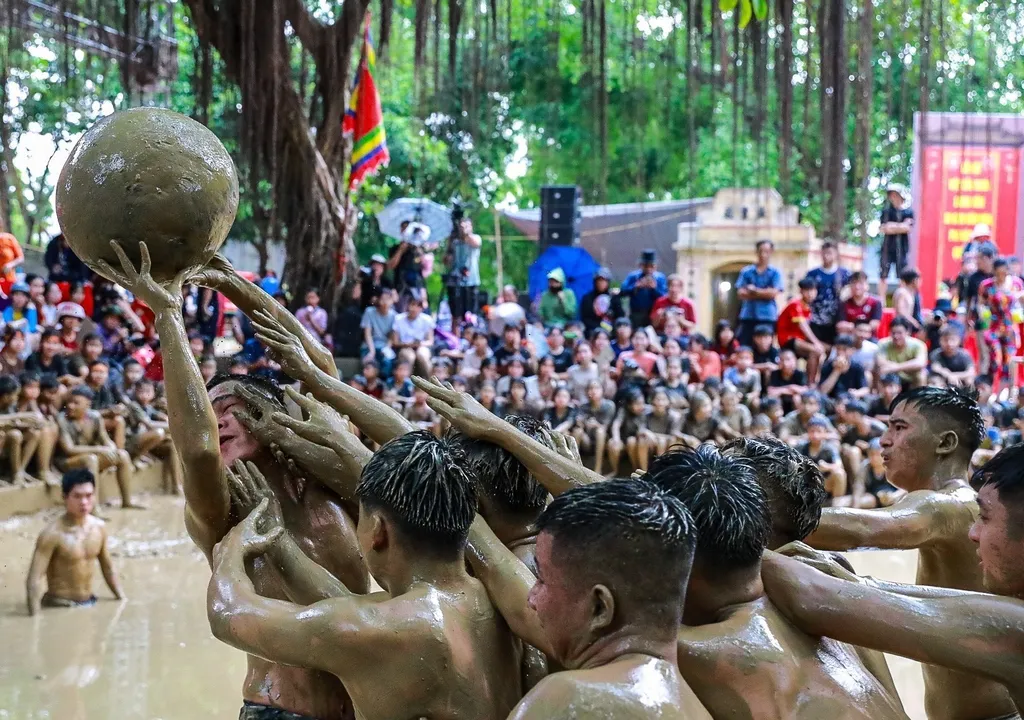
Spectators watch in suspense as powerful tackles, blocks and lifts unfold amid the rhythmic beat of drums that alternate between measured and urgent tempos. Each time the ball is forced into a scoring pit, a round ends to thunderous cheers from the crowd.
According to local belief, if Giáp Thượng wins, the year ahead will bring favourable weather, prosperous livelihoods and good fortune for the village.
At the end of the contest, the players line up in four rows before the field to pay tribute to the saints, while villagers rush onto the muddy ground to celebrate with them. The atmosphere is festive and jubilant throughout the three-day event, with every match attracting large crowds of residents and visitors.
Visitors to the festival can still hear local people reciting a traditional verse:
When Vân Village celebrates its water ball wrestling festival,
Nowhere else in Kinh Bắc can such a sight be found.
Players strive with all their strength to seize the ball,
While the muddy field becomes a single sea of brown.
In 2022, the Vân Village Water Ball Wrestling Festival was inscribed on the National List of Intangible Cultural Heritage. Local authorities continue to collect historical materials and promote the use of digital technologies to preserve and showcase the festival, with the aim of developing it into a distinctive cultural and tourism product of the Bắc Ninh-Kinh Bắc region. VNS
 |
| The village's Water Wrestling Festival is renowned for its distinctive character and is often regarded as one of a kind. |
 |
| With a history stretching back centuries, the Vân Village Water Wrestling Festival remains deeply rooted in the spiritual beliefs and communal cultural life of the Kinh Bắc region. |
 |
| Bare-chested and covered in mud, players wrestle intensely for possession of the wooden ball, showcasing the martial spirit and communal vitality that define the festival. |
 |
| Players battle fiercely for control of the ball during the match. |
 |
| A fierce contest for possession unfolds on the muddy field. |
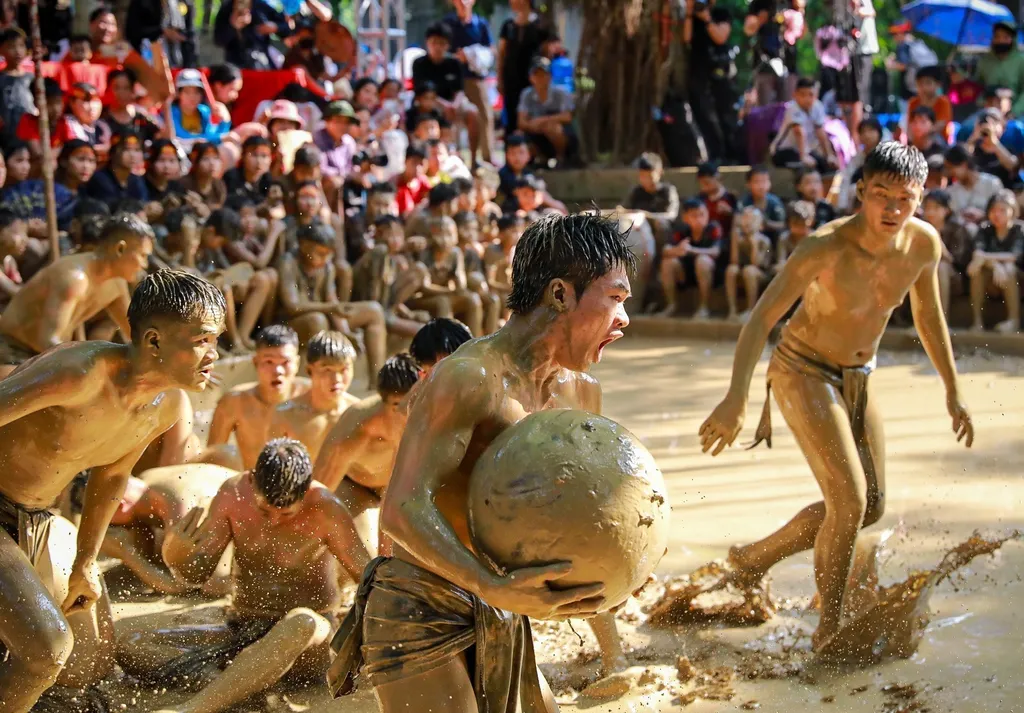 |
| A dramatic contest unfolds between two competing teams. |
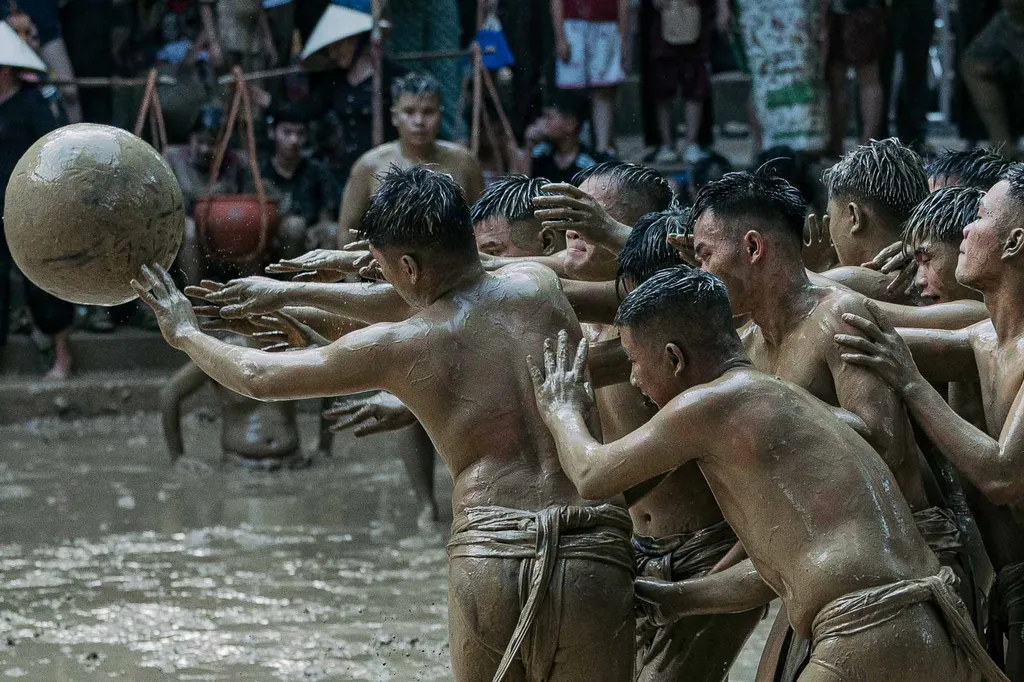 |
| The ball, made from jackfruit wood and weighing around 20kg, symbolises prayers for favourable weather, peace and prosperity, and abundant harvests. |
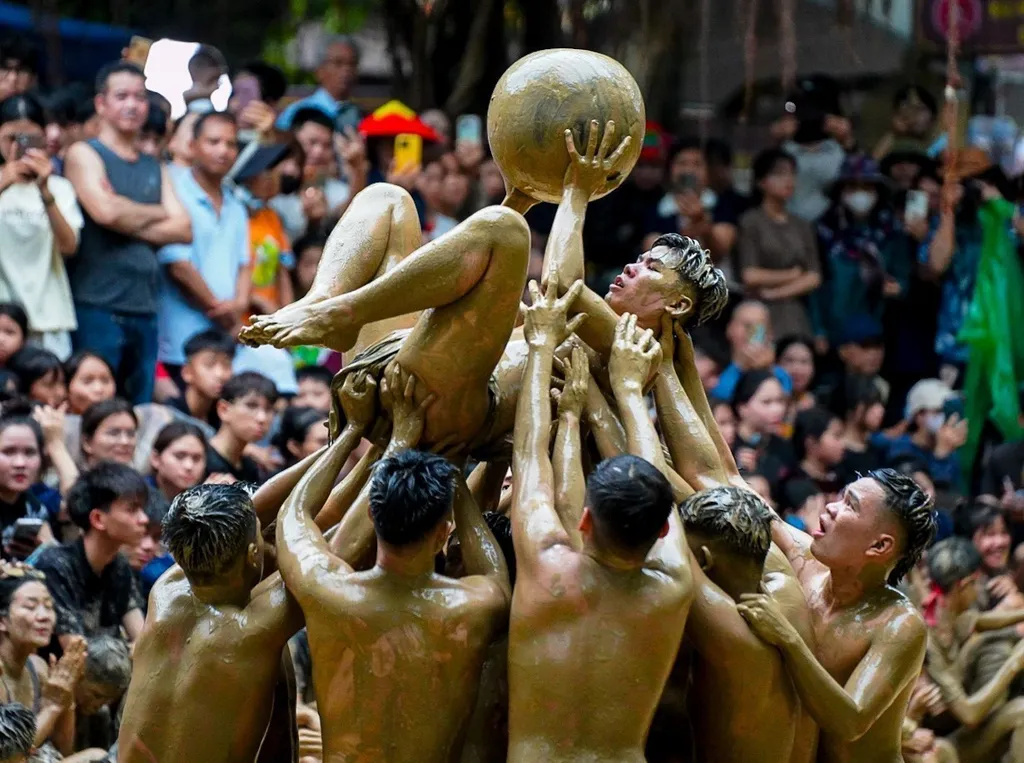 |
| Players battle fiercely for possession of the ball during the match. |
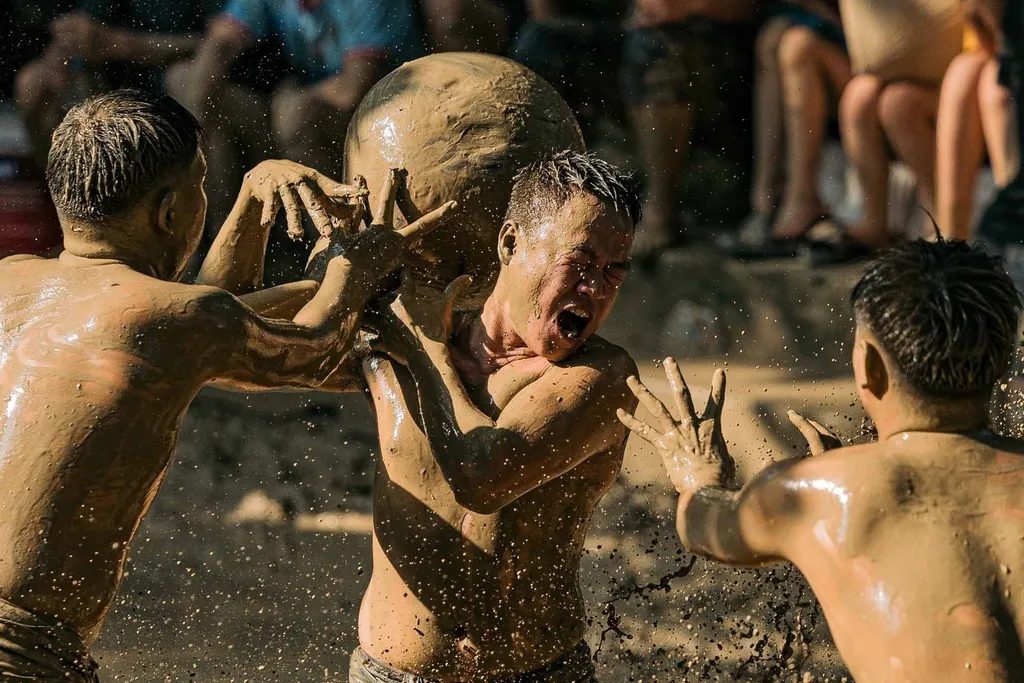 |
| A player struggles to evade defenders and move the ball towards the scoring pit. The action remains fast-paced and intense on the slippery muddy surface. |
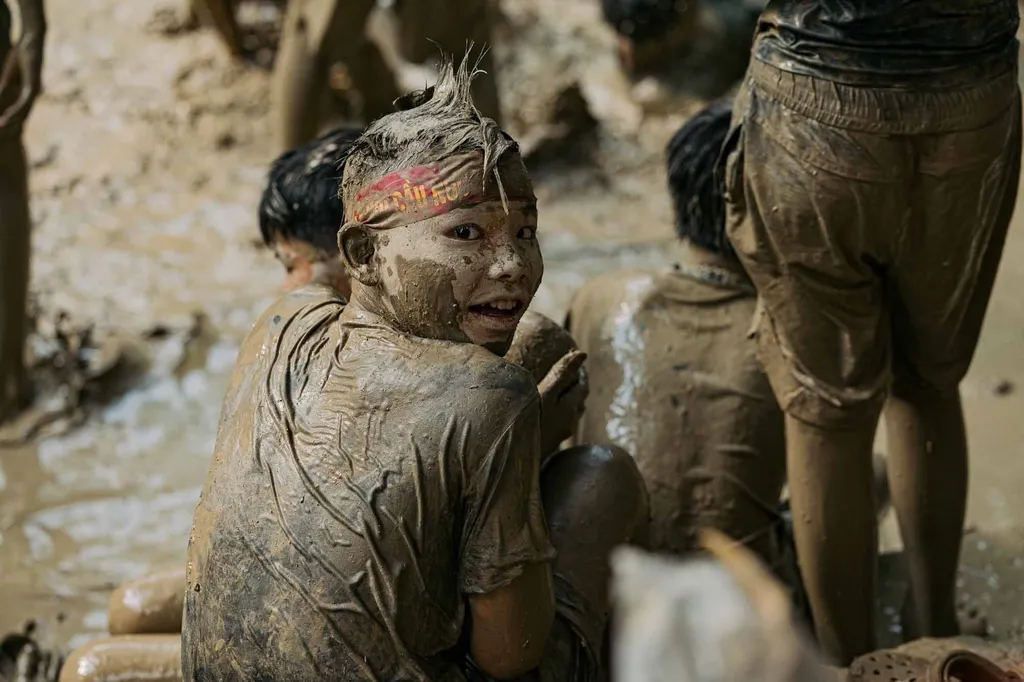 |
| Not only the players, but many children and spectators also end up covered in mud as they immerse themselves in the festive atmosphere. For the people of Vân Village, the mud is not a blemish on the festival but part of a shared community memory. |
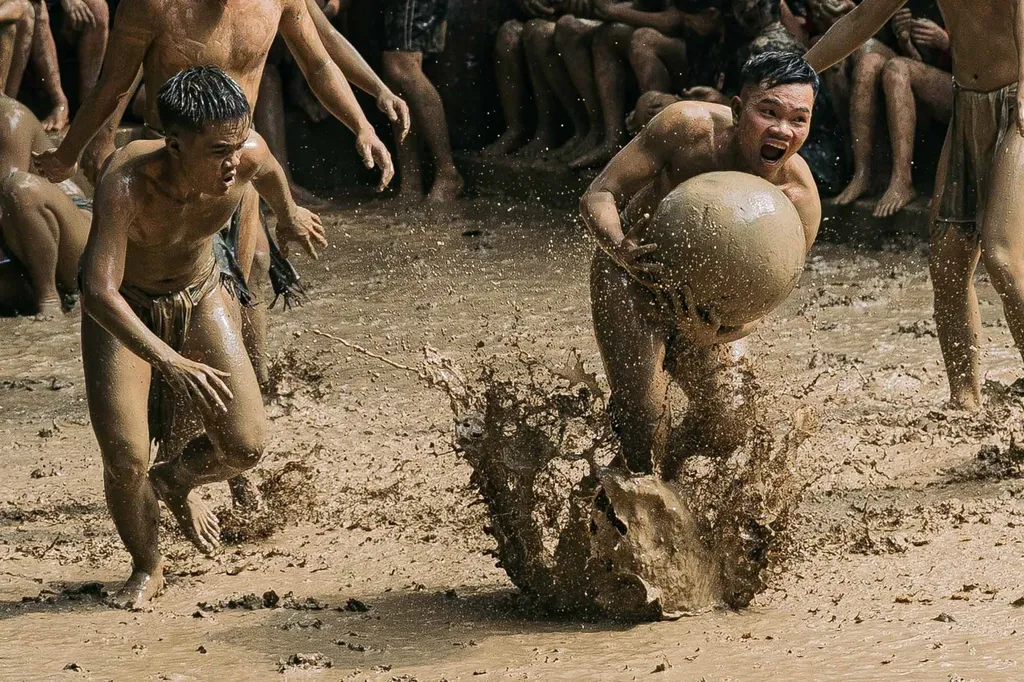 |
| The Village Vân Water Wrestling Festival is renowned for its distinctive character and is often regarded as one of a kind. |
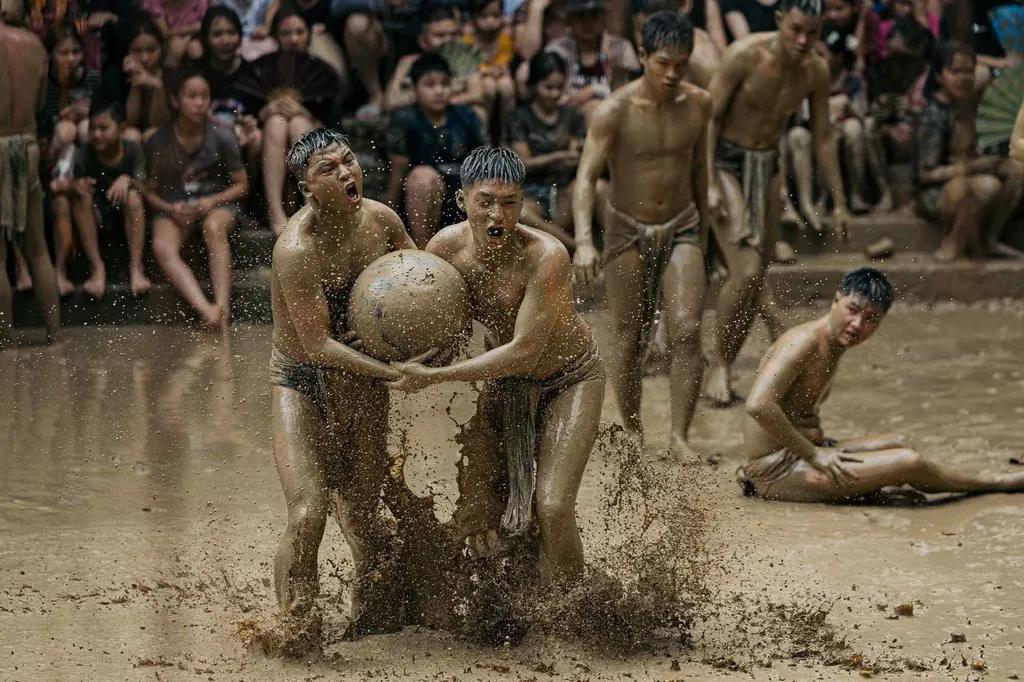 |
| On the roughly 200-square-metre muddy field within the grounds of the Temple of Đức Thánh Tam Giang, teams compete fiercely to drive the ball into their opponents' scoring pit. |
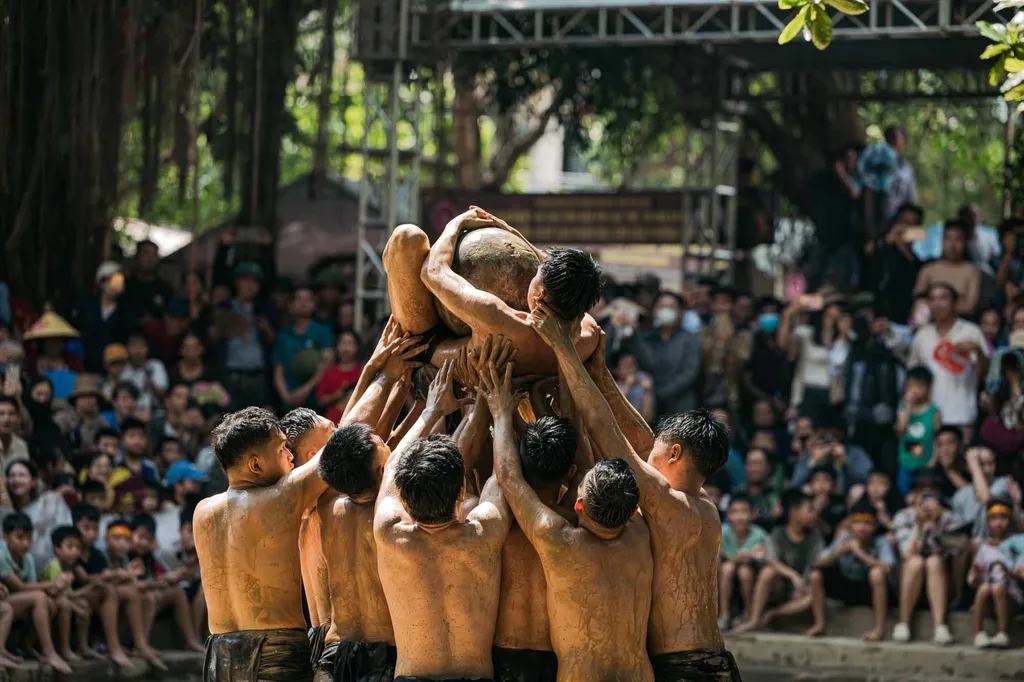 |
| On the roughly 200-square-metre muddy field within the grounds of the Temple of Đức Thánh Tam Giang, teams compete fiercely to drive the ball into their opponents' scoring pit. |
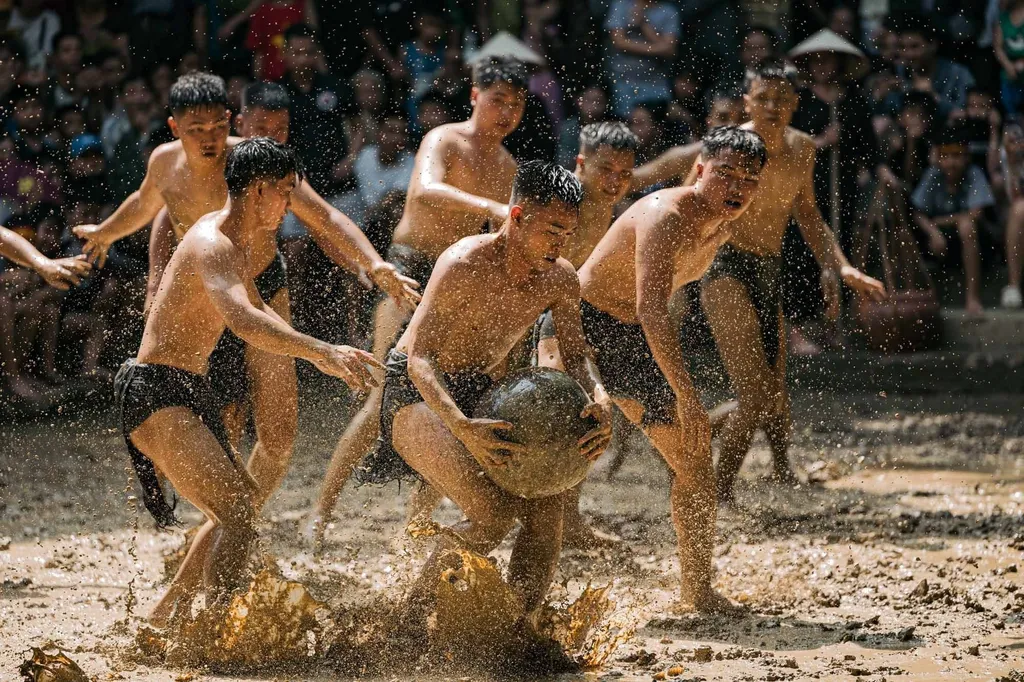 |
| Heavy collisions, thick mud and enthusiastic cheers combine to create the festival's distinctive appeal. |
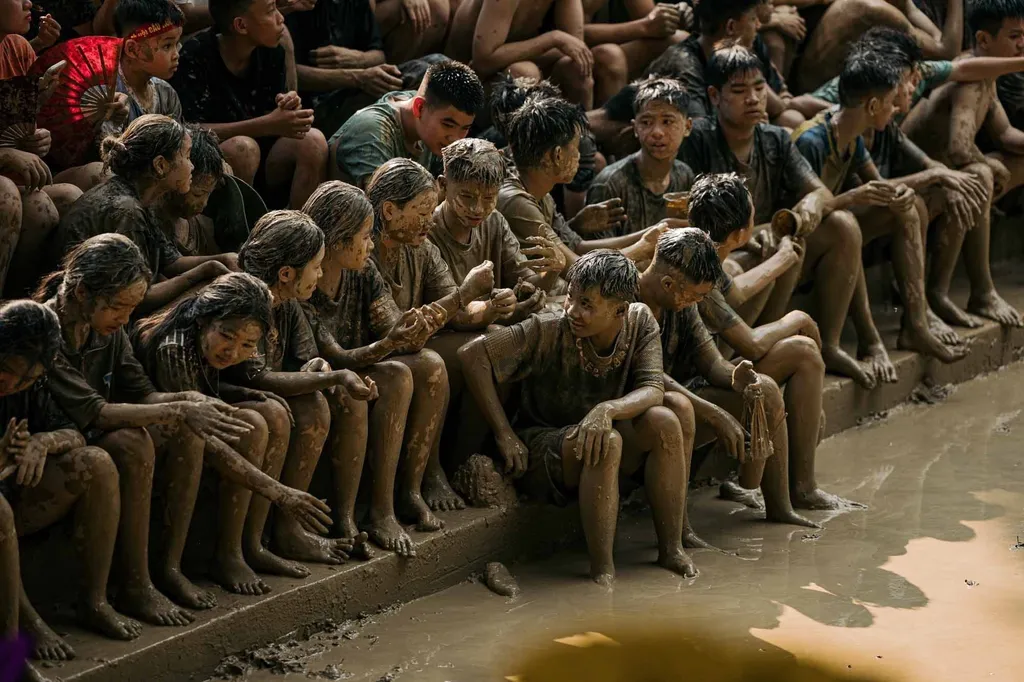 |
| The festival attracts large crowds thanks to its lively atmosphere, intense contests on the muddy field and rituals steeped in spiritual significance, expressing hopes for favourable weather and abundant harvests. |