In November 1974, the Politburo, the Secretariat and the Central Military Commission resolved to launch the Spring 1975 General Offensive and Uprising. Beginning with the Central Highlands Campaign and the strategic breakthrough at Buôn Ma Thuột, the offensive rapidly expanded with the liberation of Huế and Đà Nẵng. The collapse of key enemy defensive lines fundamentally shifted the balance of forces, creating the conditions for the historic Hồ Chí Minh Campaign, which culminated in the complete liberation of the South and national reunification.
The Hồ Chí Minh Campaign (April 26–30, 1975) was the culminating offensive of the 1975 Spring General Offensive and Uprising, following two major strategic victories: the Central Highlands Campaign (March 4–24, 1975) and the Huế–Đà Nẵng Campaign (March 5–29, 1975). These successive offensives destroyed key enemy corps, liberated vast territories and populations, and decisively shifted the balance of forces in favour of the revolutionary side.
At the end of March 1975, continuous victories across the Central Highlands and Huế–Đà Nẵng had eliminated major enemy units, liberated 16 provinces, and brought some eight million people into liberated areas. These gains strengthened the main forces, expanded local armed units, and created favourable conditions for the final strategic battle.
On April 1, 1975, the Politburo resolved to seize the strategic opportunity, calling for a swift, bold and decisive general offensive and uprising. On April 8, at Tà Thiết base in Lộc Ninh (Bình Phước), the Command of the Sài Gòn–Gia Định Campaign was established. By April 14, the Politburo and the Central Military Commission approved the final operational plan, launching coordinated attacks from multiple directions, and officially naming it the Hồ Chí Minh Campaign.
At 5pm on April 26, 1975, Vietnamese forces opened the campaign, rapidly breaking through outer defensive lines by April 28. On the night of April 28, troops were ordered to advance simultaneously on Sài Gòn from all directions, and at 5am on April 29, major assaults began on key defensive positions leading into the city.
After three days and nights of intense fighting, most enemy divisions were destroyed or disintegrated. In the early morning of April 30, 1975, forces surged into Sài Gòn, quickly capturing strategic targets including Tân Sơn Nhất Airport. At 10.45am, troops stormed the Independence Palace, capturing the entire Sài Gòn administration and forcing President Dương Văn Minh to declare unconditional surrender.
At 11.30am on April 30, 1975, the liberation flag was raised atop the Presidential Palace, marking the complete victory of the Hồ Chí Minh Campaign. VNS
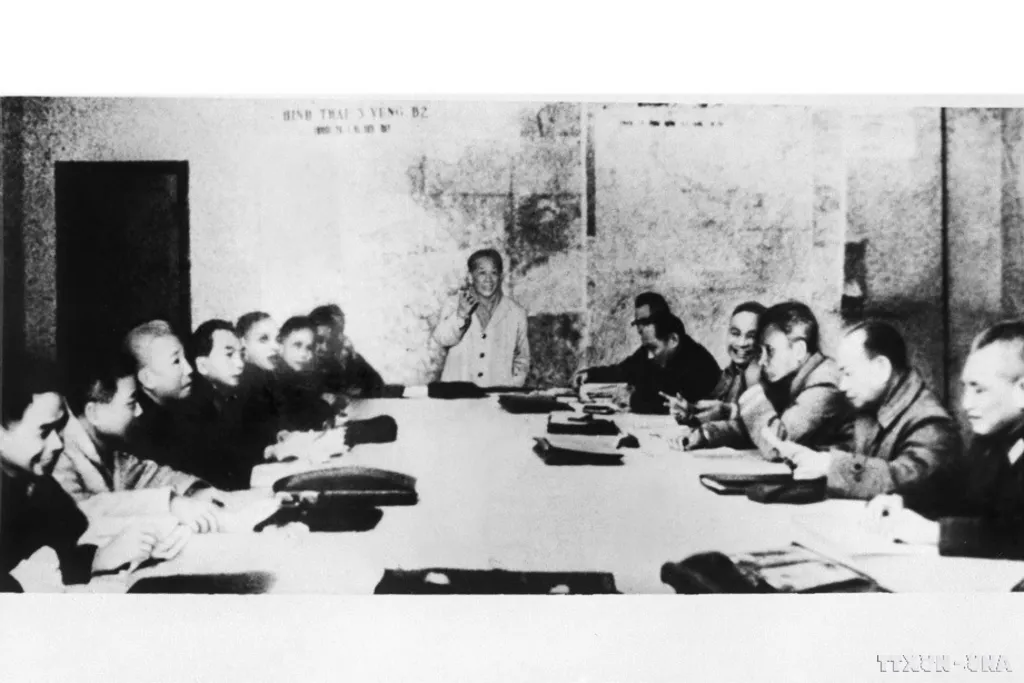 |
| The Politburo, the Secretariat and the Central Military Commission meet in November 1974, deciding to launch the Spring 1975 General Offensive and Uprising. VNA/VNS File Photos |
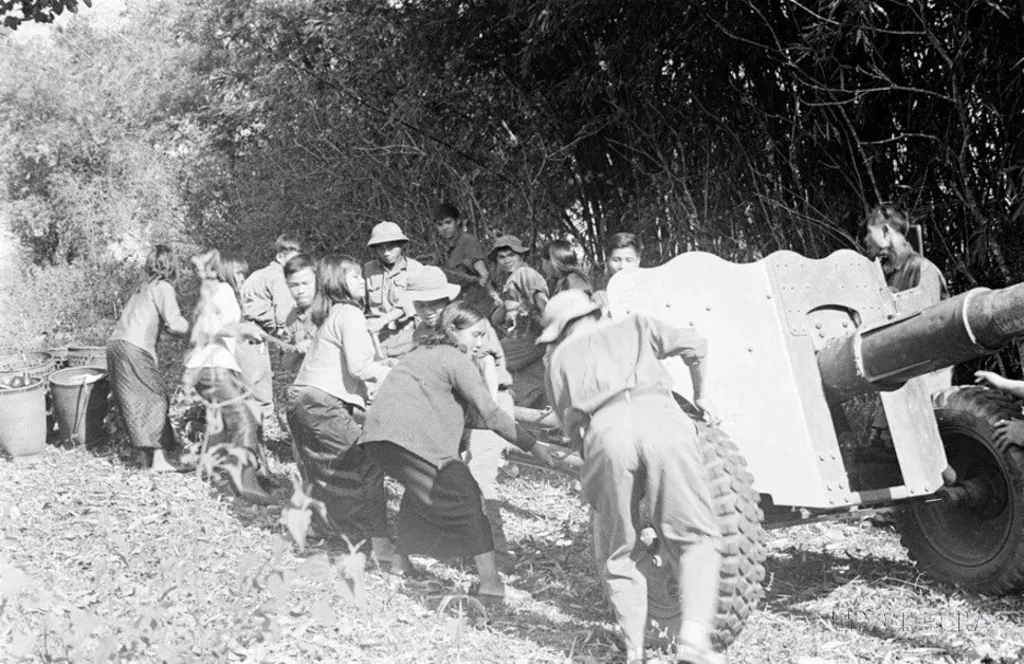 |
| Local people in the Central Highlands join troops in hauling artillery to seize key positions in Pleiku during the Central Highlands Campaign, opening the Spring 1975 General Offensive and Uprising. |
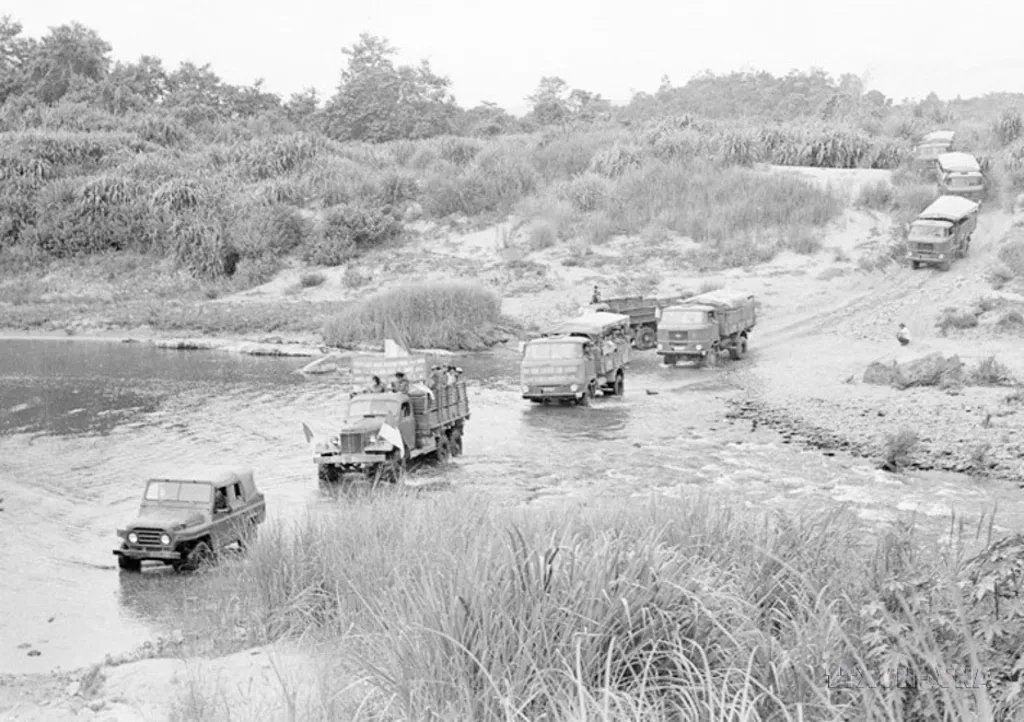 |
| Transport troops in the Central Highlands move thousands of tonnes of supplies using both rudimentary and mechanised means to support the campaign. |
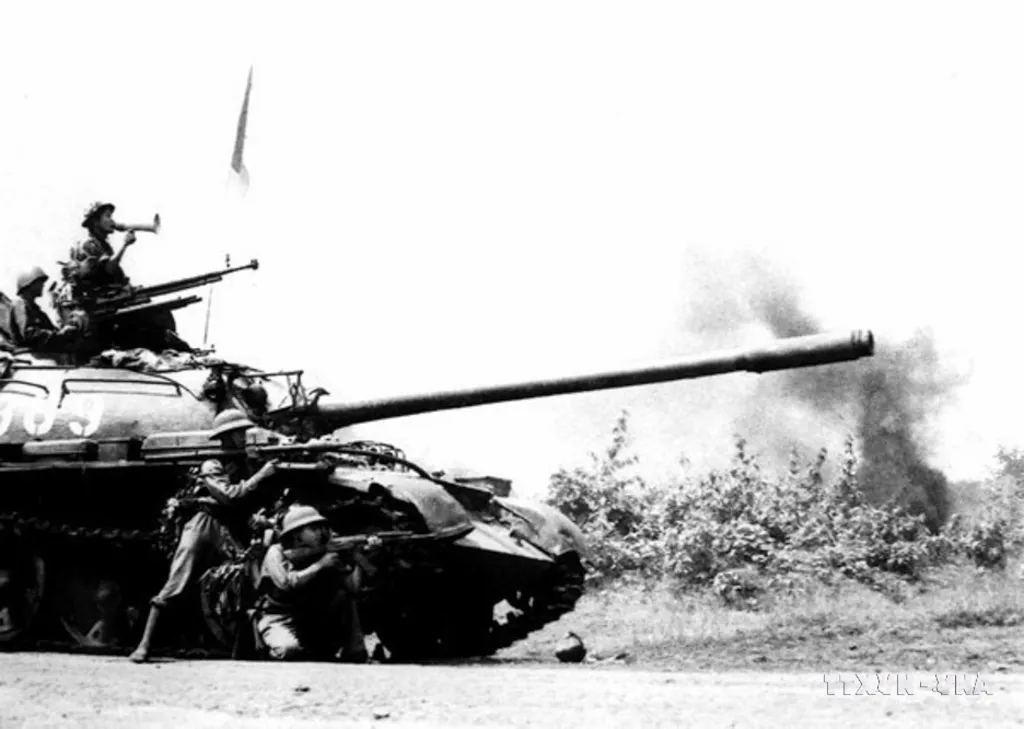 |
| Liberation tanks advance on Buôn Ma Thuột on March 10, 1975, during the Central Highlands Campaign. |
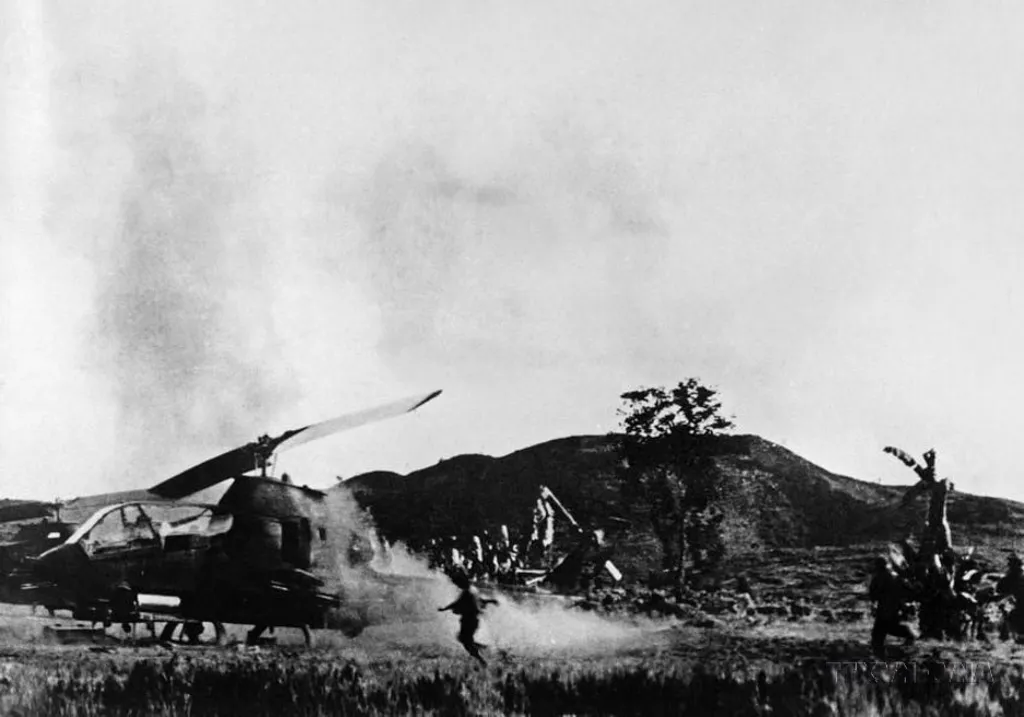 |
| Liberation forces capture Đắk Tô–Tân Cảnh (Kon Tum) during the Central Highlands Campaign. |
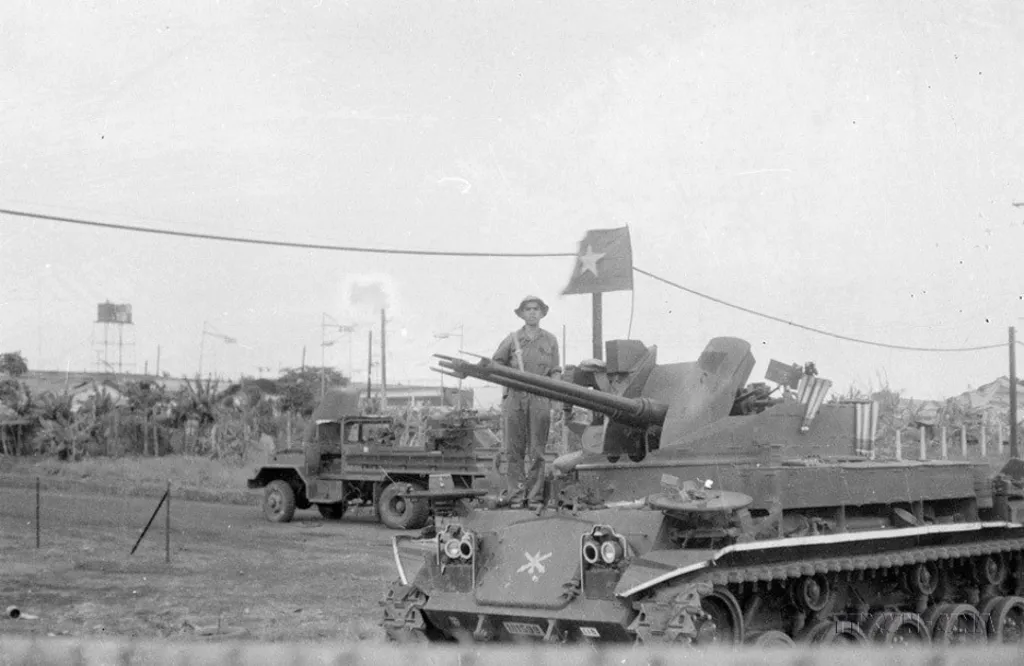 |
| Enemy military equipment at the fortified Đức Lập base is seized by liberation forces during the Central Highlands Campaign. |
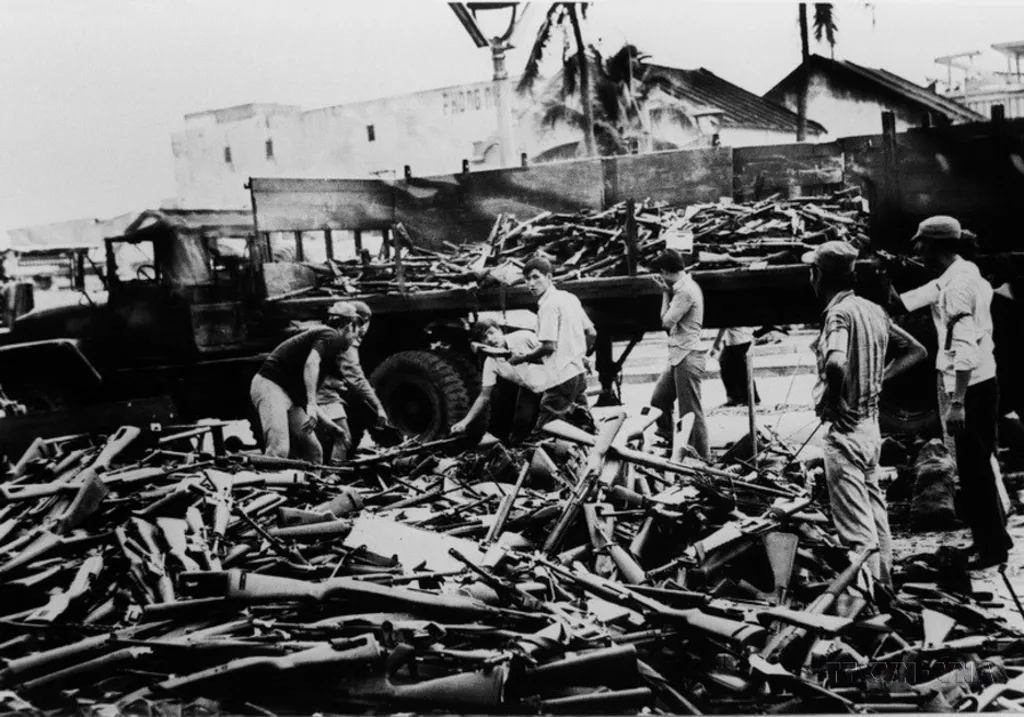 |
| The Huế–Đà Nẵng Campaign, from March 21 to 29, 1975, was one of three major campaigns of the Spring Offensive, dealing decisive blows to key enemy divisions. |
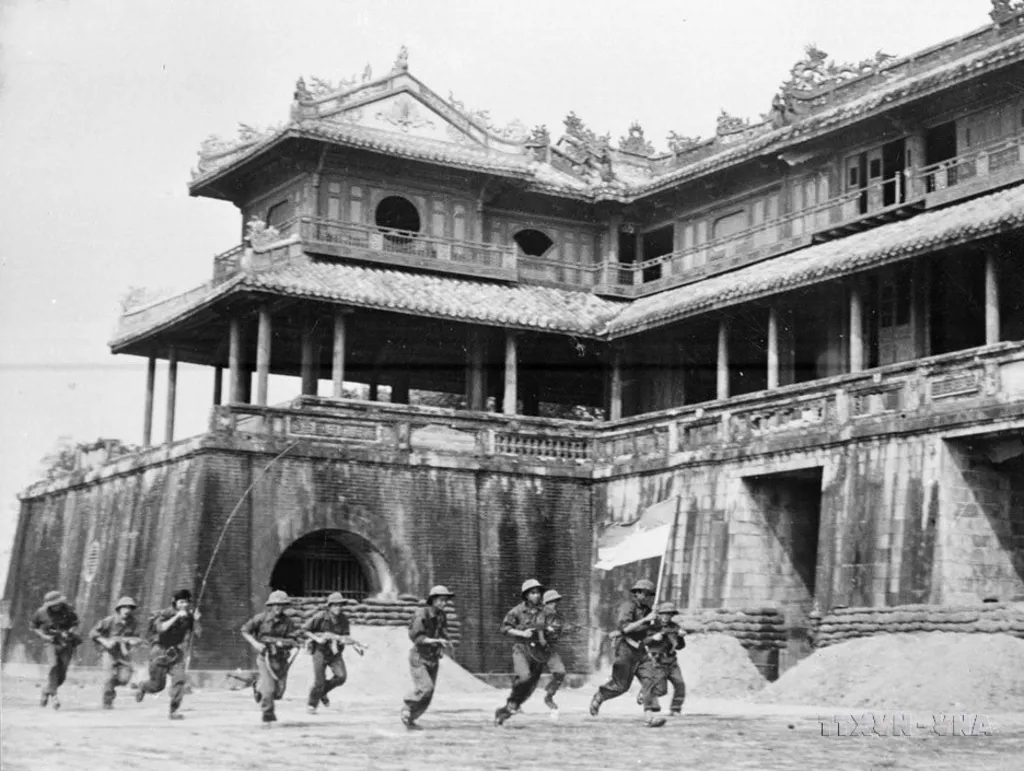 |
| Liberation forces enter Ngọ Môn Gate in Huế on the morning of March 26, 1975. |
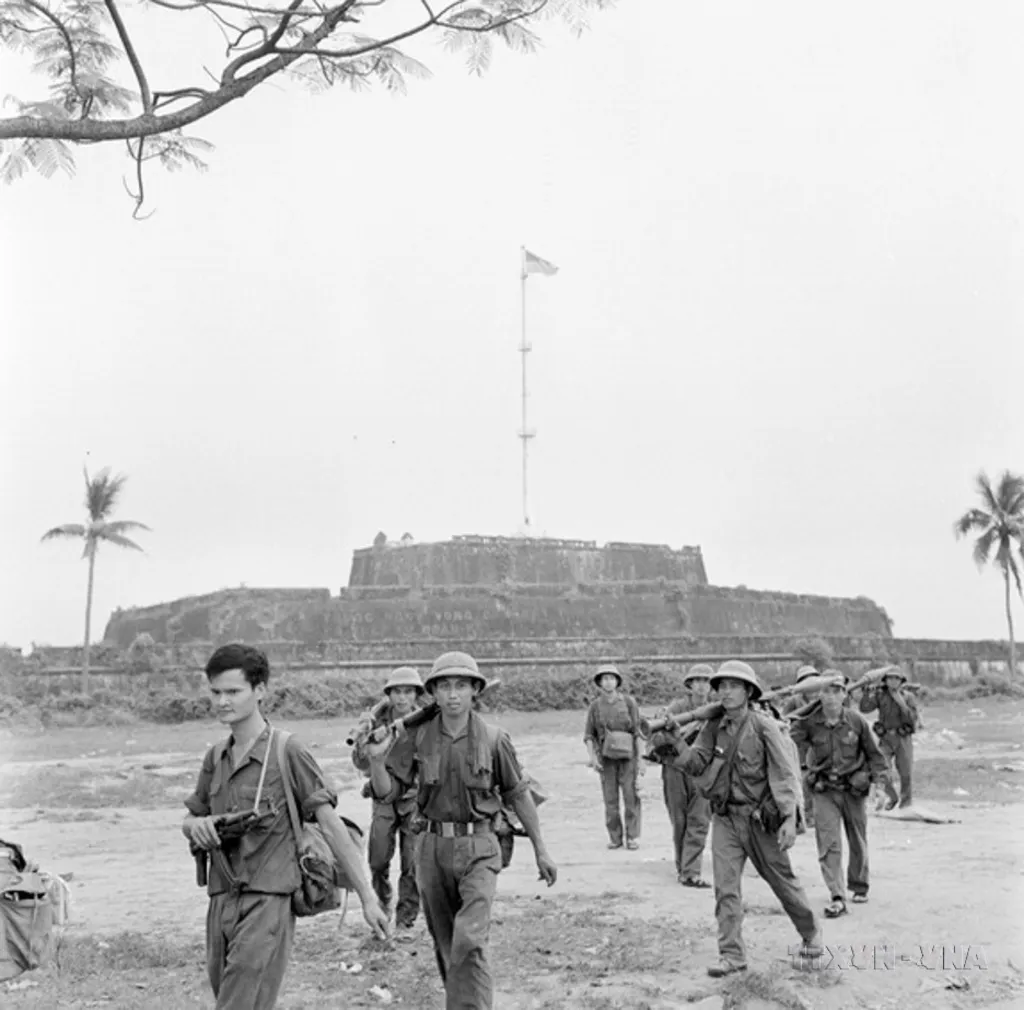 |
| The flag of the Provisional Revolutionary Government flies over Huế, marking the collapse of enemy defences following a swift and strategic shift in operations. |
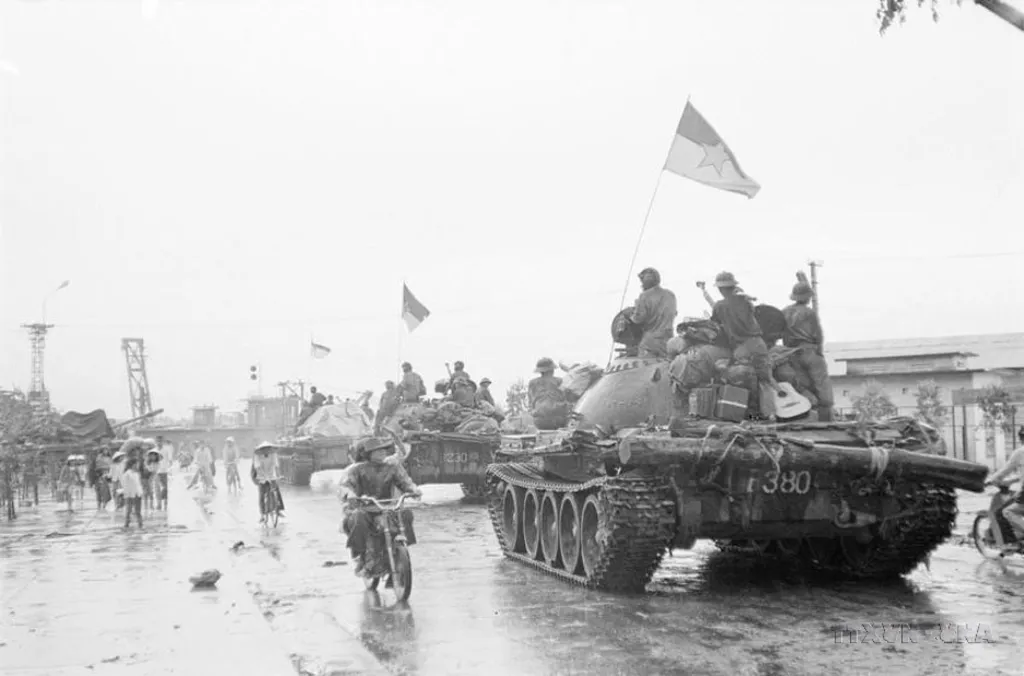 |
| Tanks of Brigade 203, Division 304, Corps 2 advance to liberate Đà Nẵng on March 29, 1975. |
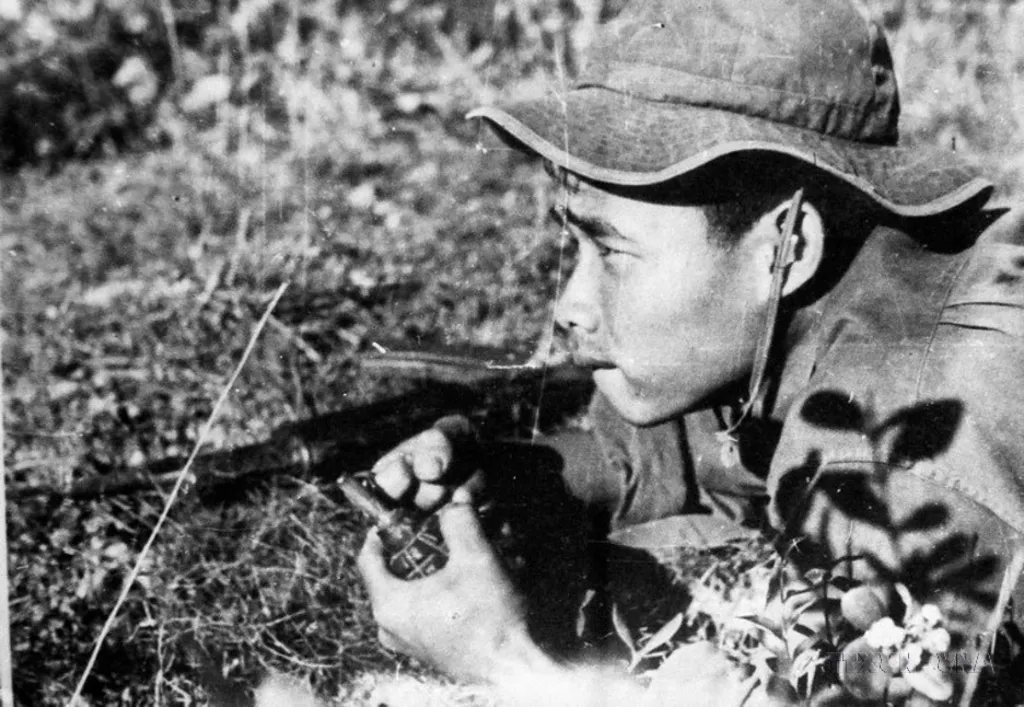 |
| Liberation troops await the order to attack the Dương Đế base in Tam Kỳ (Quảng Nam) during the Huế–Đà Nẵng Campaign. |
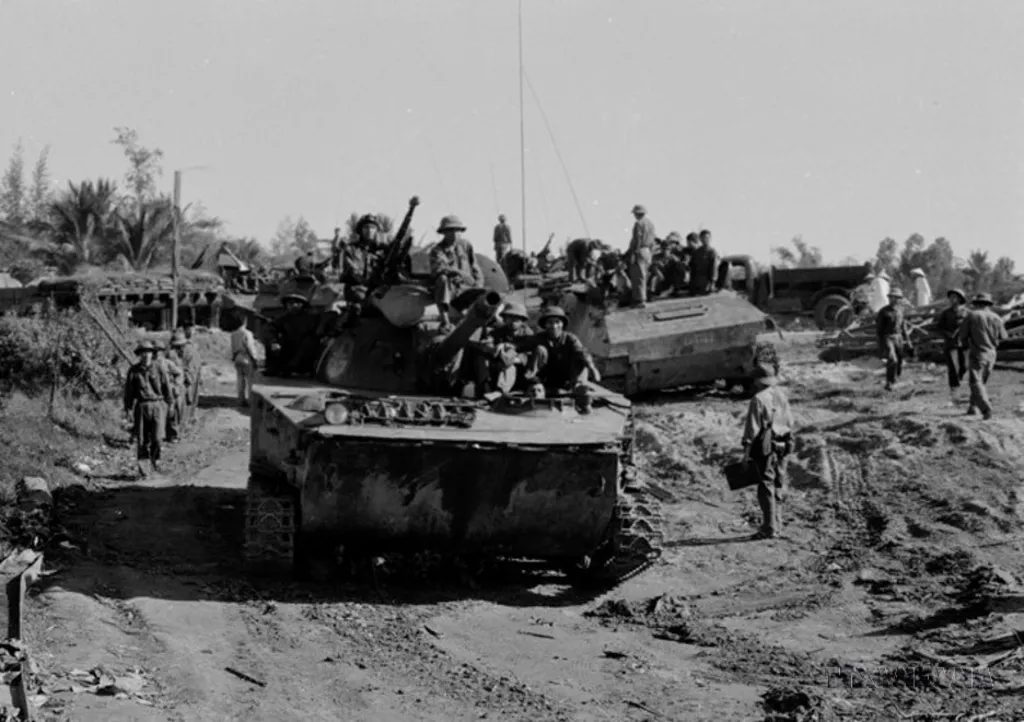 |
| Artillery and tanks advance towards Quy Nhơn as the Central Highlands Campaign expands to the central coastal provinces. |
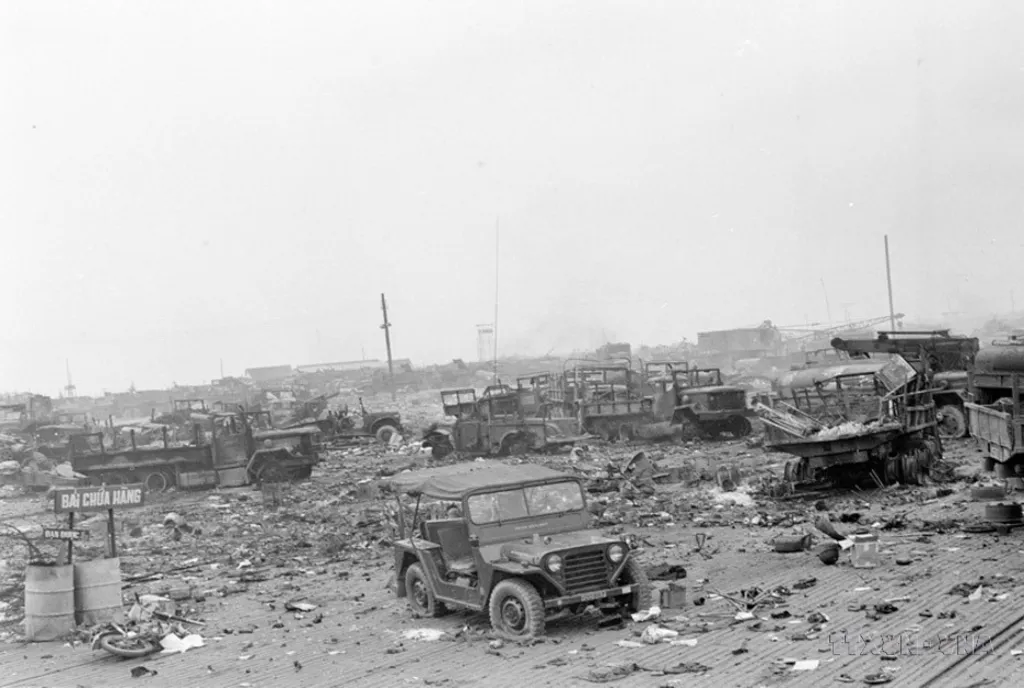 |
| Hundreds of enemy military vehicles retreating along Route 7 from Cheo Reo to Phú Bổn are destroyed. Within 12 days, more than 120,000 enemy troops were neutralised. |
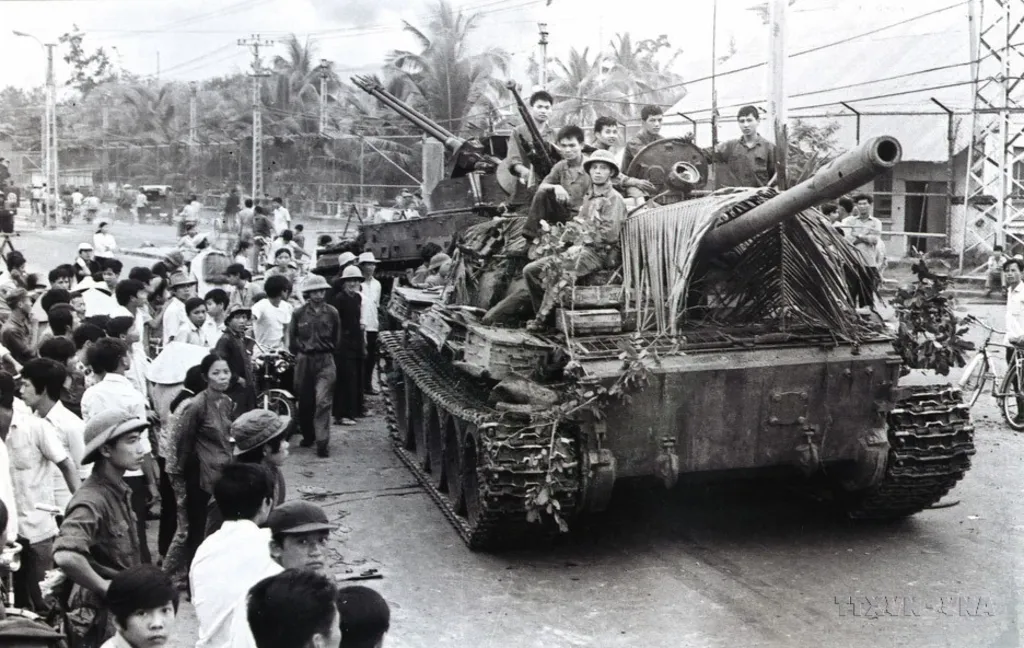 |
| Following the liberation of Huế (March 26) and Đà Nẵng (March 29), all central coastal provinces were secured by April 3. Tanks enter Nha Trang (Khánh Hòa) on April 2, 1975. |
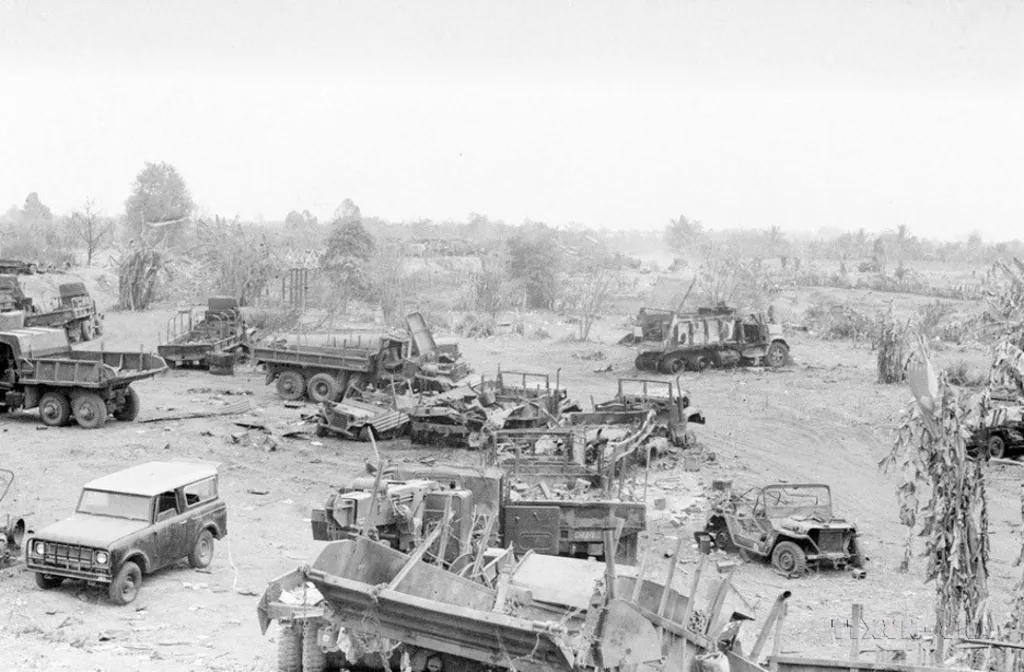 |
| Hundreds of enemy military vehicles retreating along Route 7 from Cheo Reo to Phú Bổn are destroyed. Within 12 days, more than 120,000 enemy troops were neutralised. |
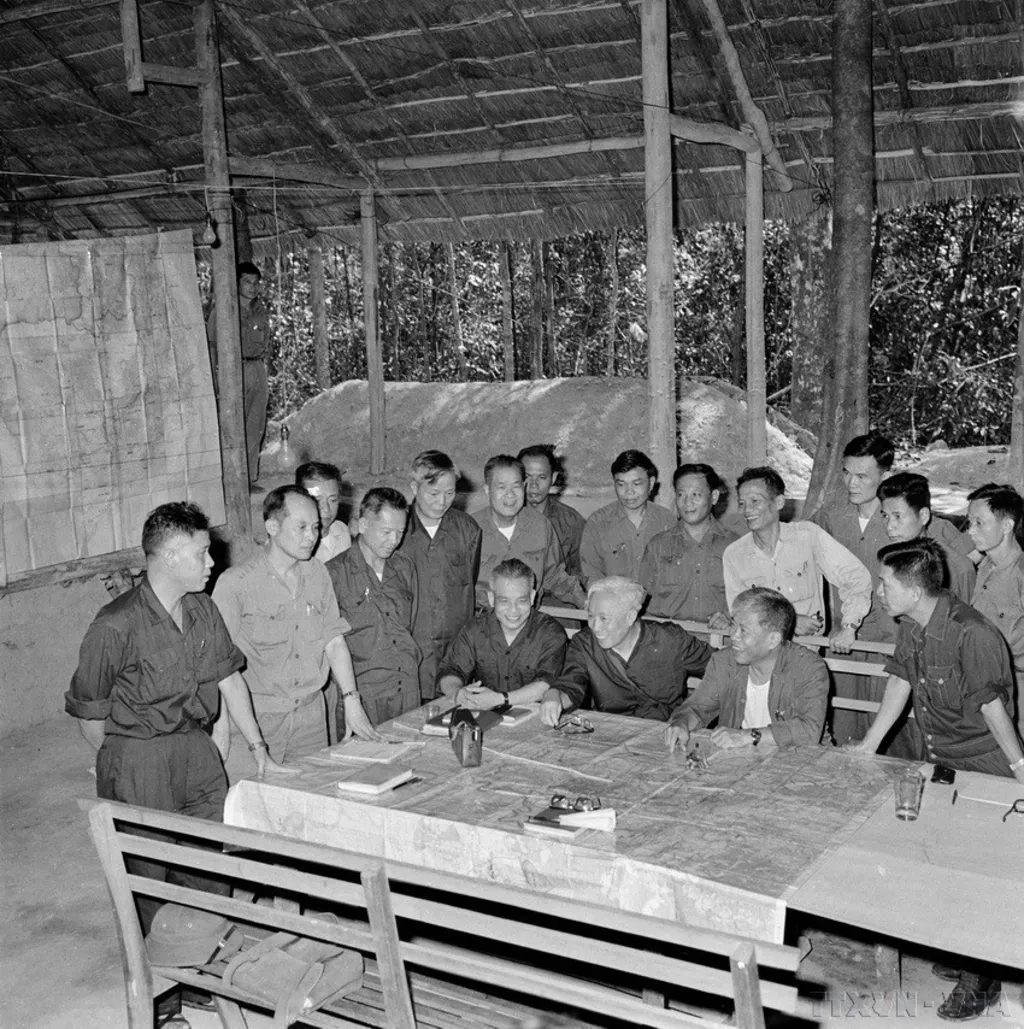 |
| On April 6, 1975, the Command for the Sài Gòn–Gia Định Campaign is established. |
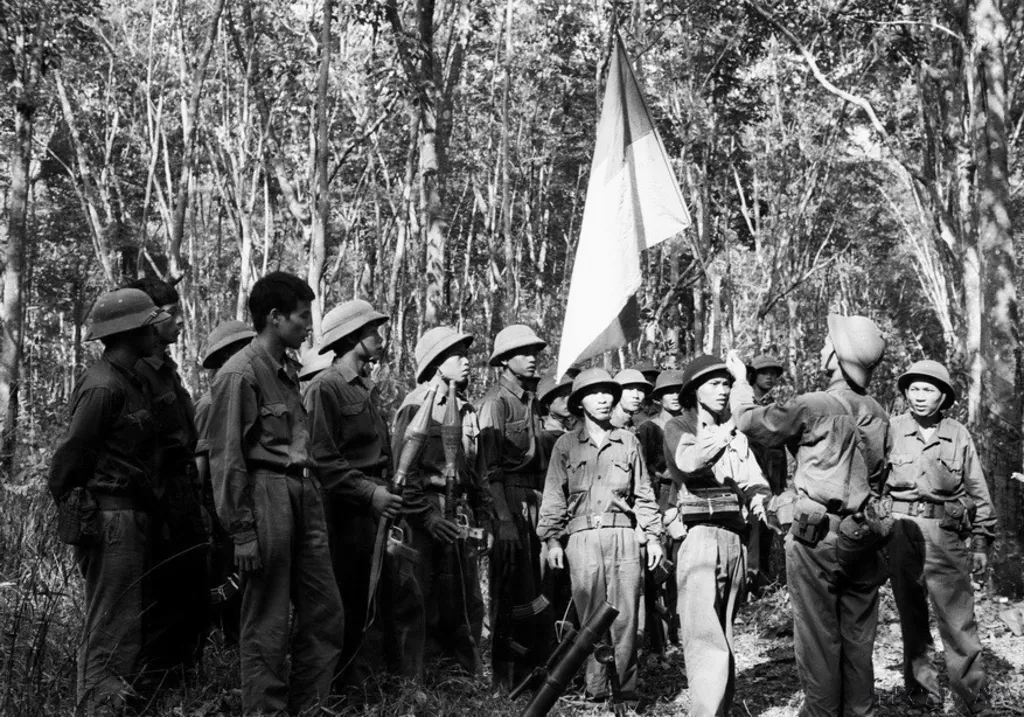 |
| A ceremony sees Regiment 3 (Khe Sanh unit) receive the victory flag before entering the Sài Gòn Campaign. |
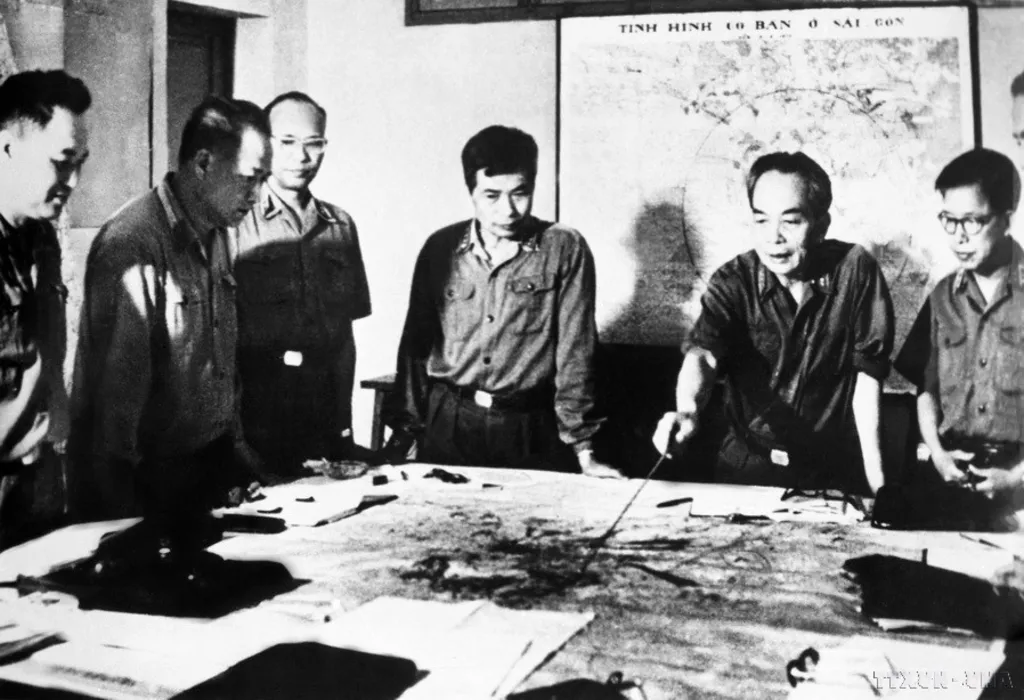 |
| On April 14, 1975, the Politburo named the Sài Gòn–Gia Định Campaign the Hồ Chí Minh Campaign. |
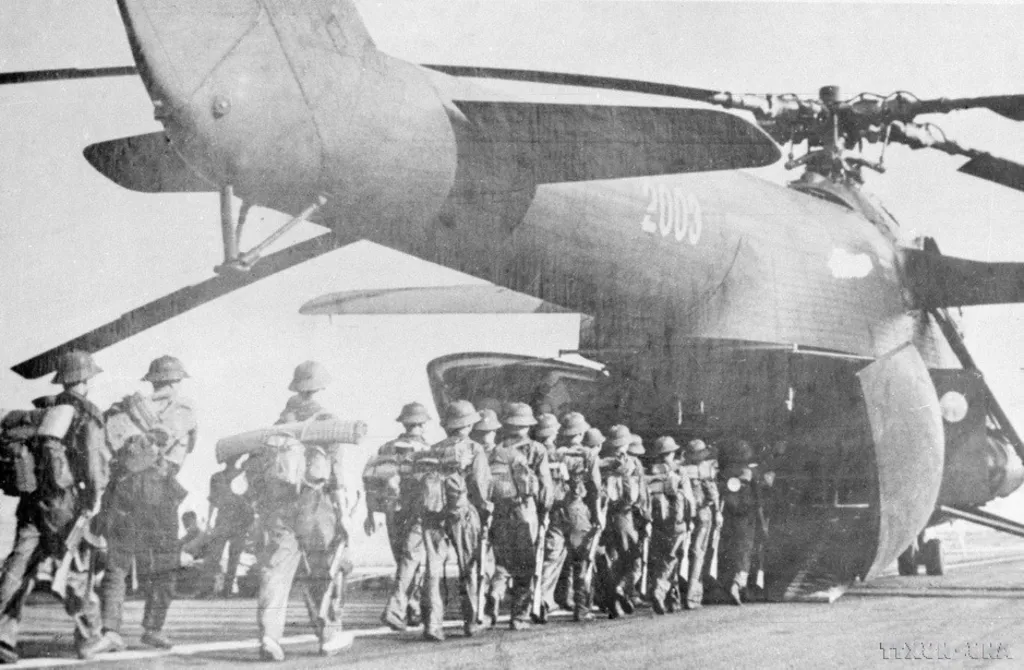 |
| Troops board transport aircraft heading south to join the Hồ Chí Minh Campaign. |
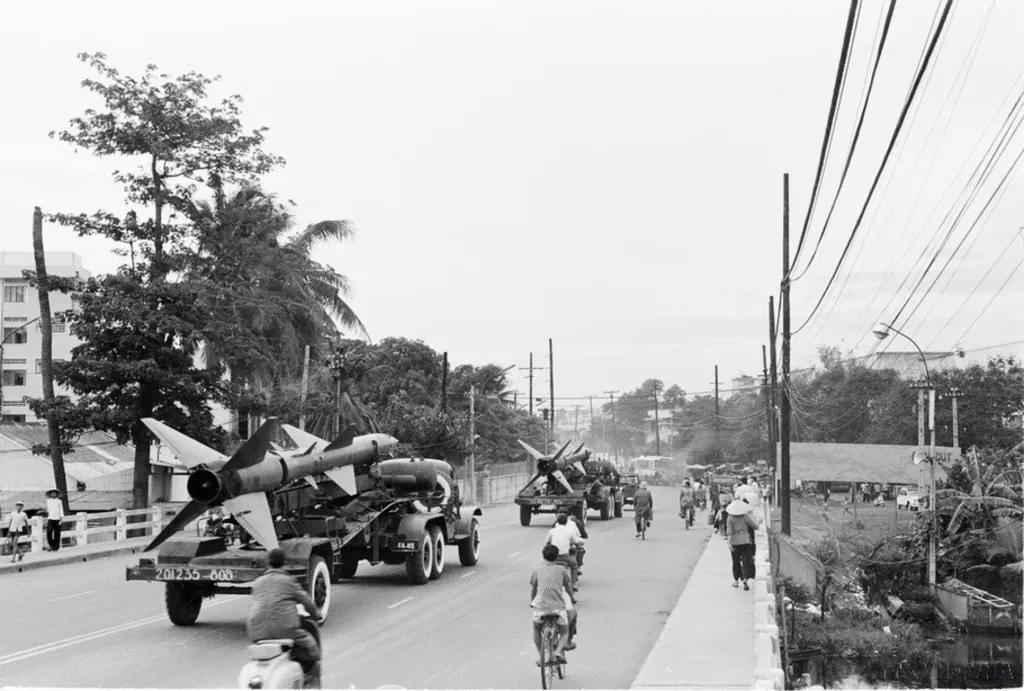 |
| Forces mobilise for the final assault on Sài Gòn. |
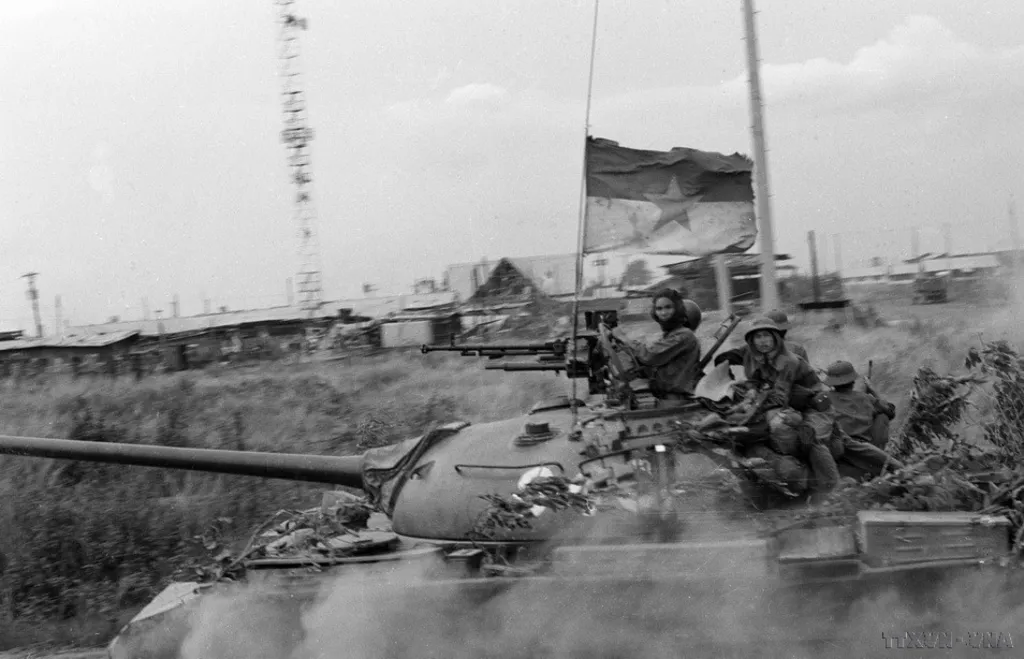 |
| Liberation forces capture the armoured training school at Nước Trong (Biên Hòa). |
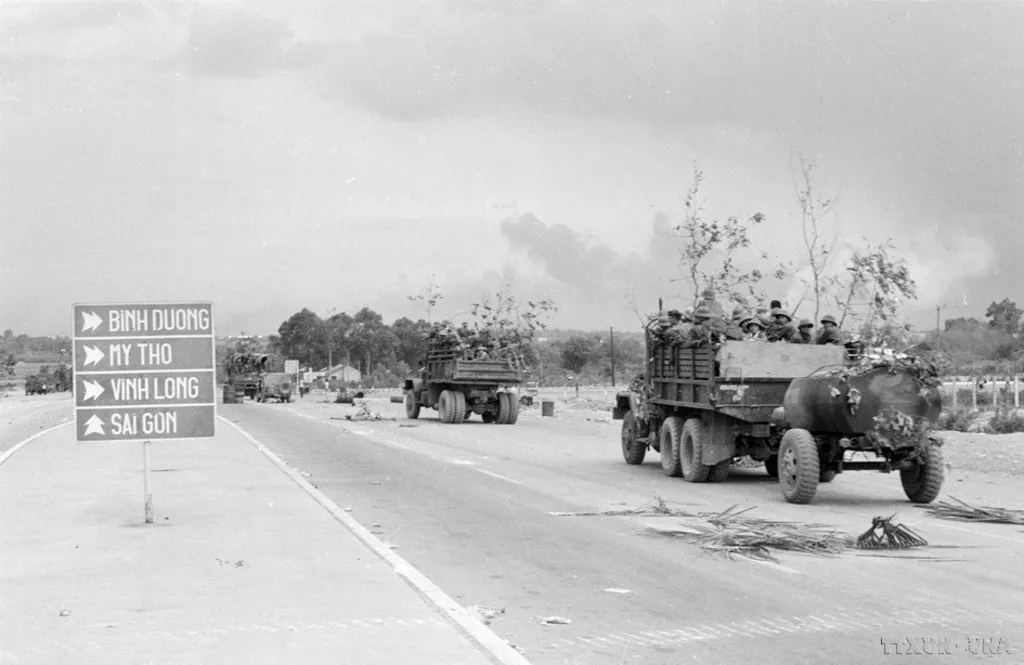 |
| Troops advance into Sài Gòn along the Biên Hòa Highway. |
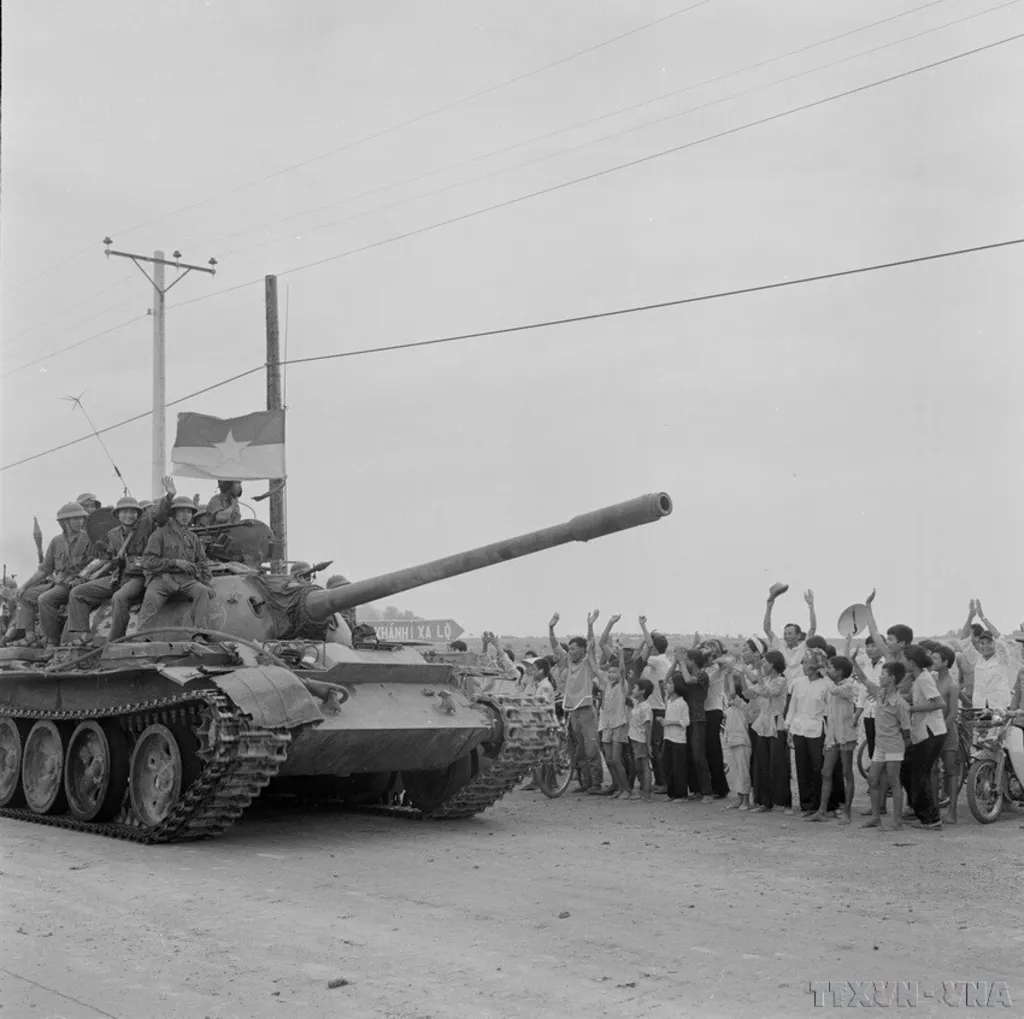 |
| Residents of Biên Hòa welcome liberation forces. |
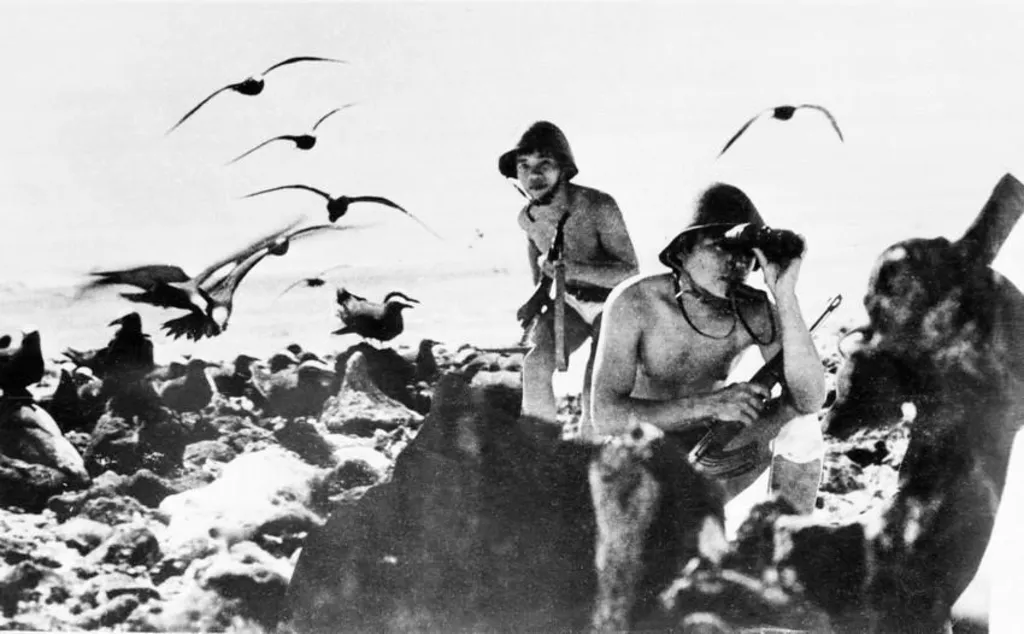 |
| Naval commandos liberate Sinh Tồn Island in the Trường Sa (Spratly) archipelago on April 28, 1975. |
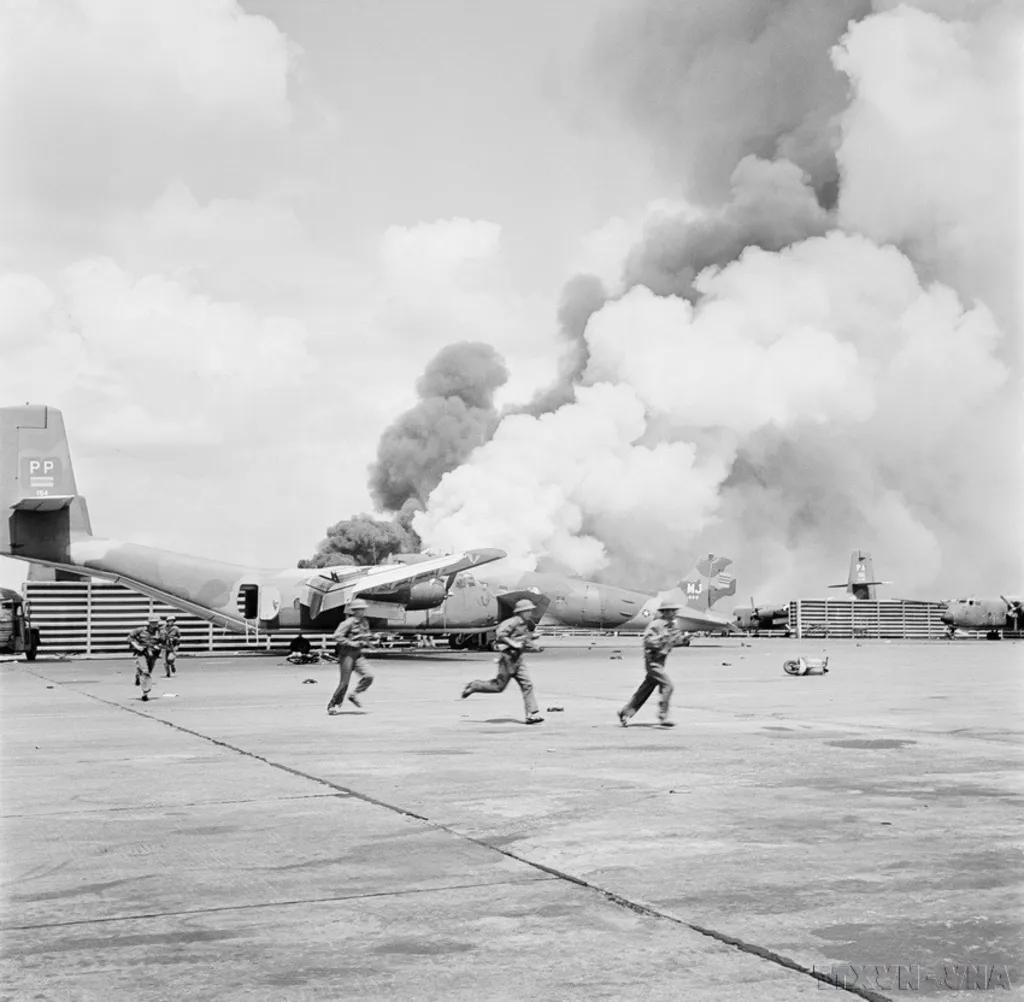 |
| Liberation forces seize Tân Sơn Nhất Airport on April 30, 1975. |
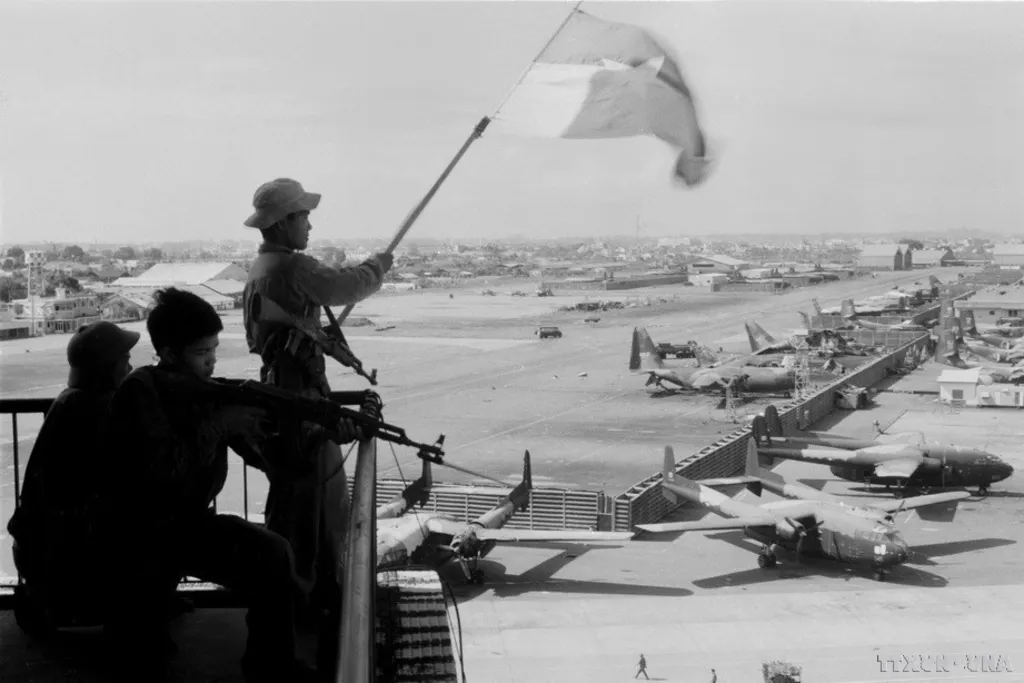 |
| The liberation flag flies over Tân Sơn Nhất Airport on April 30, 1975. |
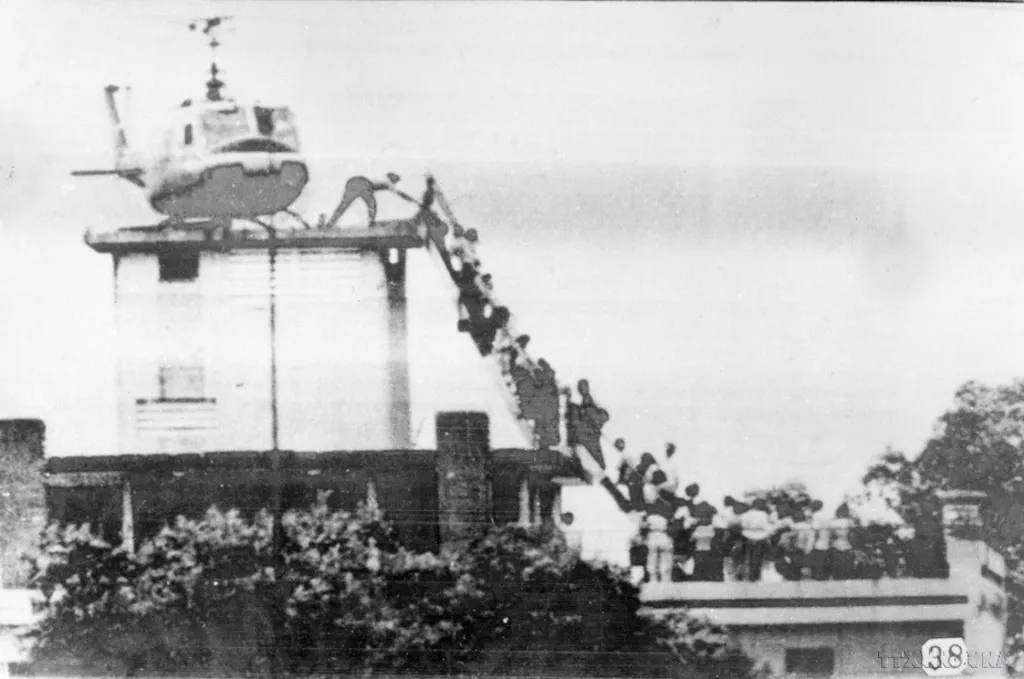 |
| US personnel evacuate by helicopter as liberation forces advance. |
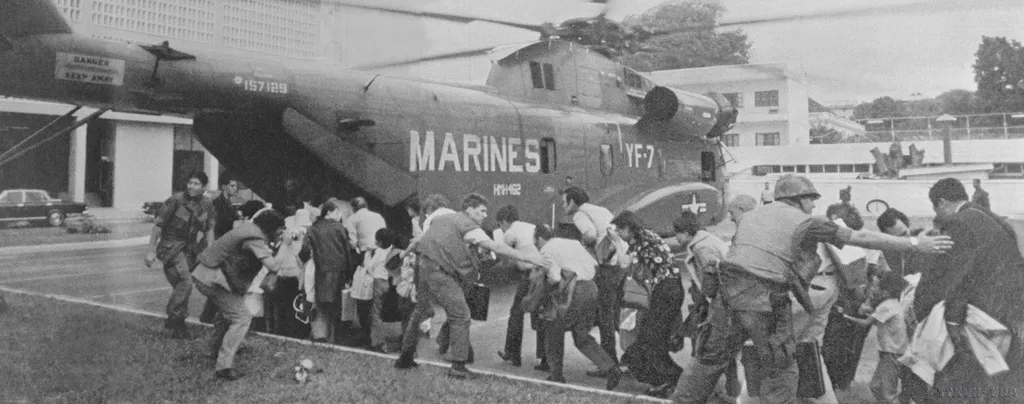 |
| US Embassy staff flee Sài Gòn amid the final offensive. |
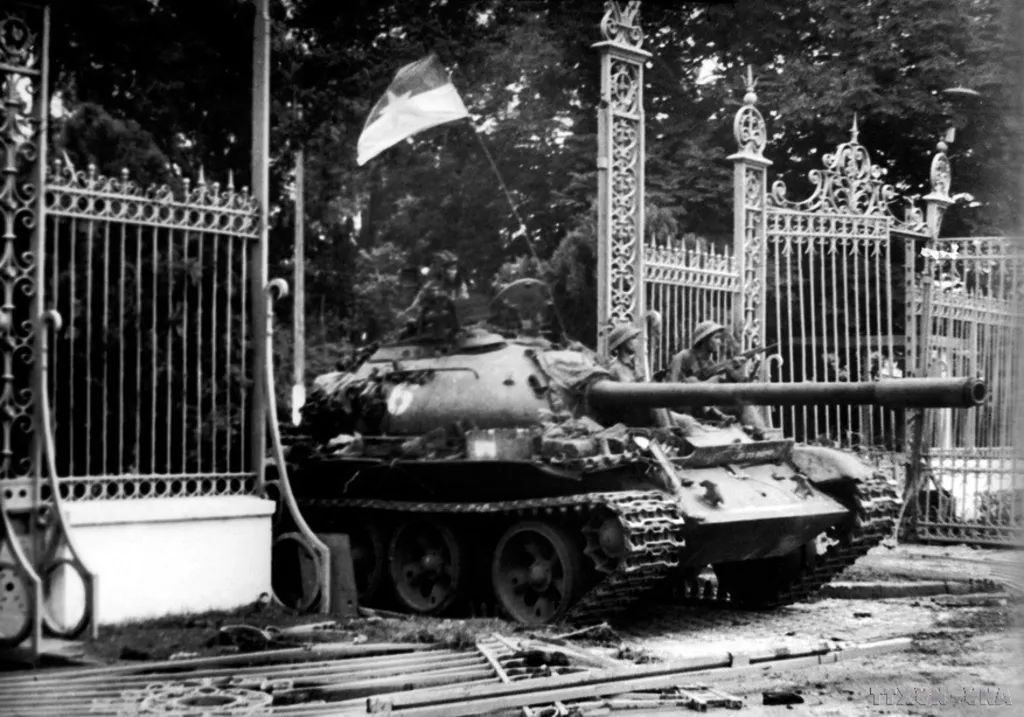 |
| At 11:30am on April 30, 1975, liberation tanks break through the gates of the Presidential Palace, marking the end of the war. |
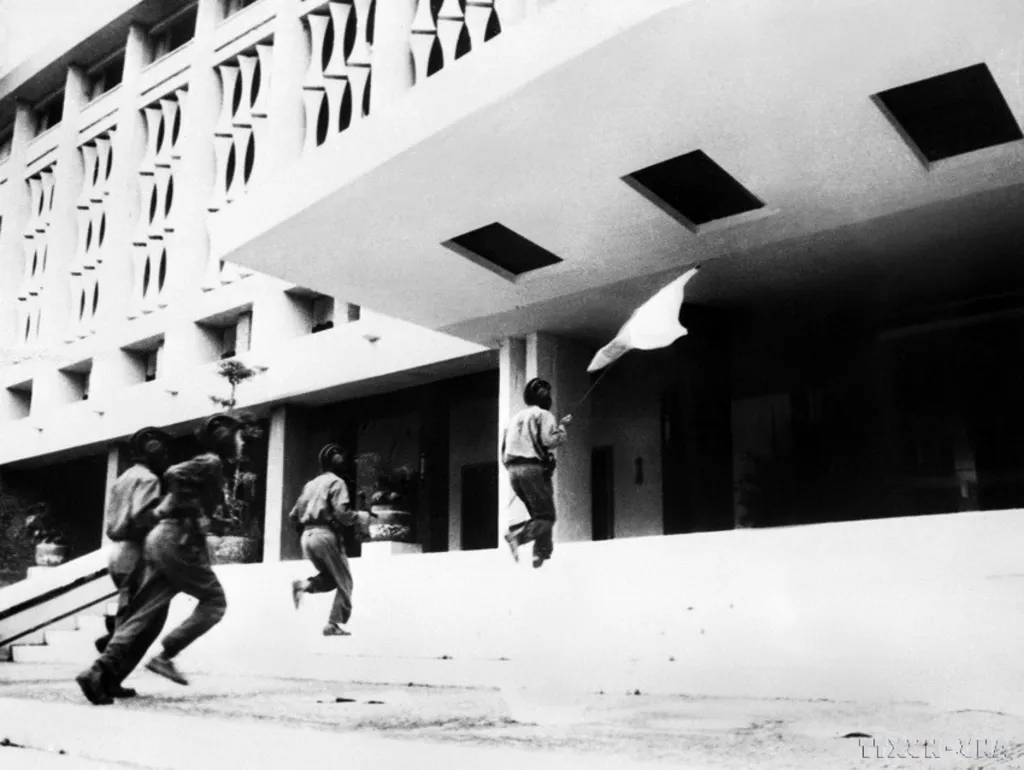 |
| Soldier Bùi Quang Thận raises the flag atop the Presidential Palace at 11:30am on April 30, 1975. |
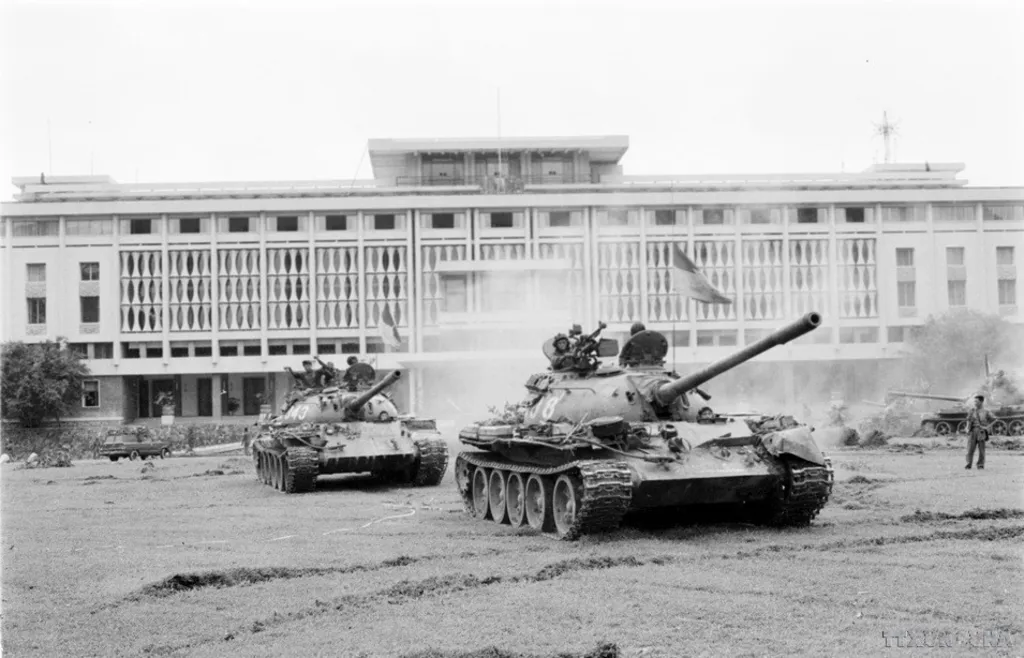 |
| Liberation tanks secure the Presidential Palace. |
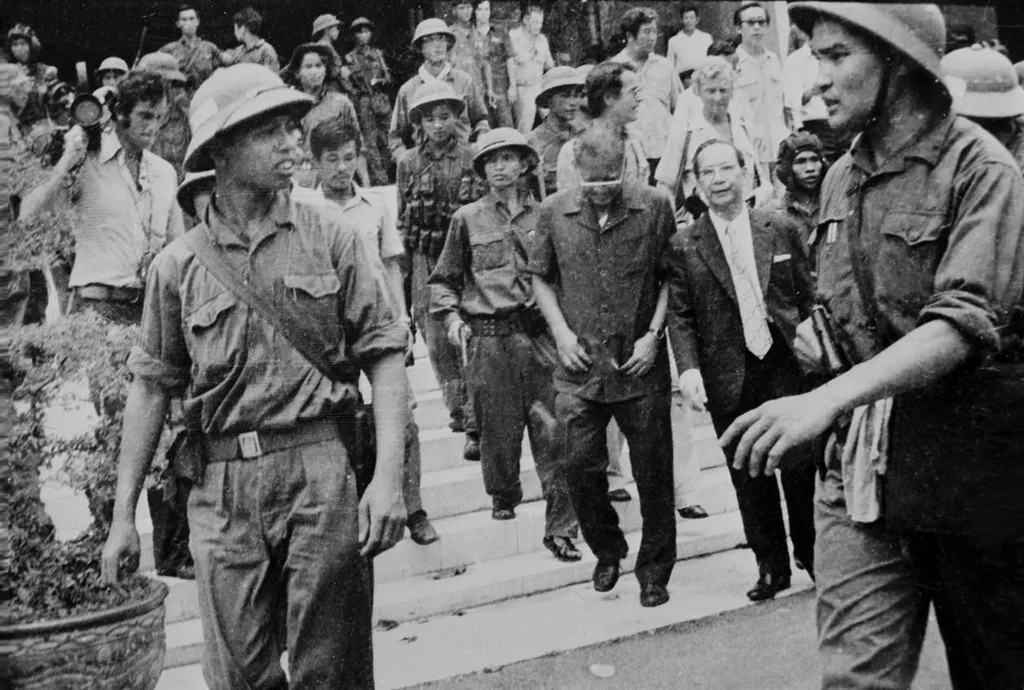 |
| President Dương Văn Minh and Prime Minister Vũ Văn Mẫu are escorted to the radio station to announce unconditional surrender on April 30, 1975. |
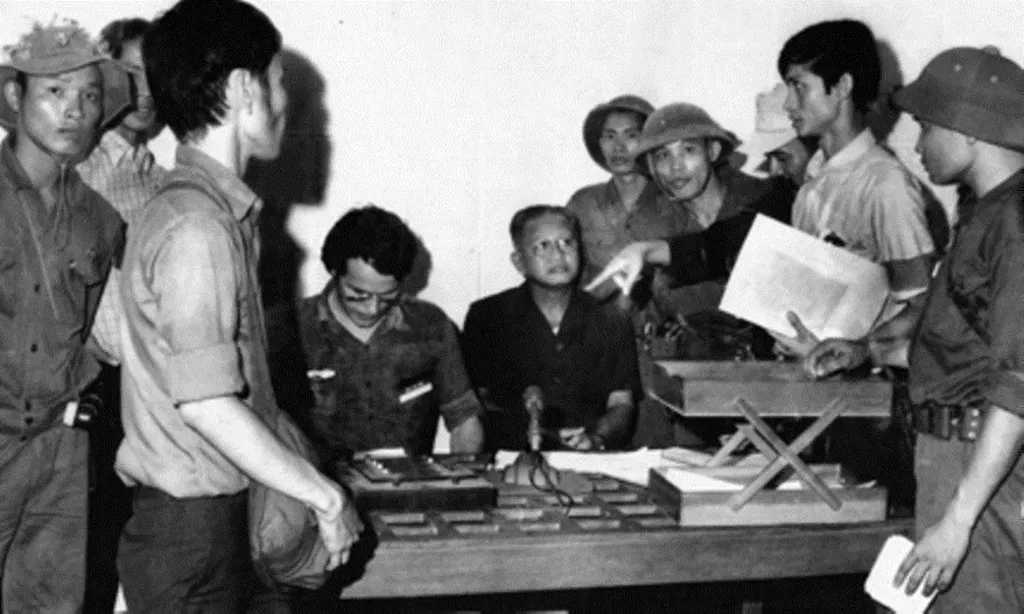 |
| Dương Văn Minh declares unconditional surrender, ending the war, April 30, 1975. |
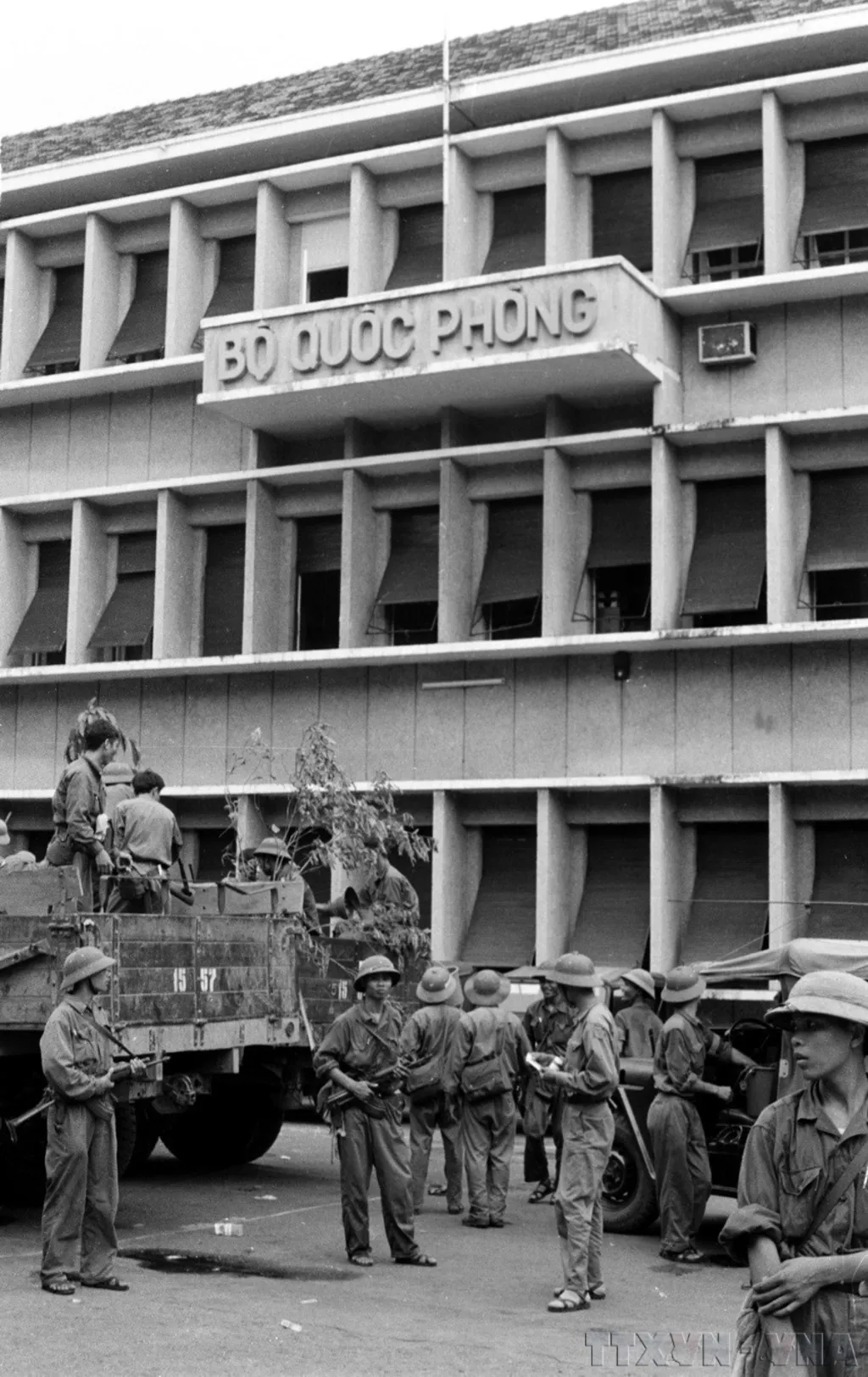 |
| Liberation forces capture the Ministry of Defence in Sài Gòn on April 30, 1975. |
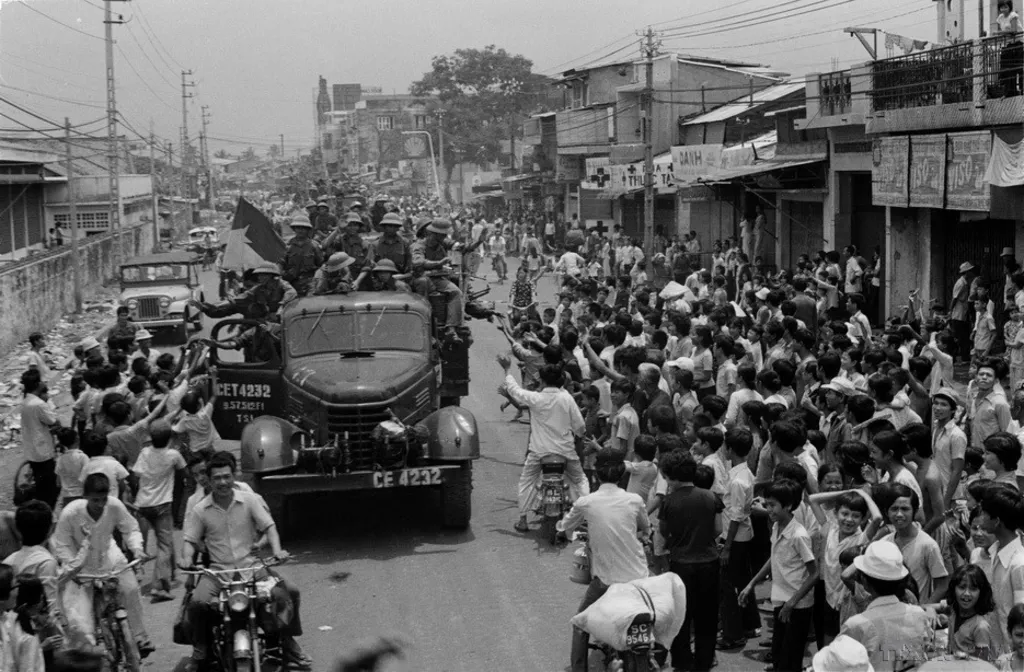 |
| People in Sài Gòn welcome liberation forces. |
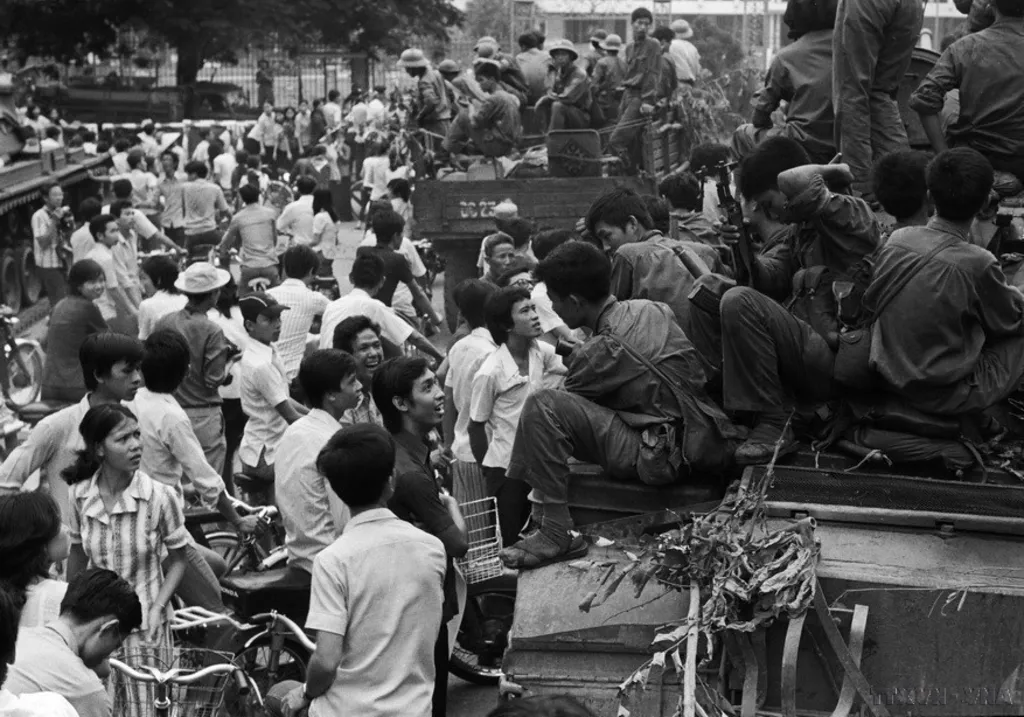 |
| Crowds celebrate victory in Sài Gòn on April 30, 1975. |
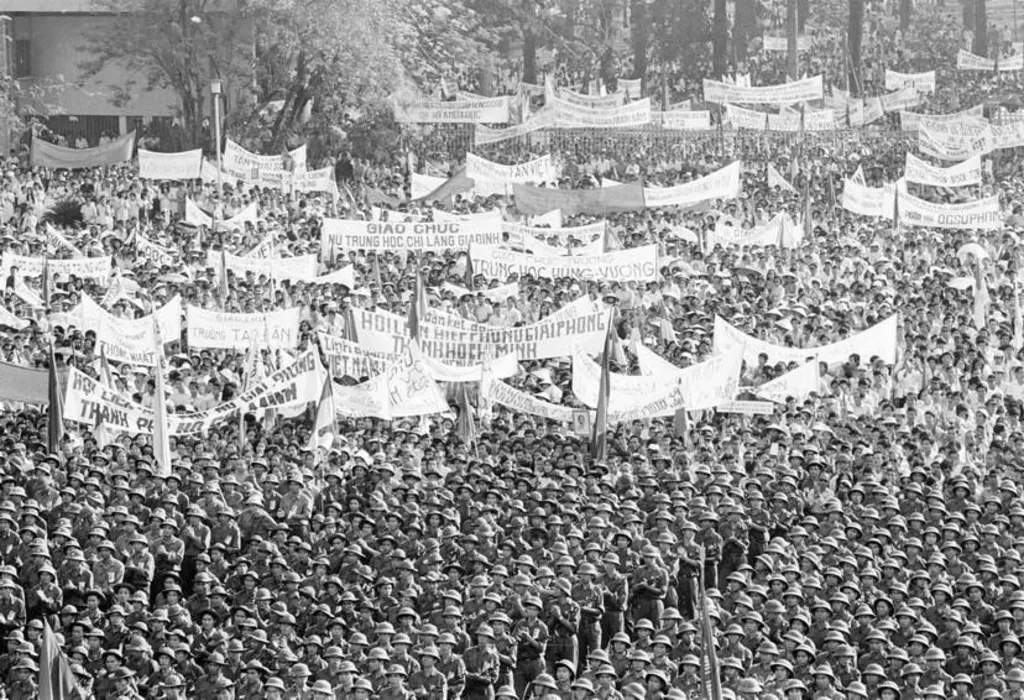 |
| Mass rally marks the debut of the Military Administrative Committee in Sài Gòn on May 7, 1975. |
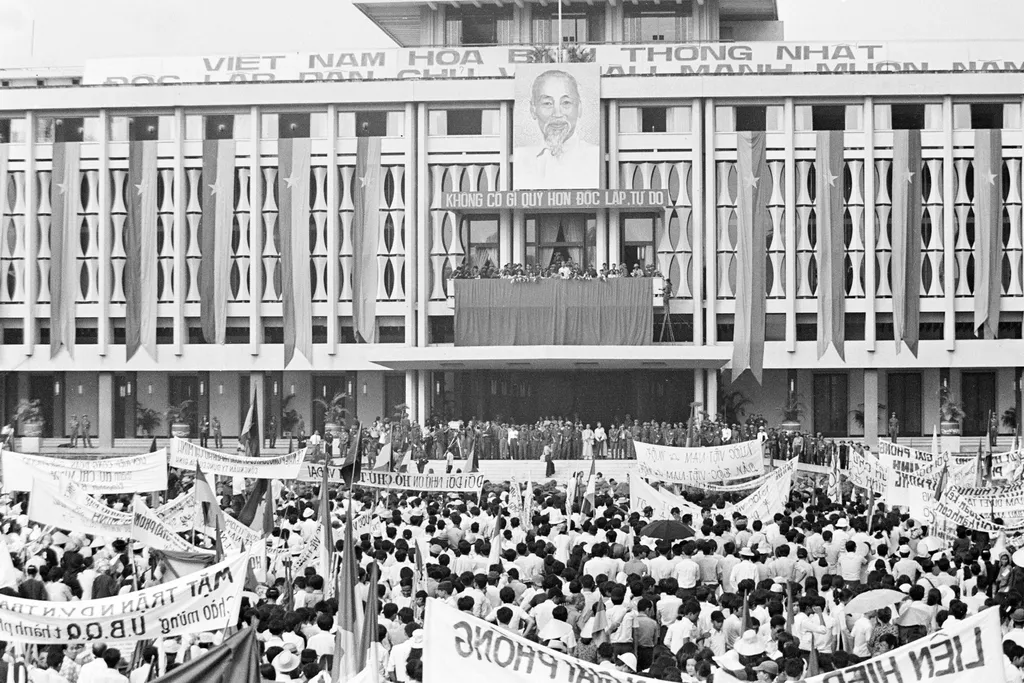 |
| Millions gather in Sài Gòn–Gia Định on May 15, 1975, to celebrate victory. |
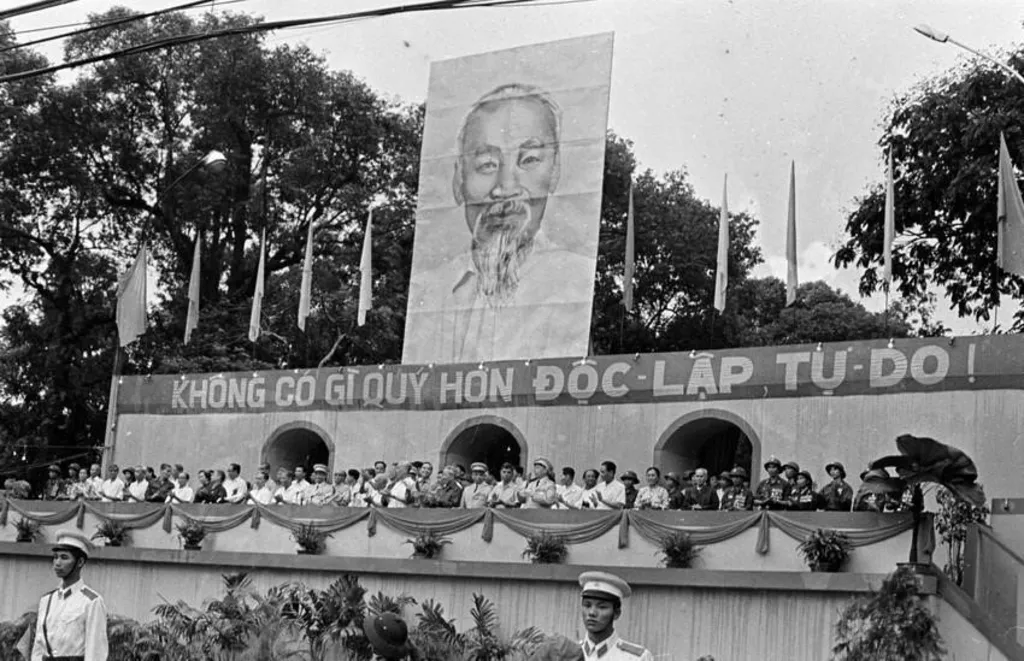 |
| Millions gather in Sài Gòn–Gia Định on May 15, 1975, to celebrate victory. |